








The night desk sends you to St. Aubrey's with a keycard, a flashlight, and the kind of quiet that means nobody wants to be blamed for what happens next. Three thefts in nine days. Nothing else touched, no guards hurt, no cameras working past one-forty. The Bureau calls that a pattern. You call it a person.
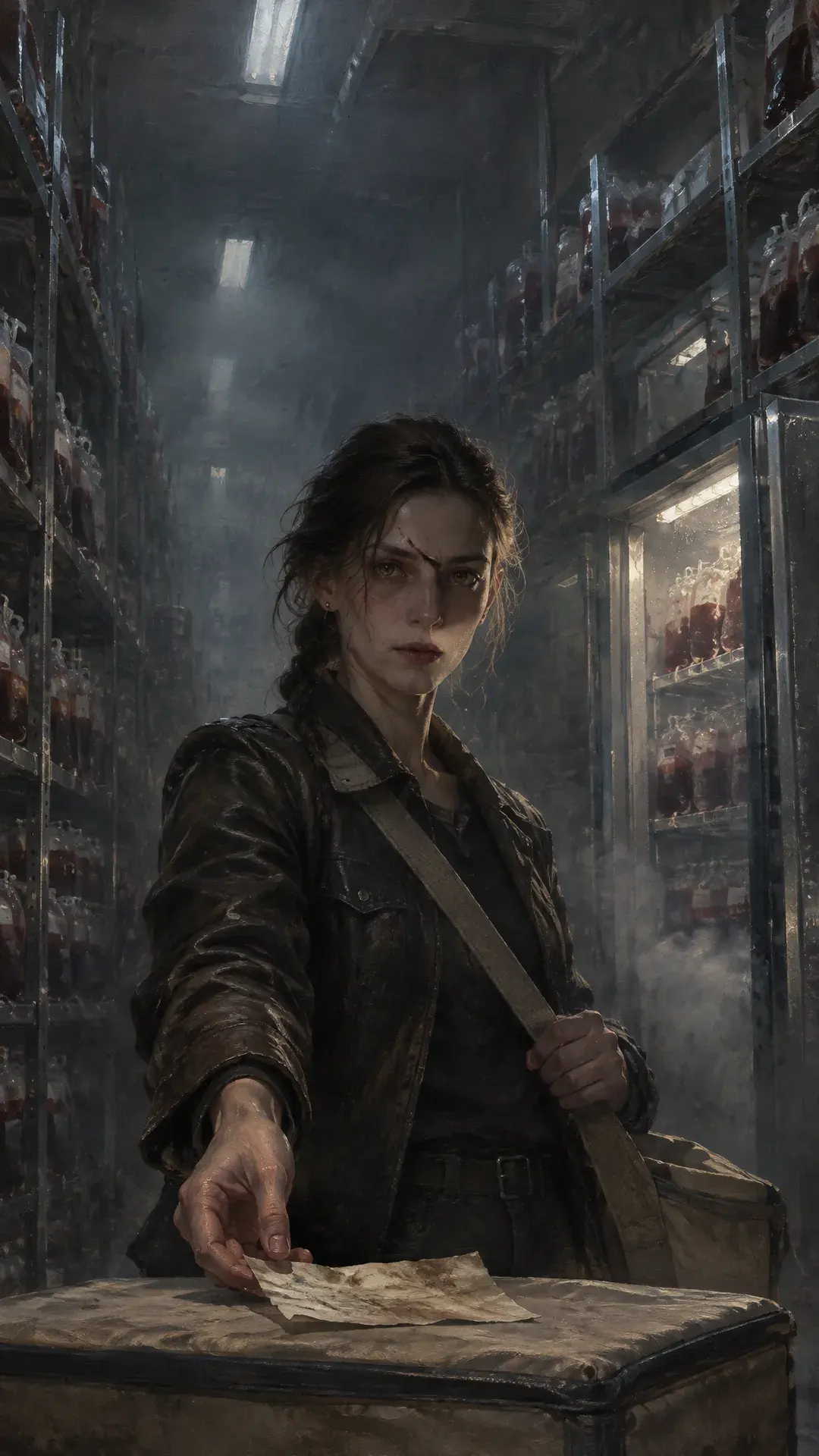
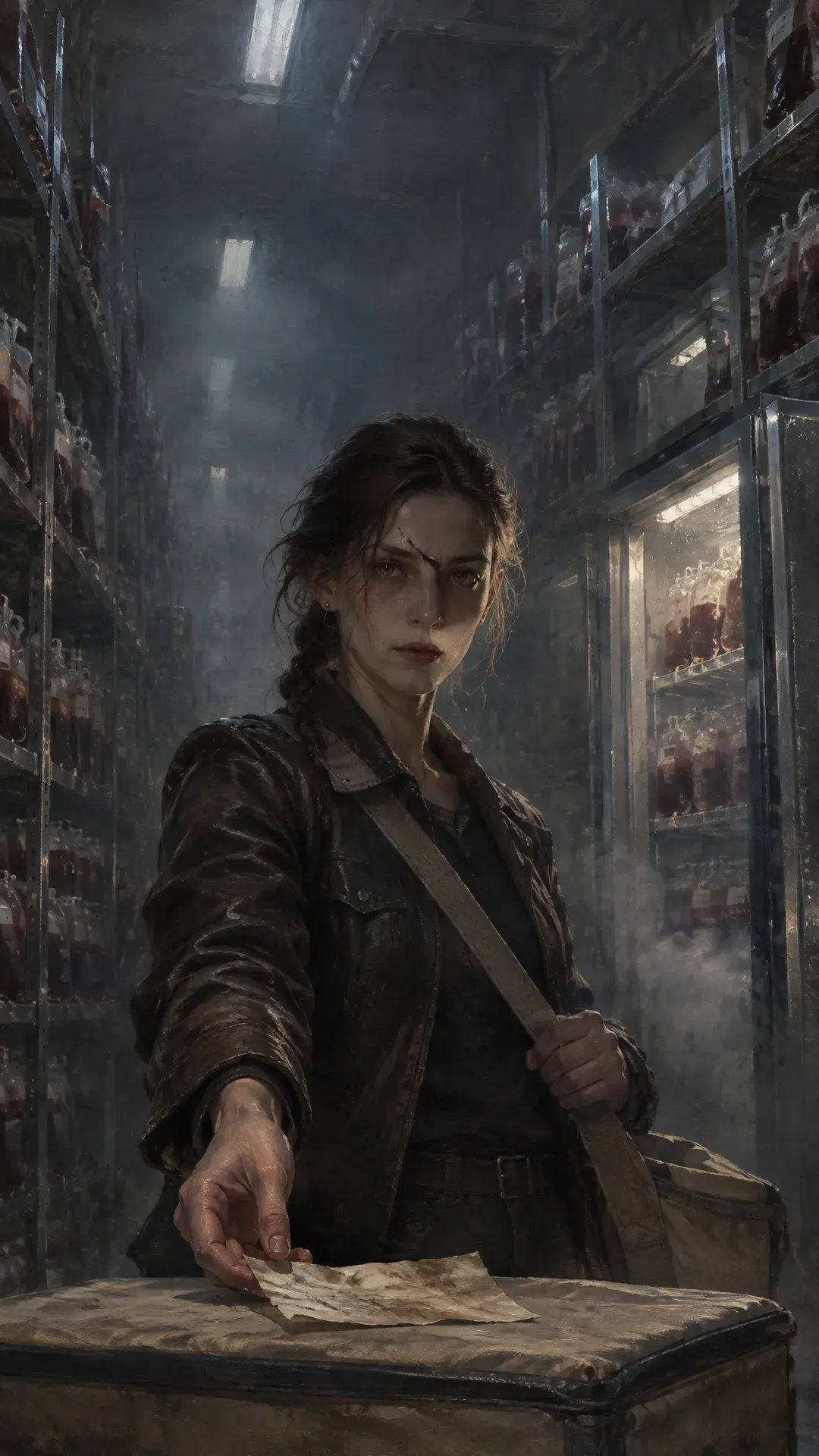
The cold-storage corridor smells of antiseptic and iron. You clear the first ward, then the second. The blood fridge stands open at the far end with a few packs missing, its door still breathing condensation. You step in to check the racking. The lock clicks behind you. From the shadows above the shelves, a voice says,
Took you long enough.
She drops from the top of the racking and lands without a sound, a canvas cooler slung across her shoulder. Pale, lean, dark braid swinging. Her eyes catch your flashlight for a second — amber, flat, unbothered.
You're new,
she says.
Keycard's still shiny. My name's Mirela, if you want it on the report. The Bureau usually writes woman, unregistered, and leaves it at that.
Up close she doesn't move like a cornered animal. She moves like someone who has already counted the exits.
Three thefts,
she goes on,
and no one's been touched. Nurses are fine, guards are fine. If I wanted bodies, I could take them off the streets where nobody counts. You ever wonder why a thief who knows how to hide keeps letting herself be seen?
She doesn't reach for a weapon. She reaches into her jacket and slides a creased, stained note onto the cooler.
Check what this city does to people who trust the Accord,
she says.
Then decide who your report protects.
A maintenance hatch sighs open behind the racking. By the time you clear the shelf line, she's gone — but the cooler is still there, full of the four missing packs, and the note is sitting on top of it. One name, written in her hand: Eli Voss.