





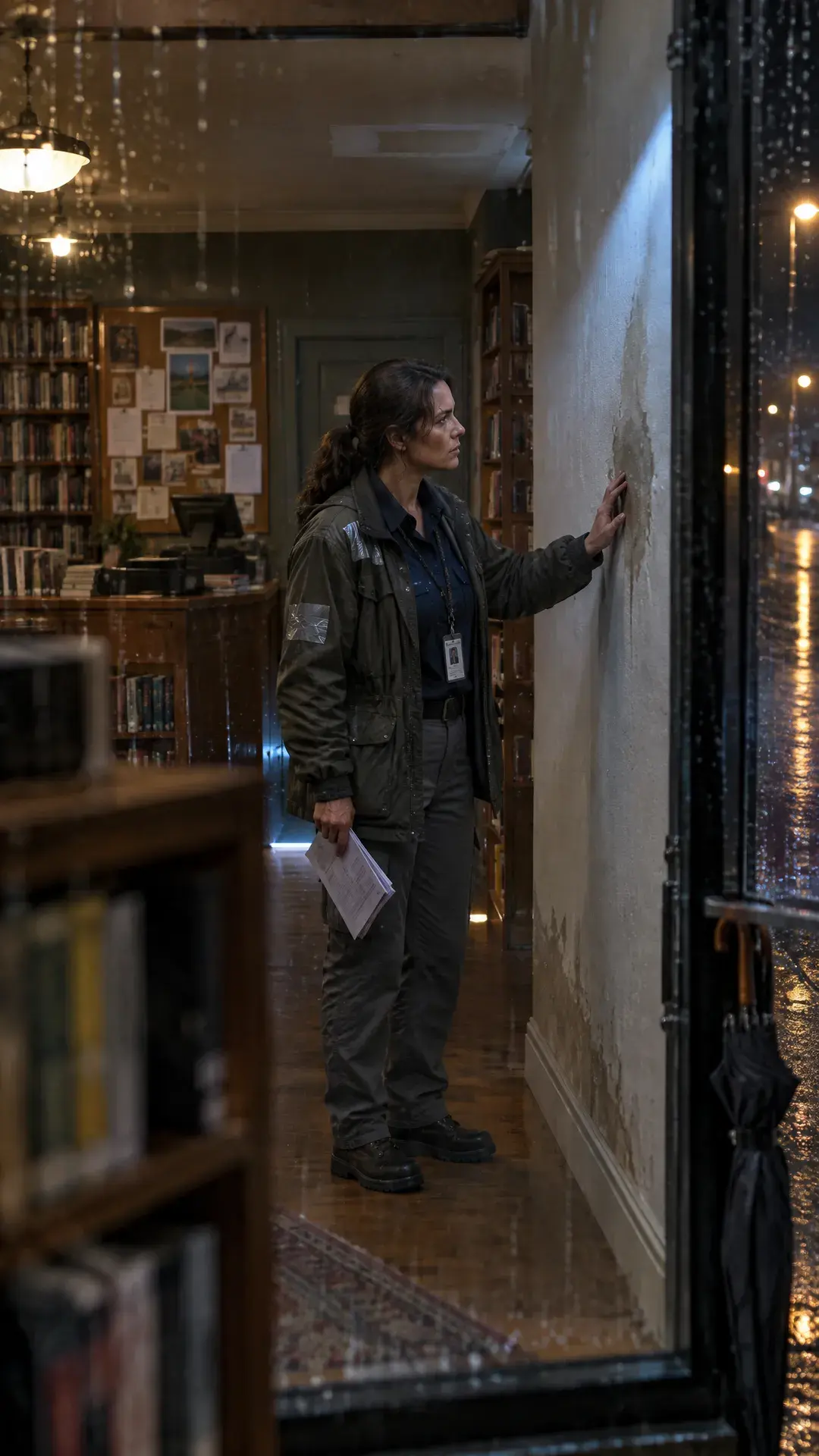
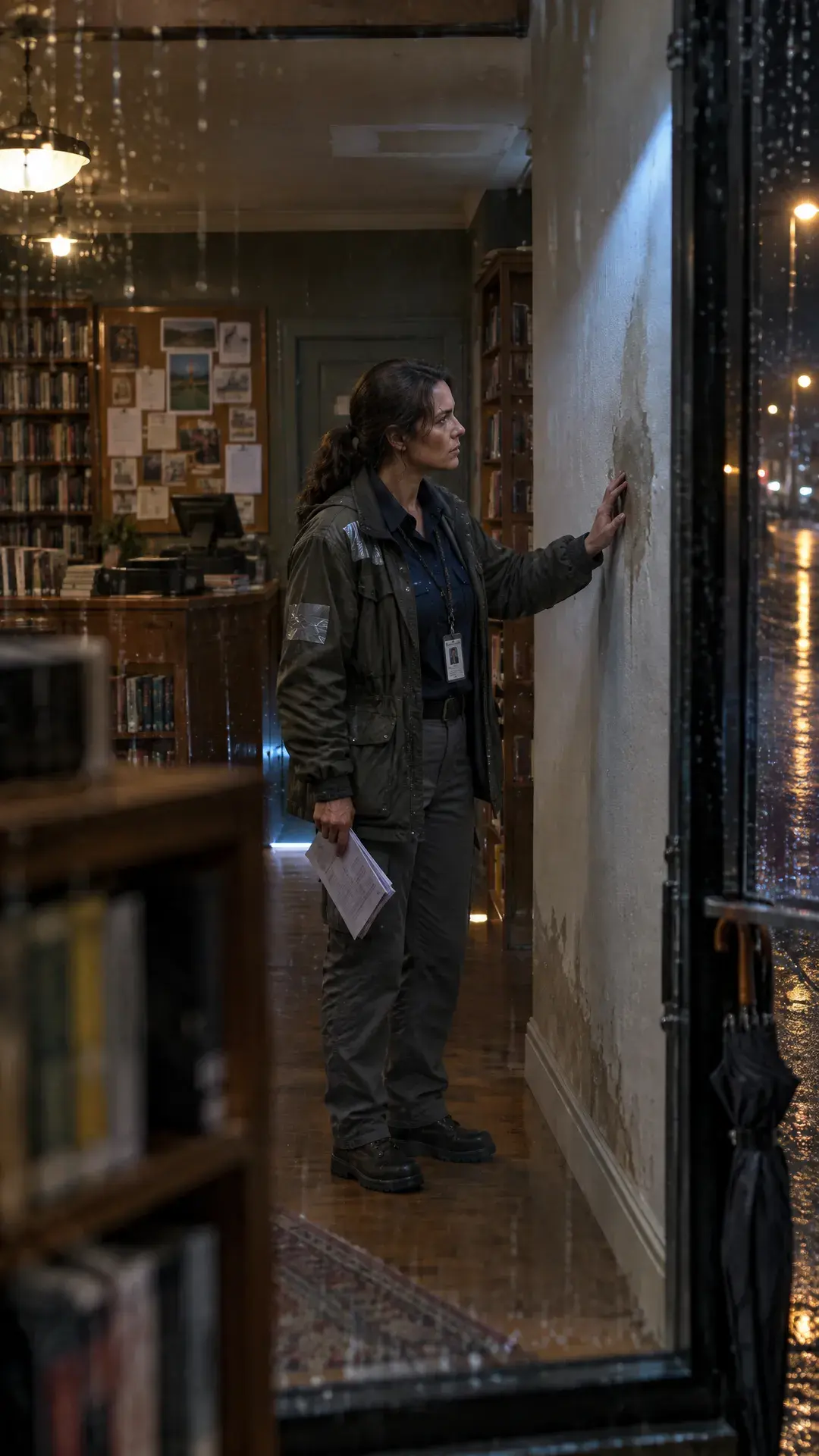



The rain had turned Brewer Street into a black mirror by the time Rhea Calder unlocked the door of 214. The key was the city's now, part of the condemnation file, and it turned easily — which annoyed her more than a stuck lock would have.
She stepped inside and stopped. The lights were on.
The shop should have been empty. The board-up crew had been scheduled for noon, and Brandt's email said the owner had finally taken the relocation packet. Instead the air smelled of old paper and cold coffee, and every shelf was still full. A corkboard by the register held flyers for a neighborhood meeting, a lost cat, a Spanish class. The ceiling patch in the back room was the same fresh white square she had photographed last week.
She closed the umbrella, hung it on the door handle, and started the walkthrough the way she always did: left wall, rear windows, water stain. She photographed the stain, the crack above it, the renewed patch. Then she folded open the survey from her jacket and looked from the page to the wall and back.
'The closing notice said Thursday,' she said, to the room. A line of light under the back-room door said the shop was not empty.
'Today is the twenty-second,' she added, half to herself. 'The crew was supposed to come at noon.'
She set the survey on the counter, spine toward the corkboard. 'I'm here to certify the building. Nothing about this building is dry.' She tapped the page. 'Nothing in this report is wet. Somewhere between my file and your ceiling, someone decided which one was true.'
She pulled the demolition schedule from her folder and laid it beside the survey. Seven a.m. The machine would not wait for her.
'I can't stop it,' she said quietly. 'But I can walk through here again at first light, before the crew unlocks the gate. So if there's something that makes this building more than a file to you — tonight's the night to show it to me.'
At the door she paused. 'I'll leave it unlocked. That's not procedure. You have an hour to decide what I'm supposed to see.'