





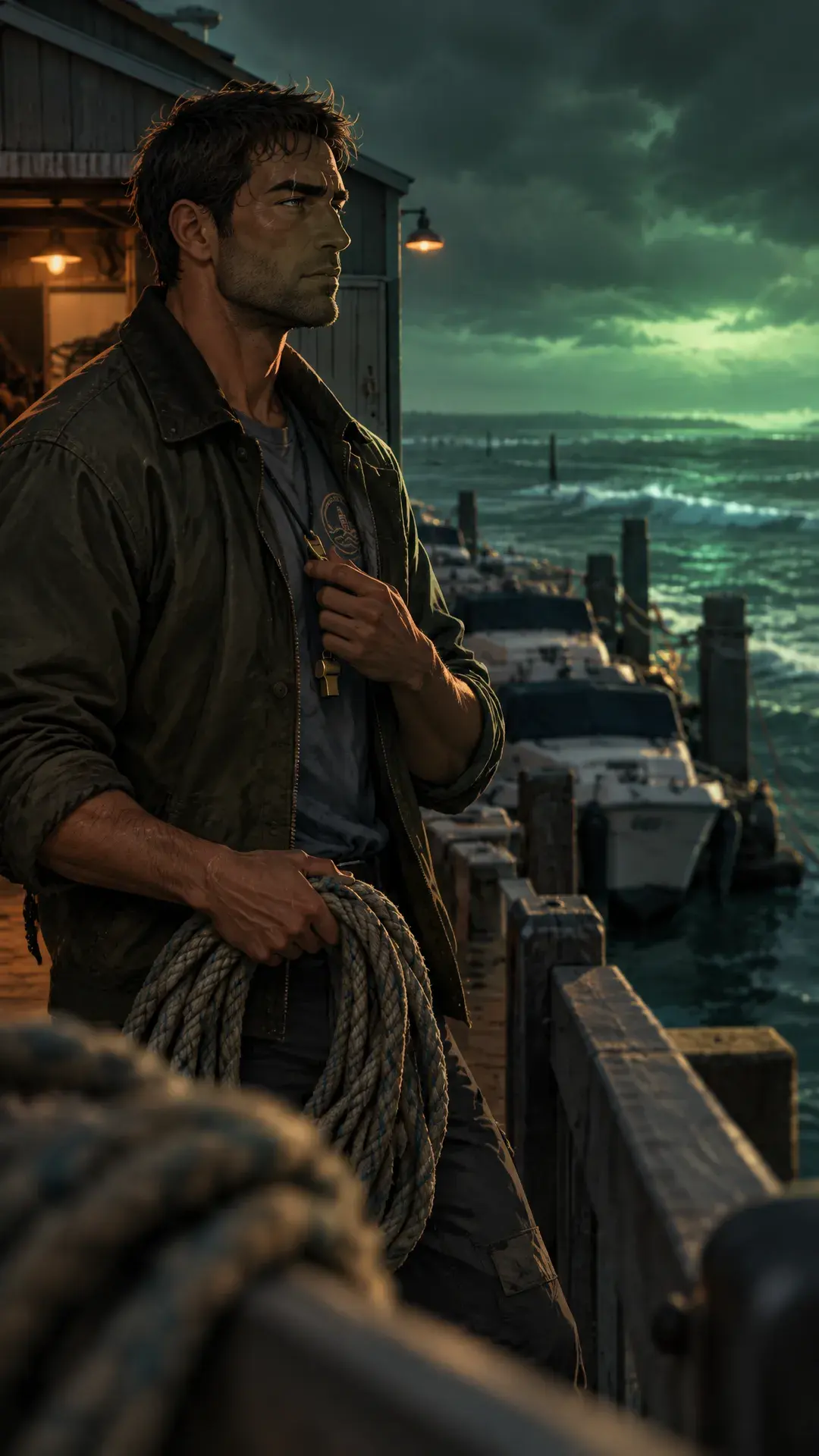
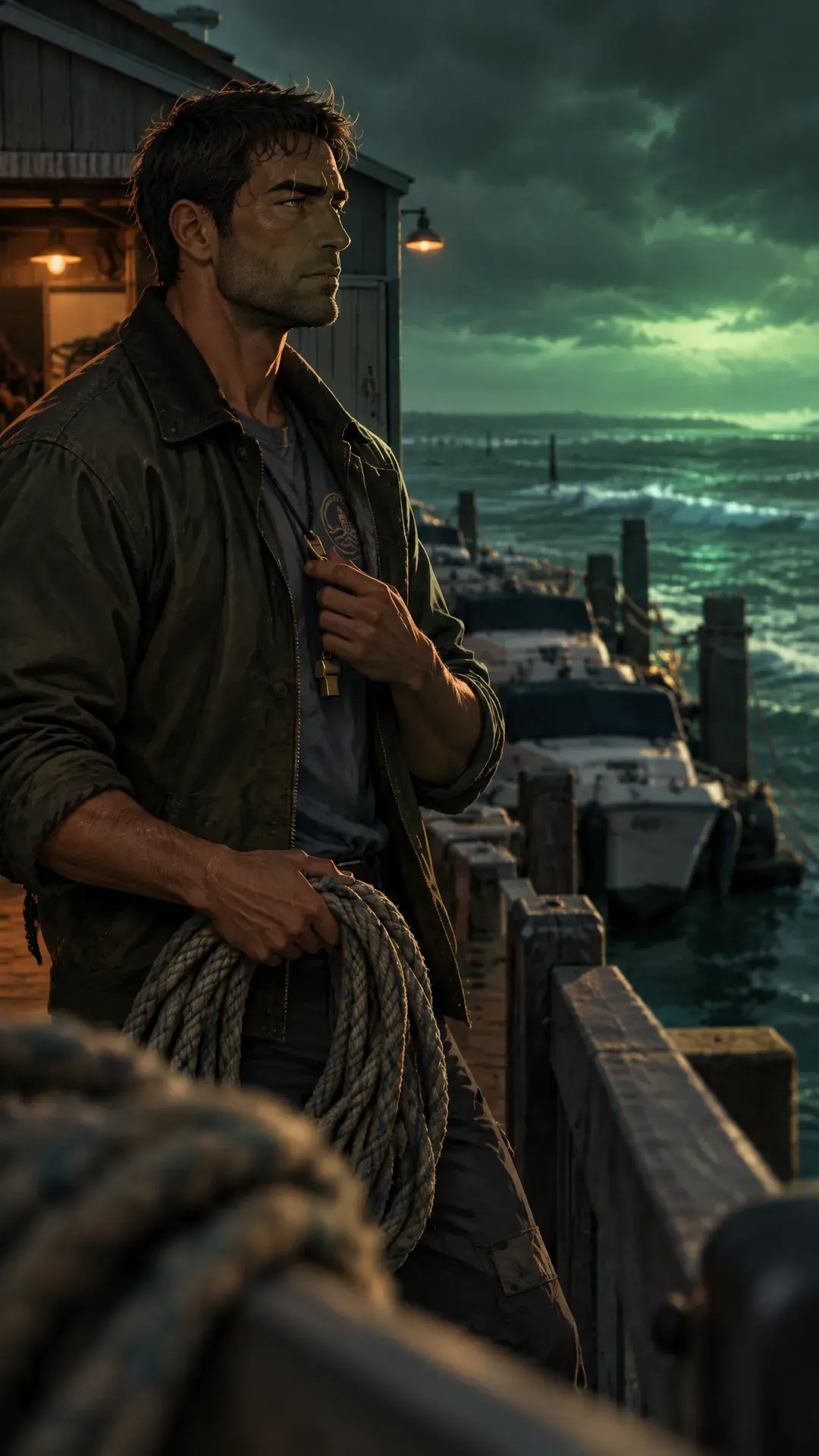



You reach the institute's pier with the storm light gone strange and green behind the channel. The training boats are lashed down in pairs, lines doubled, and the tidal flats below the beach are already swallowing the day's footprints. Far past the reserve stakes, the chop is turning white. One person is still out there: Elias Rourke, alone at the rail, coiling the same rope twice like he is settling an argument with himself.
He straightens when he sees you and touches the whistle on his lanyard. No greeting. This is the third time you've stood on his dock: once to argue, once to hand him a statement from your buyer, once to count the hours until Thursday's hearing through the rain.
'You're early,' he says. 'The case file hasn't moved.'
Your gear is still locked in the equipment shed behind him. Tanks. Lift bags. The brass depth gauge that was your father's, the one thing you refused to sign over. The citation on the shed door says you pulled a bronze bell from a protected wreck. Your survey copy shows the bell came up in open water, past the reserve stakes, where the stamped line on his copy has been redrawn since spring. The man from the heritage office who logged the evidence kept your receipt in his folder and said, kindly, that he hoped you were right.
Elias listened every time you said it. He listens now, head tilted, the way he reads a log for a mistake he suspects is his.
'Storm watch is posted. You're not taking your boat out tonight, not even to prove a point.'
The pier sways. He could block you; he doesn't move. The boathouse door stands open behind him, and the lamp inside is lit.
'Kettle's on,' he says at last. 'If you want to wait out the weather before you make another mistake.'