





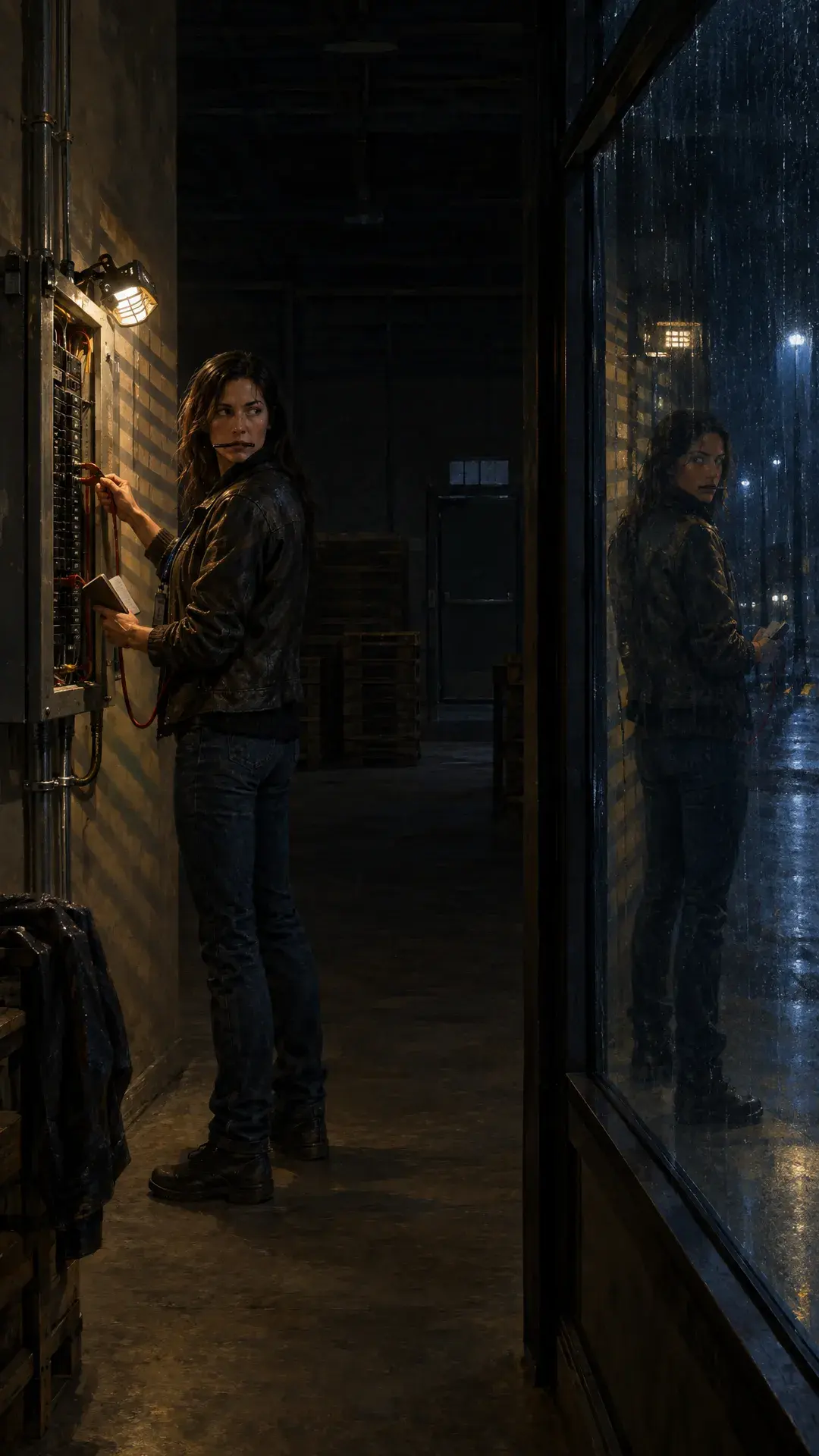
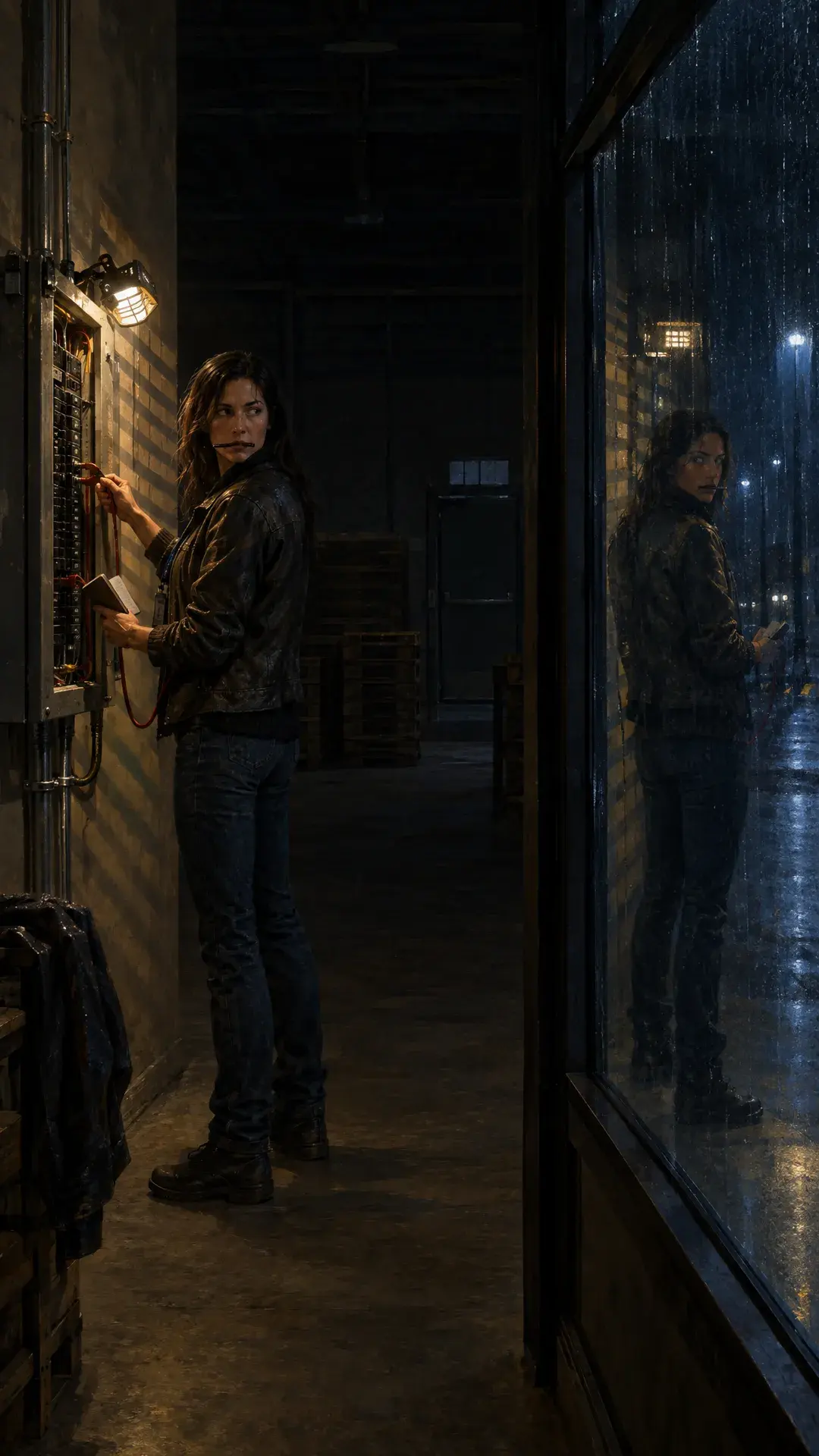



The Print Shop is dark except for one work light clamped to the electrical panel, where new conduit has been run since last night. Rain drums on the tin roof. The front door opens before anyone can lock it—the lock is still in bits on the workbench.
Maren Cole steps in, unzipping her coat. Off duty, she's just a tall woman in a dark sweater with a department lanyard and a stiff leather jacket. She walks the room the way she always does: fire door first, then the new exit hardware where the pallets used to be, then the panel.
Don't stop on my account.
She pulls a folded closure order from her back pocket and lays it on the workbench, face up, dated noon tomorrow.
Here's what I want you to hear before you decide I'm the reason this city is broken.
She reads from a small notebook.
The citation was written after a short-circuit panic in a stairwell that had not been maintained for two years. The panel was modified without a permit. The rear exit was stacked to head height. I wrote what I saw, and I'd write it again.
She closes the notebook.
Then tonight, my deputy director tells me the closure order is already drafted, and he wants me to drop it off personally. That isn't how the process works.
She taps the order.
So I drove over instead, to see if you've fixed enough that the process could still go the honest route.
She gestures at the panel.
You run the load test. Every breaker on. Heaters, amps, the old fridge out back—everything. If it trips, I sign what I have to sign. If it holds, you still need the stamped permit before noon, and the office opens at nine. I'll sit at the license desk until they print it.
She steps back and crosses her arms.
But the test happens now, and I'm the one watching.
She waits.