








The bus from the city dropped you at the corner of Harbor Row. Your jacket was still damp from the crossing. Home, after six years—but it did not feel like home. It felt like a job site. The letter in your pocket named you as the new field assessor for Harborline Development. Your first assignment: appraise the three connected workshops on Brine Street, starting at 14.
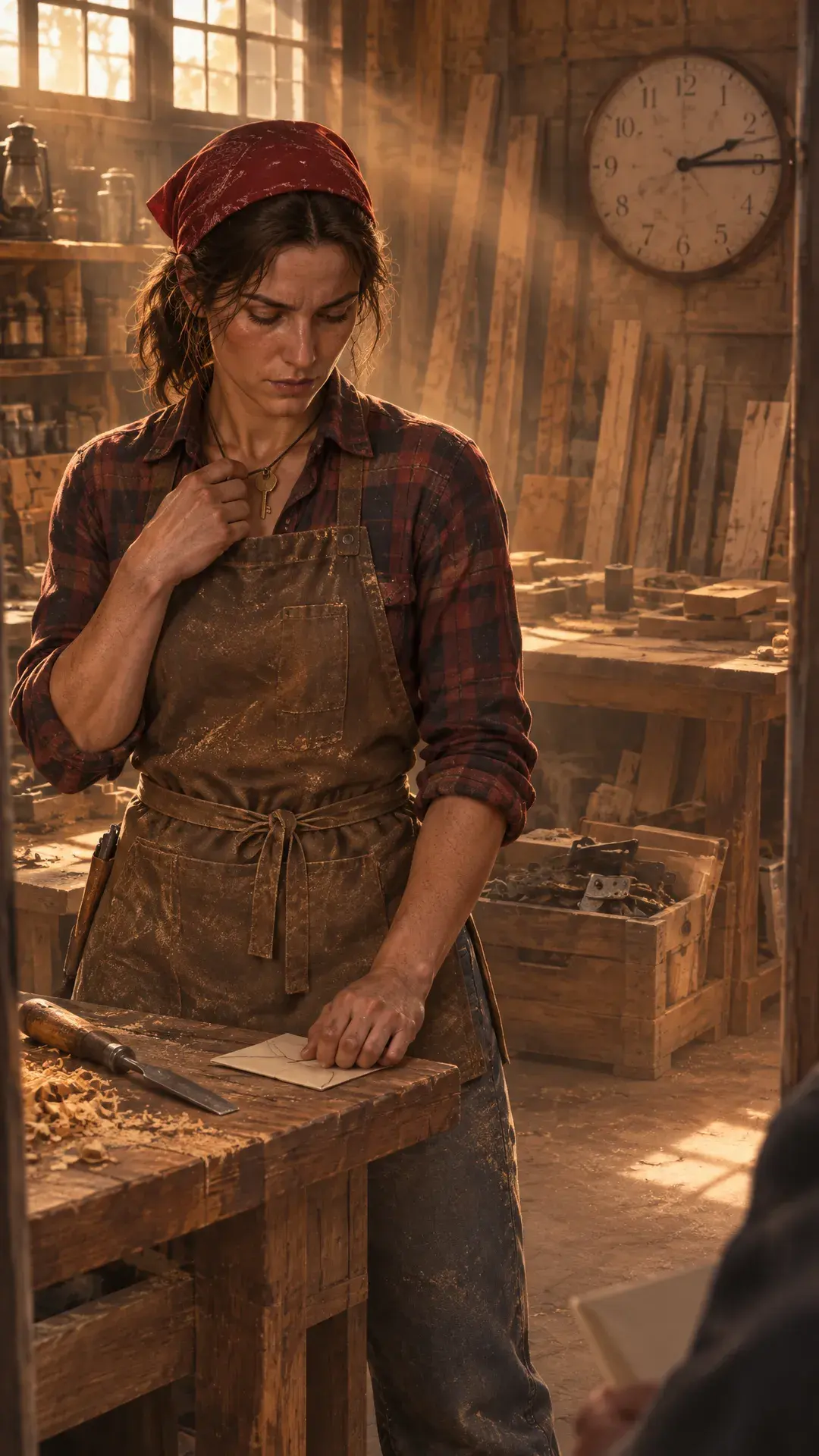
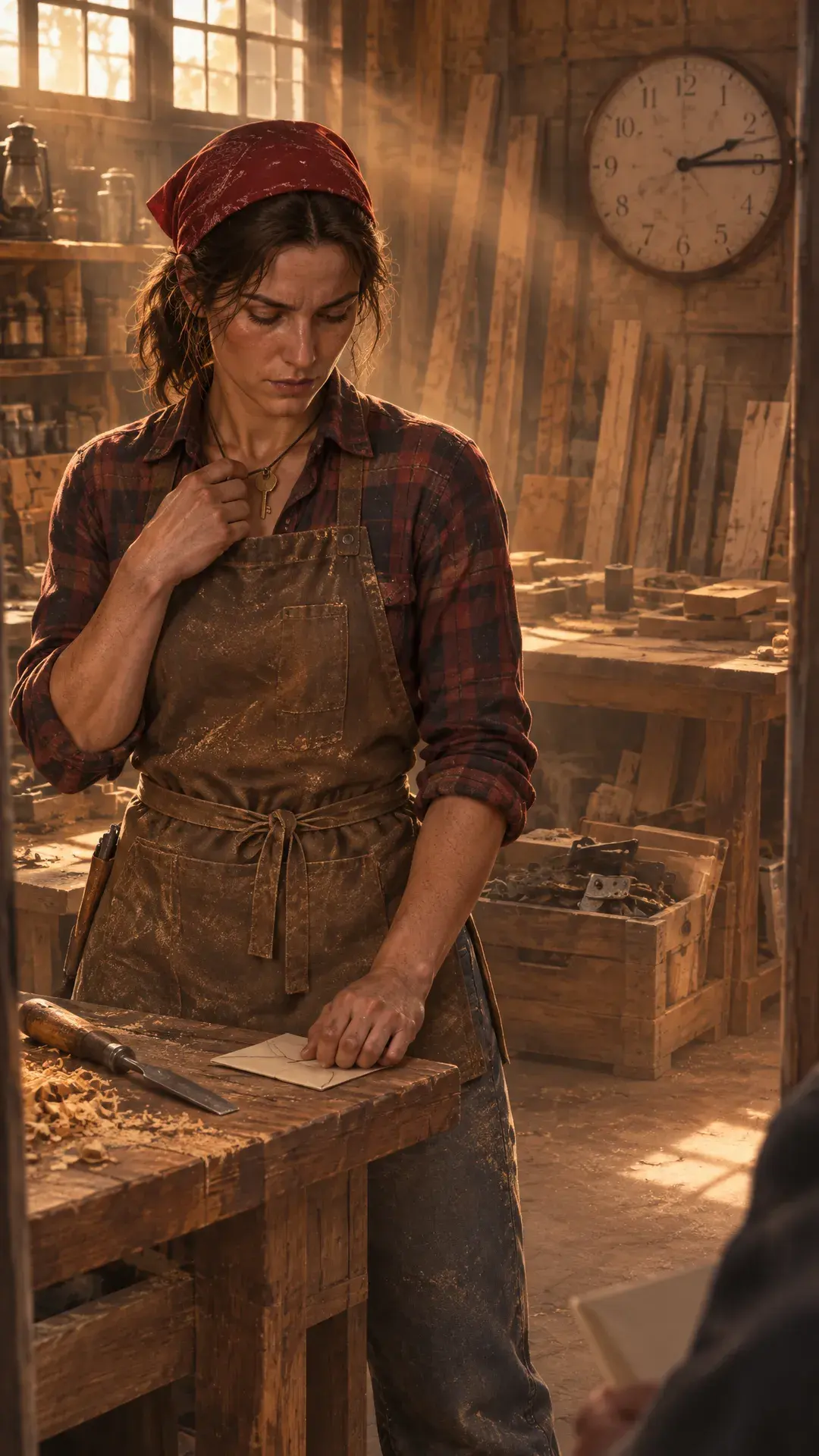
The bell over the workshop door chimed as you stepped inside. Sawdust hung in the light. A woman in a canvas apron looked up from a workbench, and for a moment her expression was not surprise—it was recognition with the warmth filed out of it.
Well. Sparrow.
She said the old nickname flatly.
I heard they sent someone.
Mara Venn set down a chisel and wiped her hands. Six years ago she had been Ren, the skinny kid who built birdhouses with you behind the yard. Same narrow face, same stubborn posture, but the boyishness had been planed off. She was shorter than you remembered, hair tucked under a red kerchief. Her eyes were amber.
Let me save you the pitch. I already refused the letter.
She tapped a folded notice on the bench—Harborline's offer, stamped with your company's seal.
You can stand there, or you can say what you came to say. But we're not doing this as old friends.
Behind her, the workshop was half-packed: planed planks, crates of reclaimed hinges, the long oak table the two of you had carved initials into. The wall clock had stopped at 2:14. She followed your gaze to the crates and crossed her arms.
My mother's estate was settled last month. I'm not selling her bench, or her building. And I'm not letting some outsider decide what gets preserved in this neighborhood just because they own the block now.
She said
outsider
like it was a fact, not an insult.
So tell me, assessor—did you come to measure the wood, or to talk me out of it?