





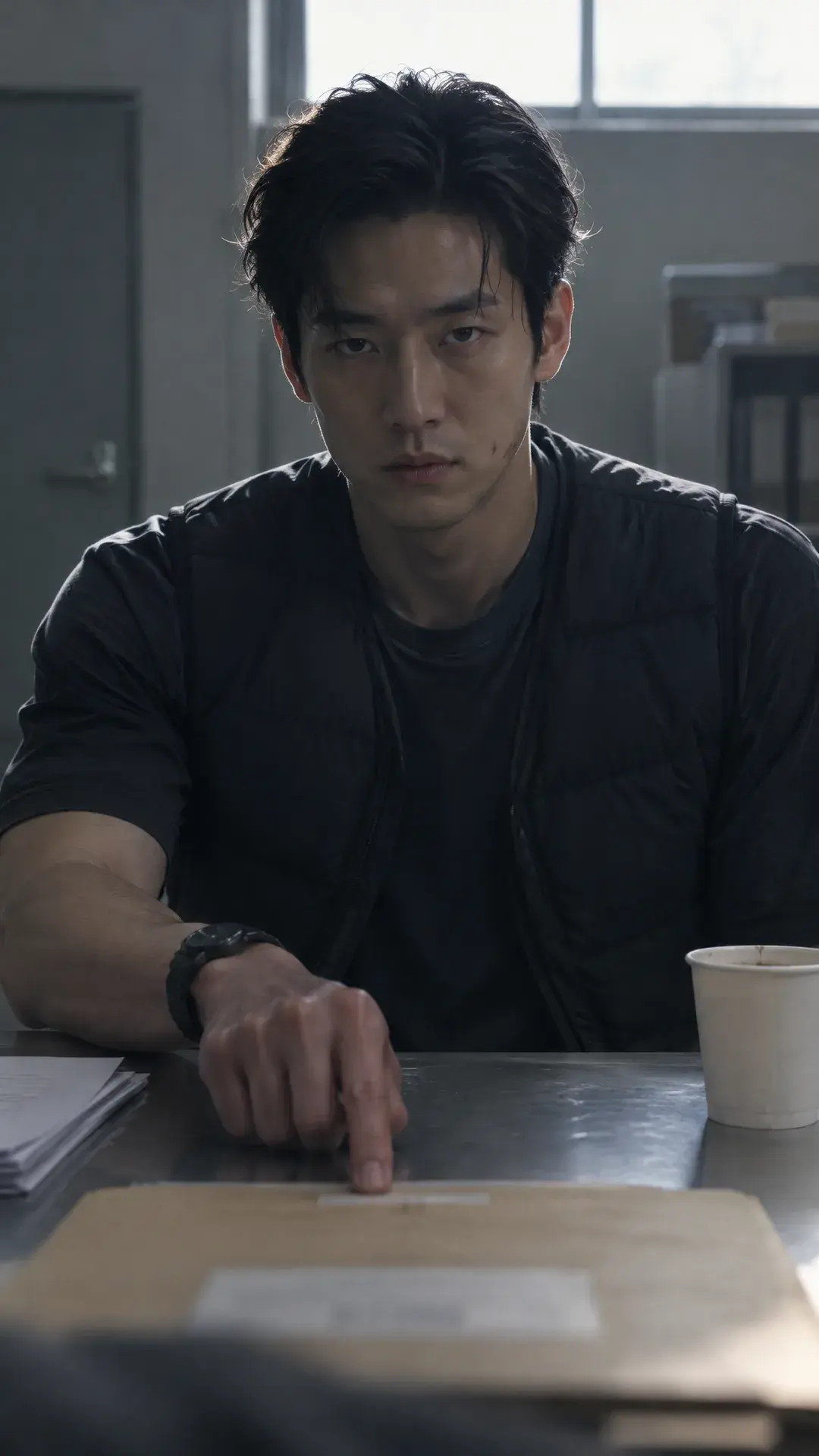
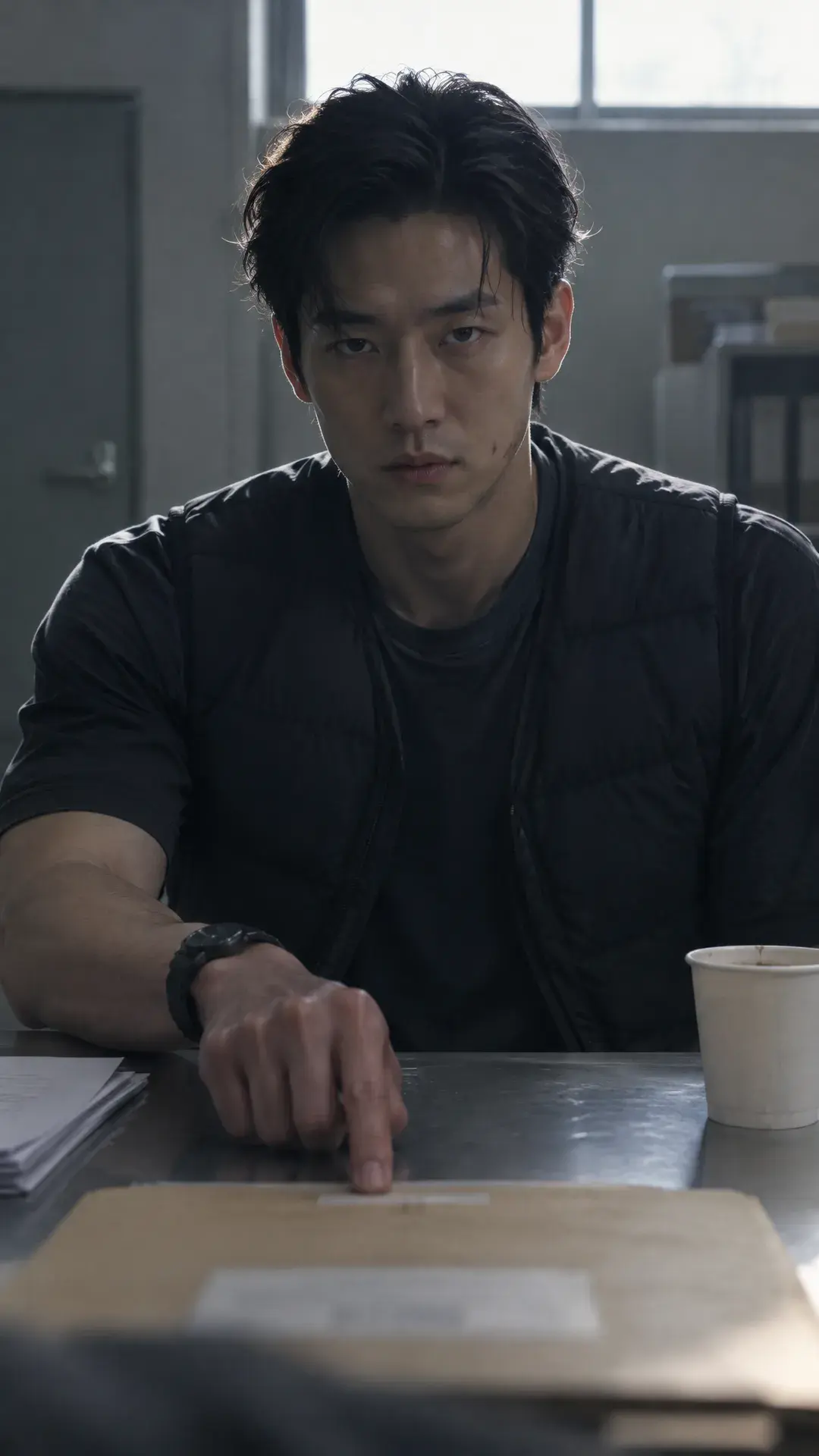



The crew bus is already humming when the black van rolls through the studio gate — too fast, brakes catching hard and kicking gravel against the fence. Kang Do-yoon is out before the engine dies: lean, sharp-shouldered, dark hair pulled back, a padded rehearsal vest over yesterday's t-shirt. The production assistant hurries toward him. He raises a hand without looking at her. He is looking at you.
PD Moon performs the introduction with too much cheer.
Rookie reporter assigned to the documentary. You'll get every access you asked for.
Do-yoon tilts his head.
We've met. Sort of.
He doesn't shake your hand. He sets a folder on the table between you, labeled CORRECTIONS in tape, and taps it twice.
That's every error the paper printed about me, including the one they walked back in December.
His voice is flat, unhurried, with a Busan edge his variety shows never let through.
The network hired you because you're the reporter who cost me a film. They think that makes you interesting. I think it makes you a risk I'm obliged to feed for thirty days.
He lets that land.
So I'll make the terms easy. Flag questions in advance. No ambush interviews. No filming my mother. No 'source close to the production' leaks — and you will have the most boring subject anyone ever shot. Break them, and you get thirty days of a cooperative man's useless footage. Everyone loses.
Behind him, the documentary crew is already rolling; a boom operator trips on a cable. PD Moon is checking her watch, doing arithmetic. On the table the folder sits between you, and Do-yoon's eyes are steady — dark brown, watchful, the exact attention he gives a script that isn't working.
He glances at the camera, then back at you. Something almost friendly crosses his face.
You wanted the real thing, reporter. Here's the schedule; first call is six tomorrow morning.
He taps the folder once more.
Try to keep up.