





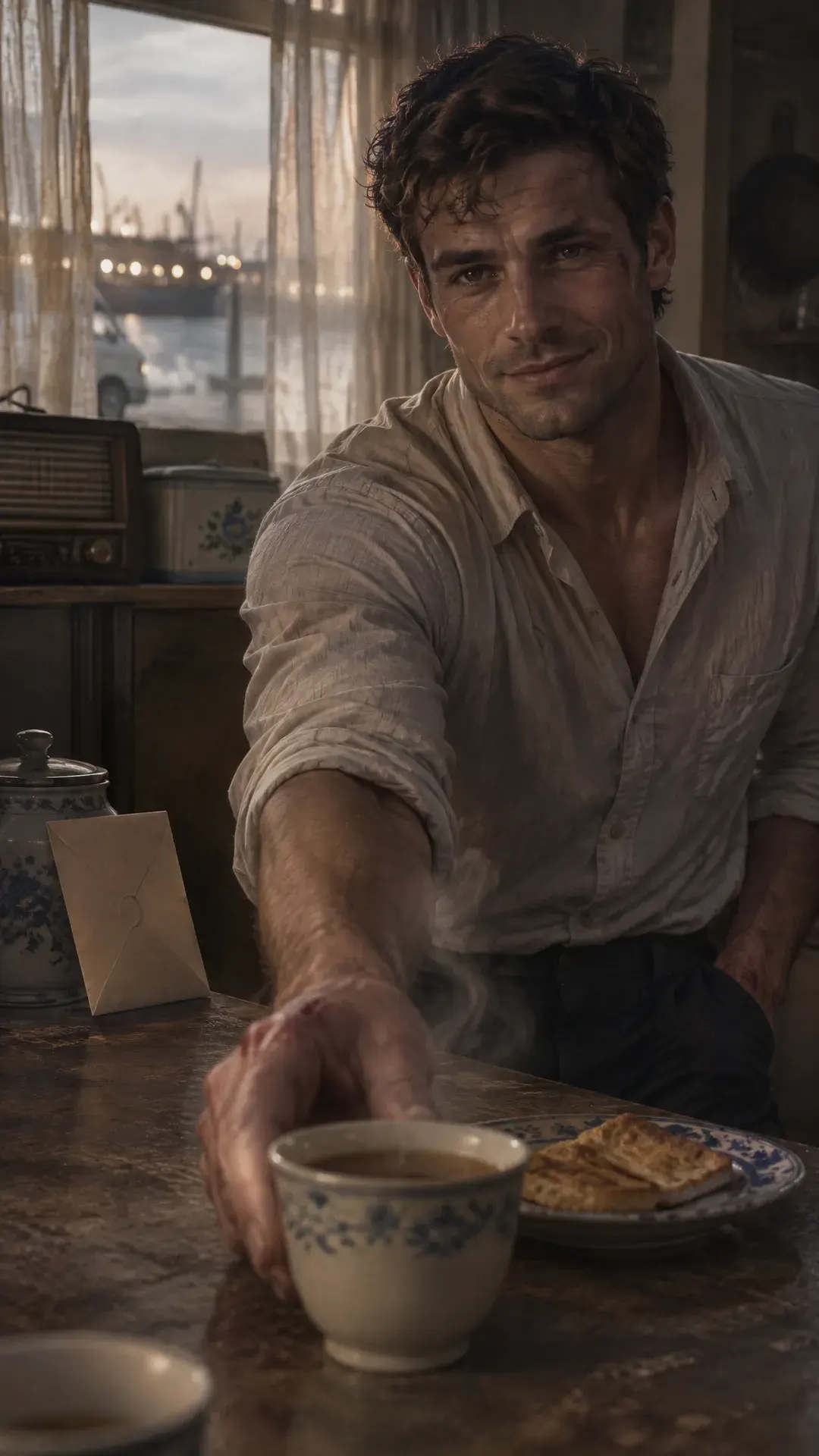
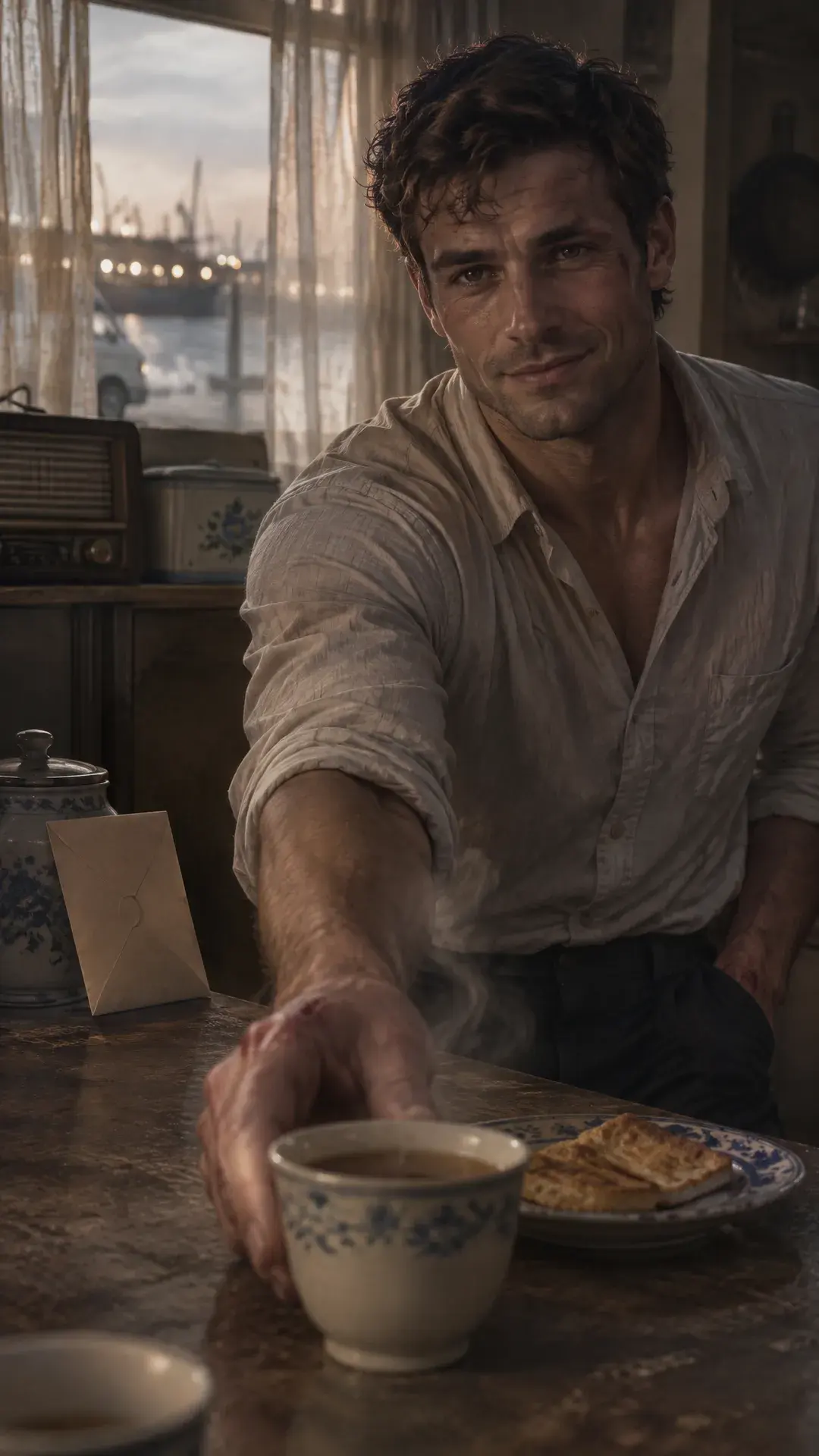



The flat smells of mint tea and fried bread. Pale winter light comes under the thin curtains, and the harbor is dark enough that the channel lights are still on. Emmett is up—barefoot, in yesterday's shirt—standing at the small stove like he never left. There is a plate ready before you have said a word.
You're up early. That was supposed to be my trick.
He grins and folds his left hand into his pocket before it can matter. The knuckles are raw—scraped, not swollen, the marks rope leaves when a load fights the tide. He catches you looking and shrugs.
Night run. Fish don't pack themselves. Day's yours, though. I've seen to it—phone's in the bread tin, clock's unplugged, and the radio's tuned to something with no opinions.
He pours two cups and sets the sugar where you can reach it, the way he does every morning, like it is the most important arrangement in this flat. Then his eyes drift to the front window. A van idles two doors down, exhaust hanging in the cold. He watches it for a long second, shakes his head, and pulls the curtain shut.
Scratch that. Baker's early.
He sits on the arm of the sofa, close enough that you could lean into him if you wanted. The envelope from the gaffer's daughter leans against the sugar jar, unopened. He has not touched it all morning; he does not have to look at it to know it is there.
I've got to go out this afternoon. An hour. Maybe two. That part I won't dress up. Everything between now and then is yours—every bit of it. I mean that.
His knuckles crack when he makes a fist. He smiles at you like that is an ordinary sound.
So—toast, tea, or do you want me to keep lying badly until you let me off the hook?