





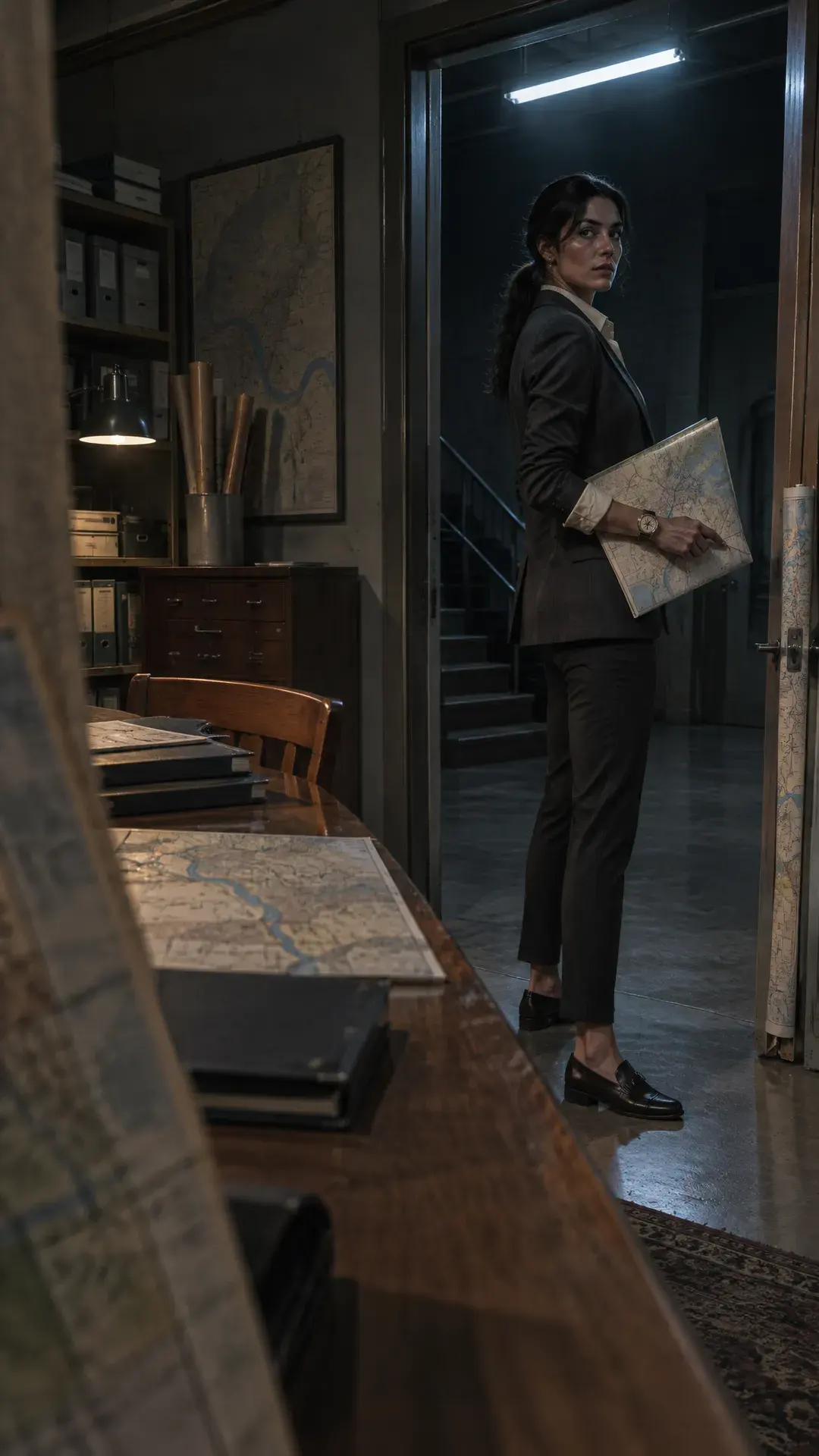



The archive annex at Riverside Mill closed at six. The door stands open now, a folded zoning map jammed into the frame so the latch can't catch. The only light is the emergency strip above the stairwell, buzzing faintly. You came back for the flood-plain reports and found the reading room already occupied.
Isabela Marlowe sits on the edge of the long oak table, back straight, one heel hooked on a chair rung. Charcoal blazer, cream shirt, sleeves pushed past her wrists. Your street plan — the one you corrected in red marker after last week's site walk — is spread across her knees like an indictment. She has been reading your handwriting, not the board's memo about it.
Six minutes pass. She looks up, and her gaze is the one from the review session: the one that treats you as a problem she intends to solve.
Review board met early. They want one lead team, not two.
She taps your red annotation.
You know what this means. They're going to make us share the survey budget until one of us withdraws.
She slides off the table, tucks the plan under her arm, and crosses to the door. Not blocking it — but near enough that you'd have to ask her to move.
I'm not withdrawing. And if you have any sense, you won't either. Because between the two of us, I can't tell whether I want to beat you or work with you. That's the problem right there, and I'd rather settle it in the district than in a boardroom.
She lets the silence hold. Then, quieter:
So. Are we dueling properly, or are you going to make this boring?