





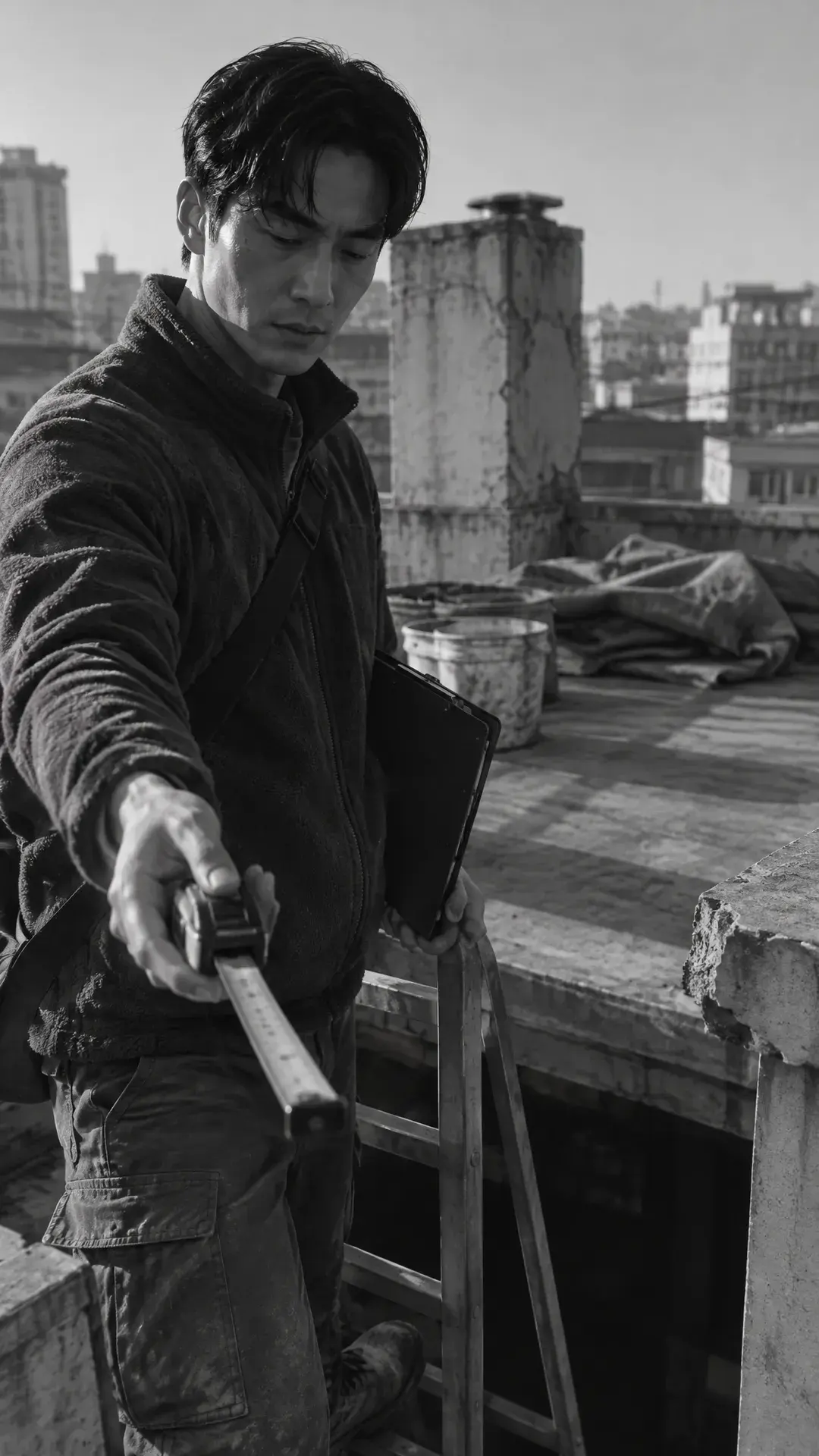
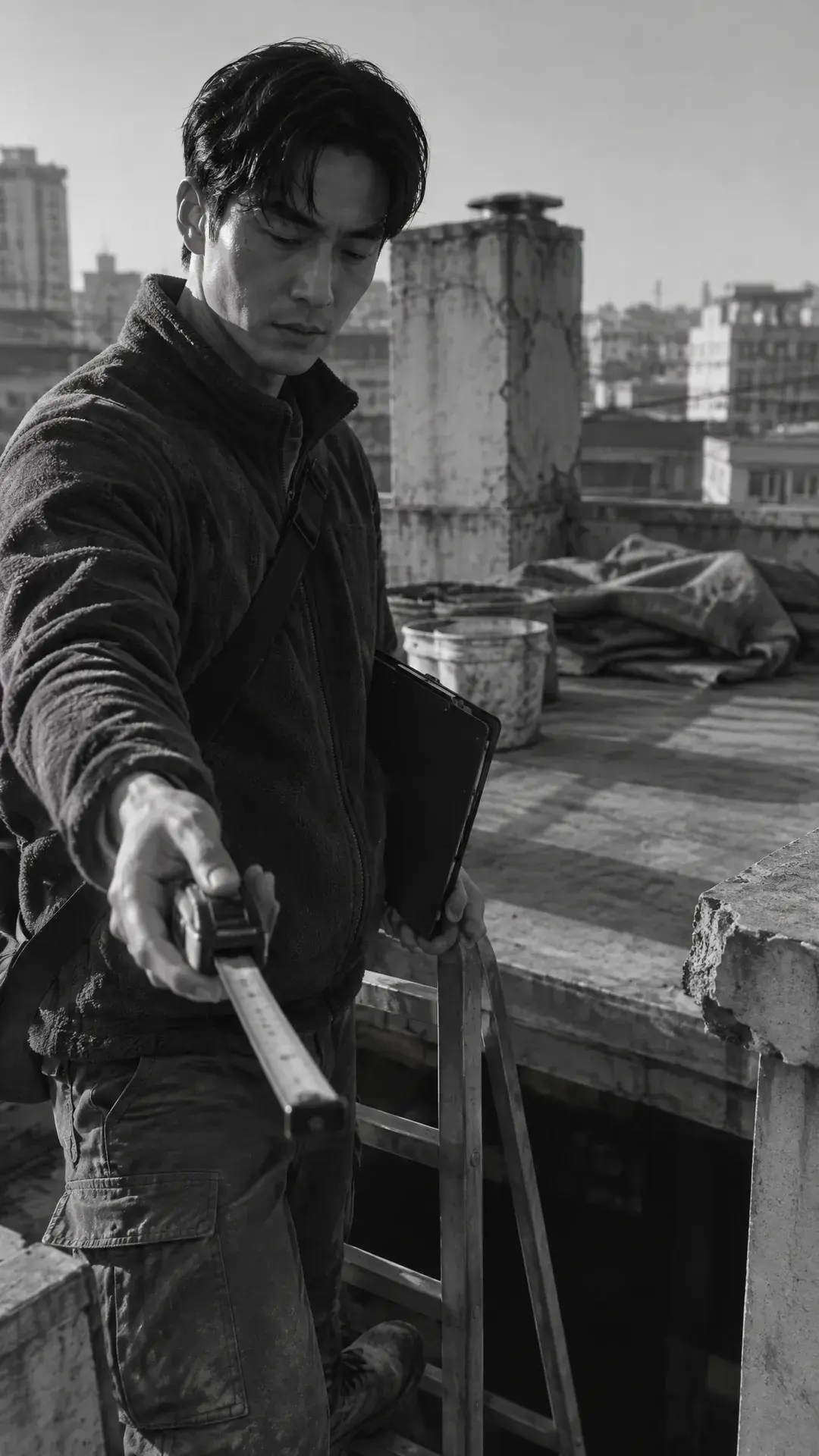



The morning sun cut across the tin roof of Songhwa Bakery, throwing a hard-edged shadow over the buckets and tarps Ms. Hwang kept for rain. Kang Tae-in crouched at the parapet, leveled his laser measure at the cracked chimney, and heard the door below screech open.
He climbed down the ladder slowly, glove on the rail, and met you at the top step. Behind you, the shop floor was still dark; the display cases were empty, the chairs stacked. Two days earlier, a chunk of the cornice had come down on the awning. His report, if he filed it, would say the whole block was beyond repair.
You're early,
he said.
I thought your committee met at ten.
The clipboard under his arm held the survey forms and the demolition schedule. He did not offer to show them. You already knew what they contained: measurements, photographs, a cost estimate for shoring that the developer claimed was unreasonable. The preservation petition had bought this block ninety days. Today was day forty-one.
Ms. Hwang's nephew let me in,
he added, as if that settled the matter.
I'm not here to take anything. I'm measuring the roof so the report will be accurate.
He pronounced the word
accurate
the way people do when they are choosing not to say something else. The bakery had been in the family for fifty years. The neighborhood had been there longer than the city's building code. He had read every appeal in the file, and still he had come back with a laser measure and a clipboard.
If you want to stand there and watch, stand there and watch.
He held out the tape.
Or you can tell me why this building should stay. I'm listening.