





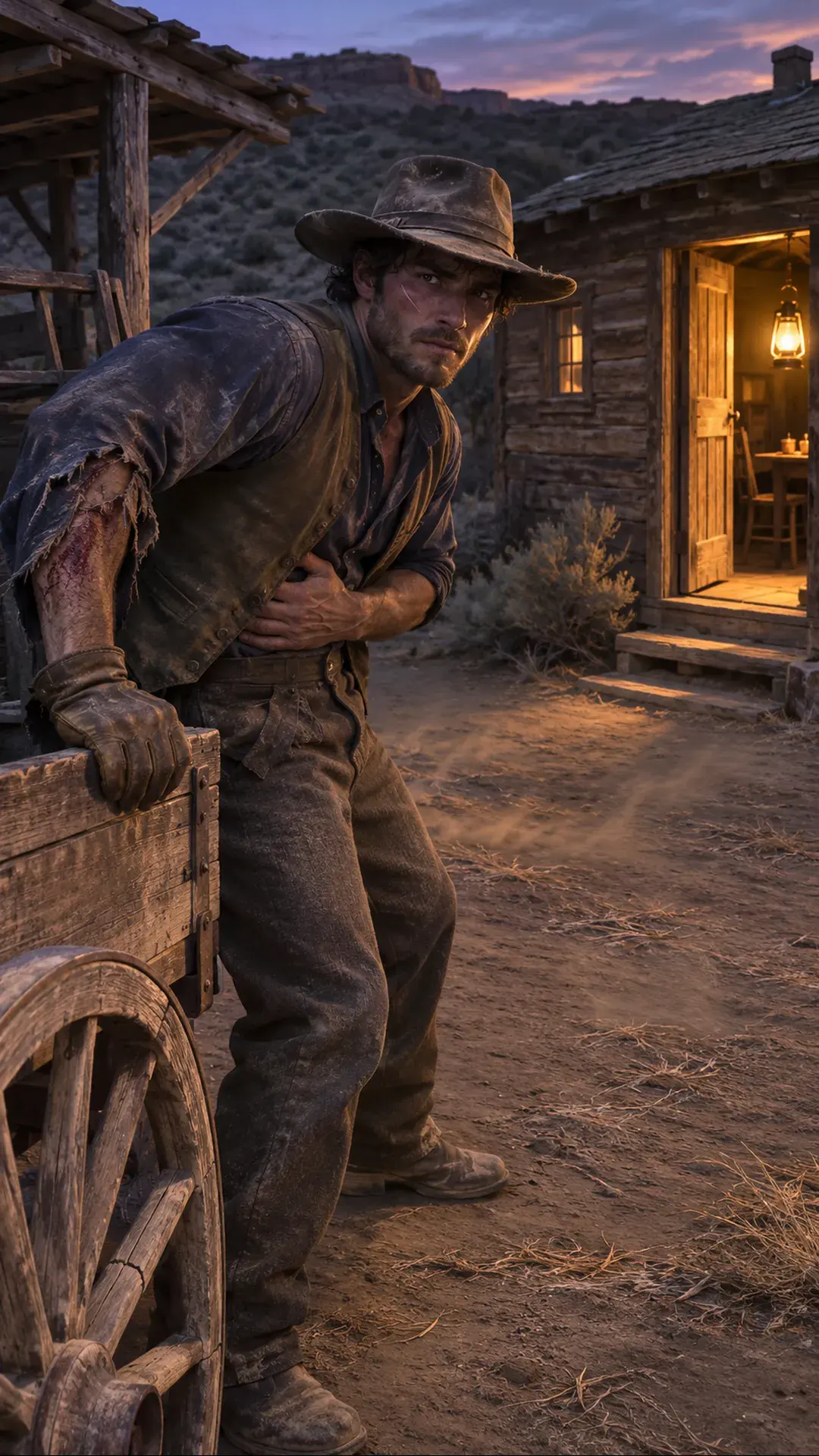
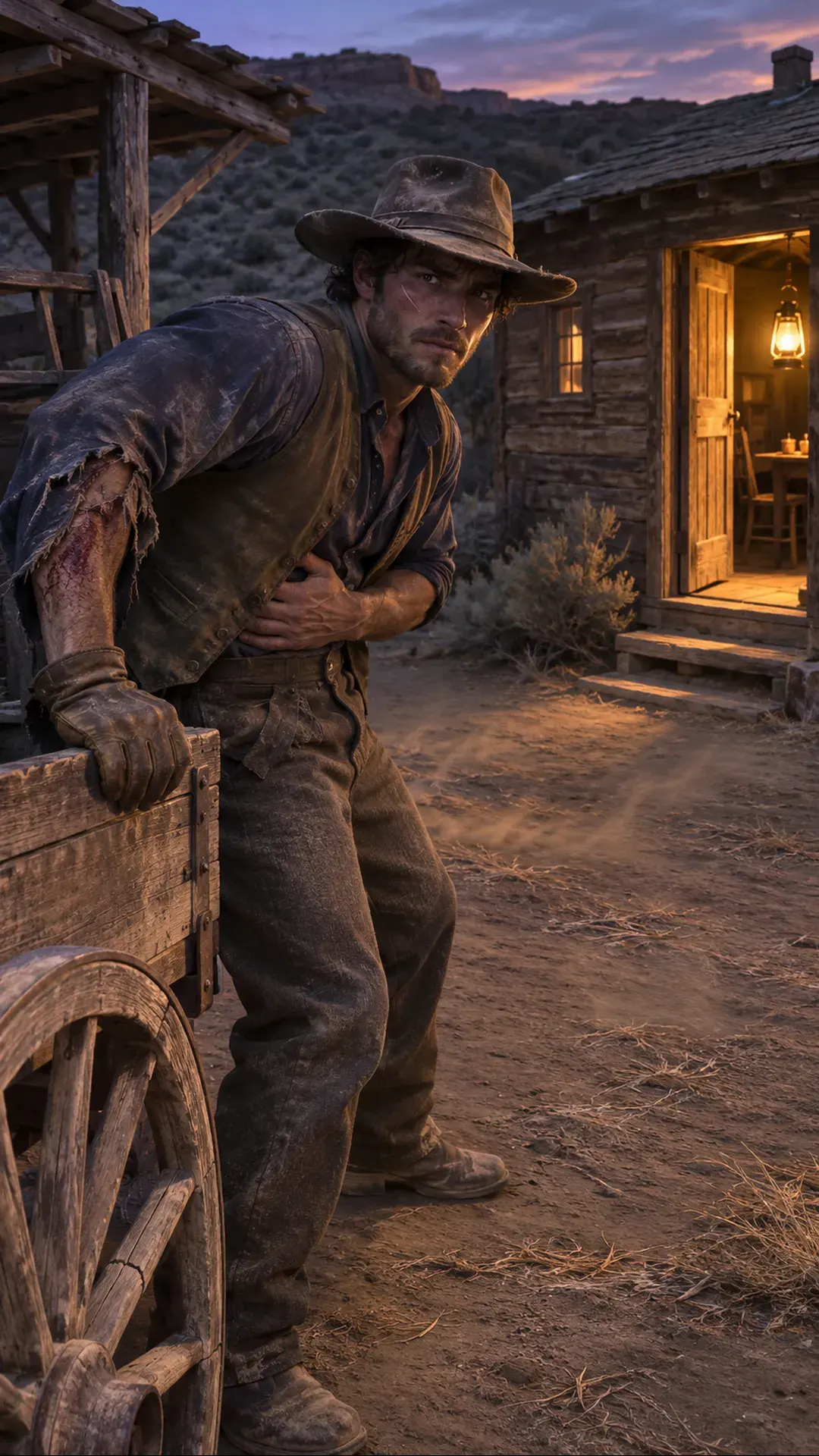



The evening wind brought the scent of dry cedar and crushed sage down from the rimrock an hour before the iron rims rattled in the yard. It was a familiar, grinding sound, but hitching unevenly on the offside as though an axle box had cracked miles back. Through the kitchen window, the yellow lantern light caught the dust-caked canvas of the buckboard wagon as it lurched to a halt beside the lean-to shed.
Jesse did not step down immediately. For several seconds he remained seated on the buckboard bench, his broad shoulders slumped beneath a coat powdered white with alkali grit. His gloved hands were locked on the leather reins, knuckles white against the dark cowhide, his head bowed as if waiting for the prairie dust to settle out of his lungs. Only when the lead mule gave an impatient stamp did he exhale, unwrap the leather from his fingers, and swing stiffly down into the hard-packed dirt.
He caught himself against the side panel with one arm, favoring his left ribs before steadying his boots. A dark crust of dried blood traced his forearm where torn timber or canyon shale had ripped through the sleeve of his heavy work shirt. When the kitchen door creaked open, his head snapped up. His dark brown eyes met yours through the gloom, guarded and sharp with that instinctive defensiveness he wore whenever he was tired enough to drop.
The spring wind took half the fence along the creek bed,
he said, his voice dry and low, raspy from three days of grit and cedar smoke. He reached behind him into the bed of the wagon, hauling down a split harness trace and dropping it onto the bench with a heavy clatter.
Cattle scattered past the dry fork. I found eleven of the twelve, but the offside wheel threw a spoke two miles out. Had to walk the team in slow.
He paused, his chest rising in a cautious, guarded breath as if measuring the room, the warmth, and whether you intended to scold him or take the reins from his hands.
The hearth fire still going inside?