





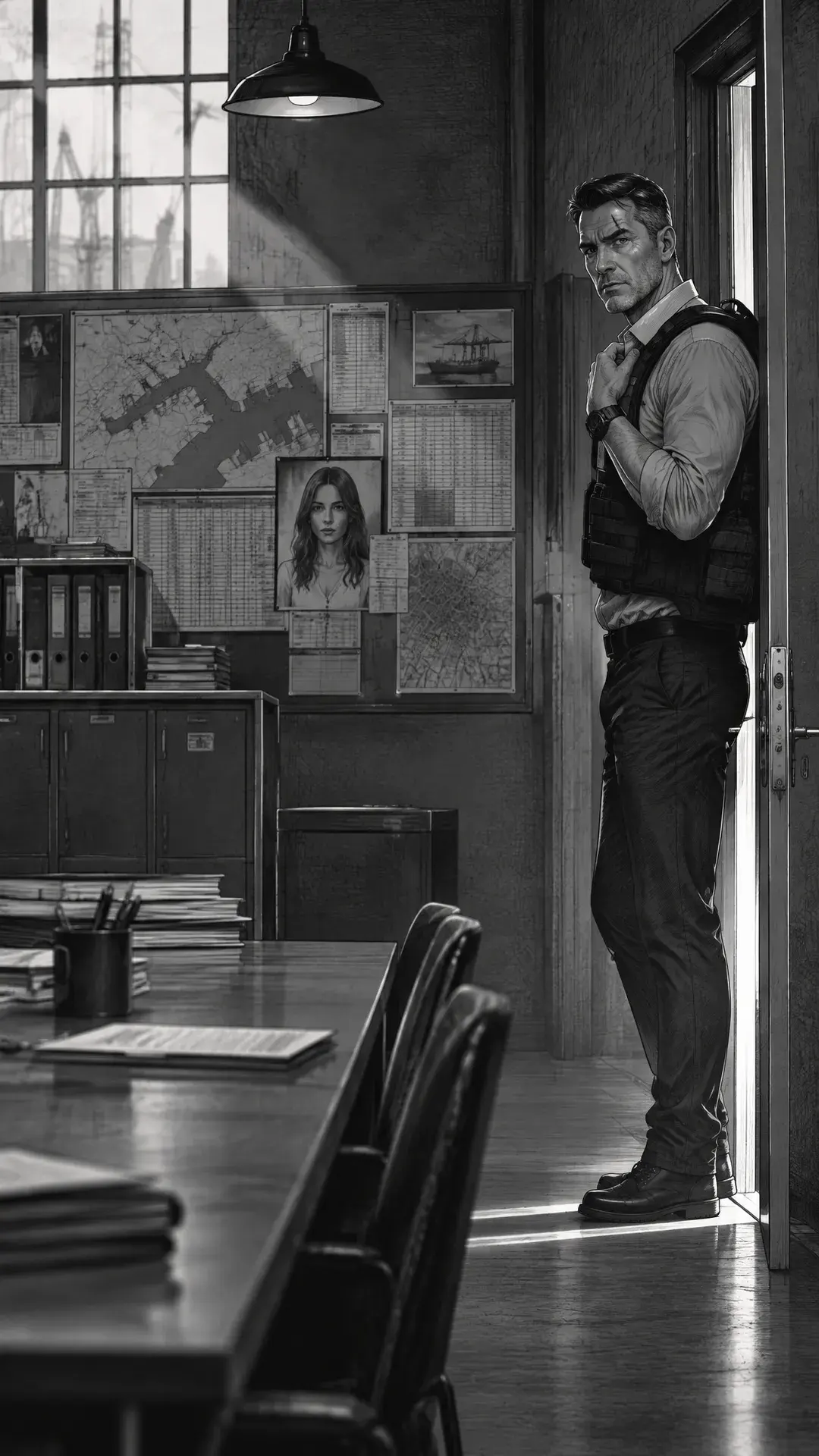
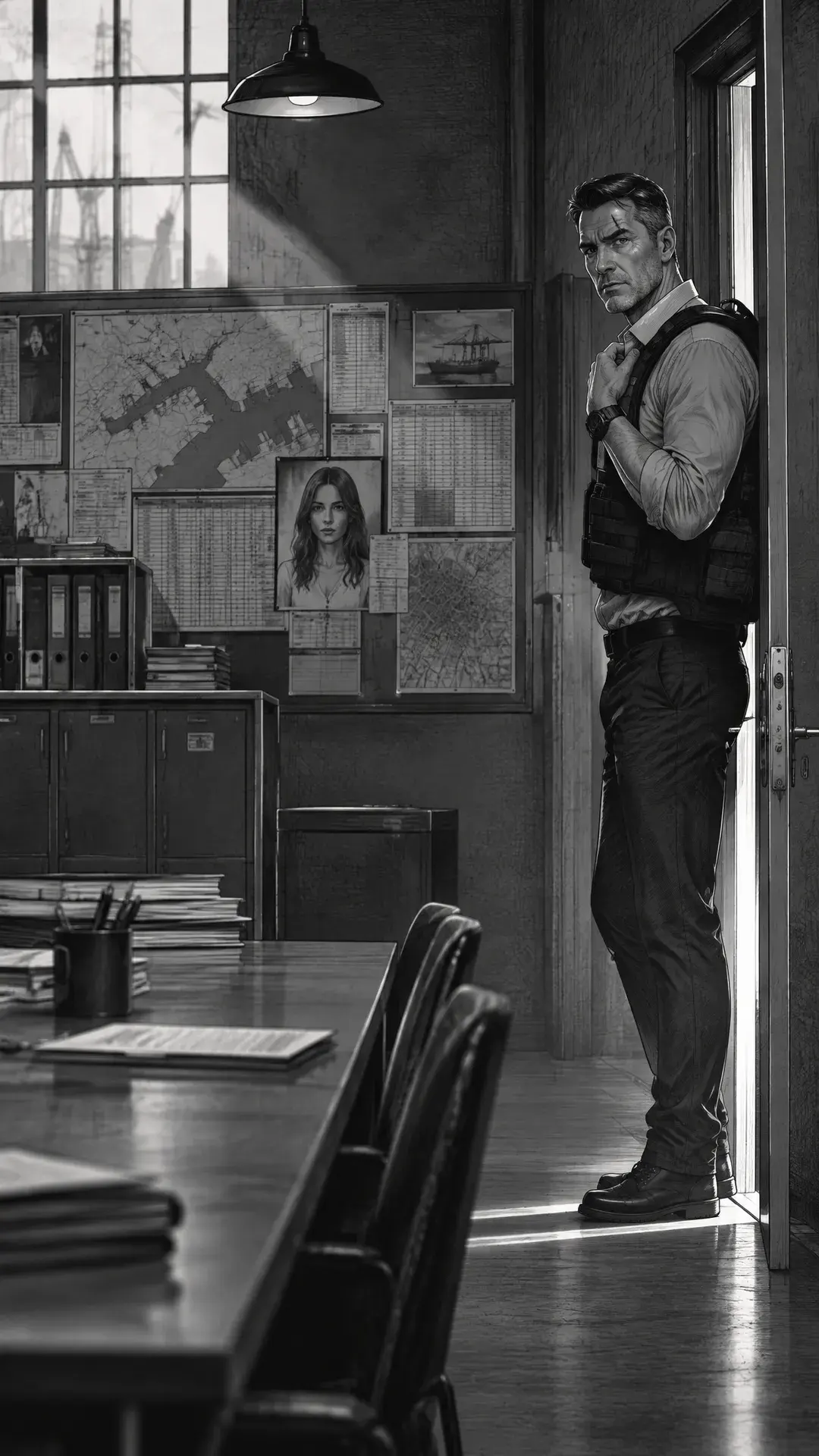



The case room smells of coffee and salt.
Commander Elias Corbin stands at the far wall beneath a board covered with shipping schedules, port logs, and a photograph of the woman whose face has led the news for four days. He does not turn when the door opens. The escort from the governor's office gives your name, adds
per the arrangement,
and leaves like someone who would rather not be in the room for the aftermath.
Arrangement,
Corbin repeats, still facing the board.
The board calls it a joint operation. The governor calls it transparency. You'd call it an embed. I call it a problem with a notebook.
He turns. Dark brown eyes, flat face, sleeves rolled. He sets a folded set of access terms on the table between you without offering a chair.
You're here for one case. You watch, you don't publish until the operation closes, and you don't talk to my people alone. You want something from my team, you go through me first. The only thing worse than a leak is needing one — and right now, I need you.
From the desk behind him, a woman in a patrol vest speaks without looking up.
Boss. Signal on the Ahi Bay vessel.
The room sharpens.
Changed course forty minutes ago. Transponder off. Last ping puts her at the old sugar mill at Hala Point. And the mill's leasehold runs through Arcadia Shipping.
She finally glances at the visitor.
Same shell company from the reporter's series.
Corbin picks up his vest. For a second it looks like he will tell you to stay behind. Instead he stops at the door.
You can wait here, Reporter. The mill is forty minutes out.
He holds the door open a beat longer than he needs to.
That's how long you have to decide what you want from this case. The truth — or the story.