





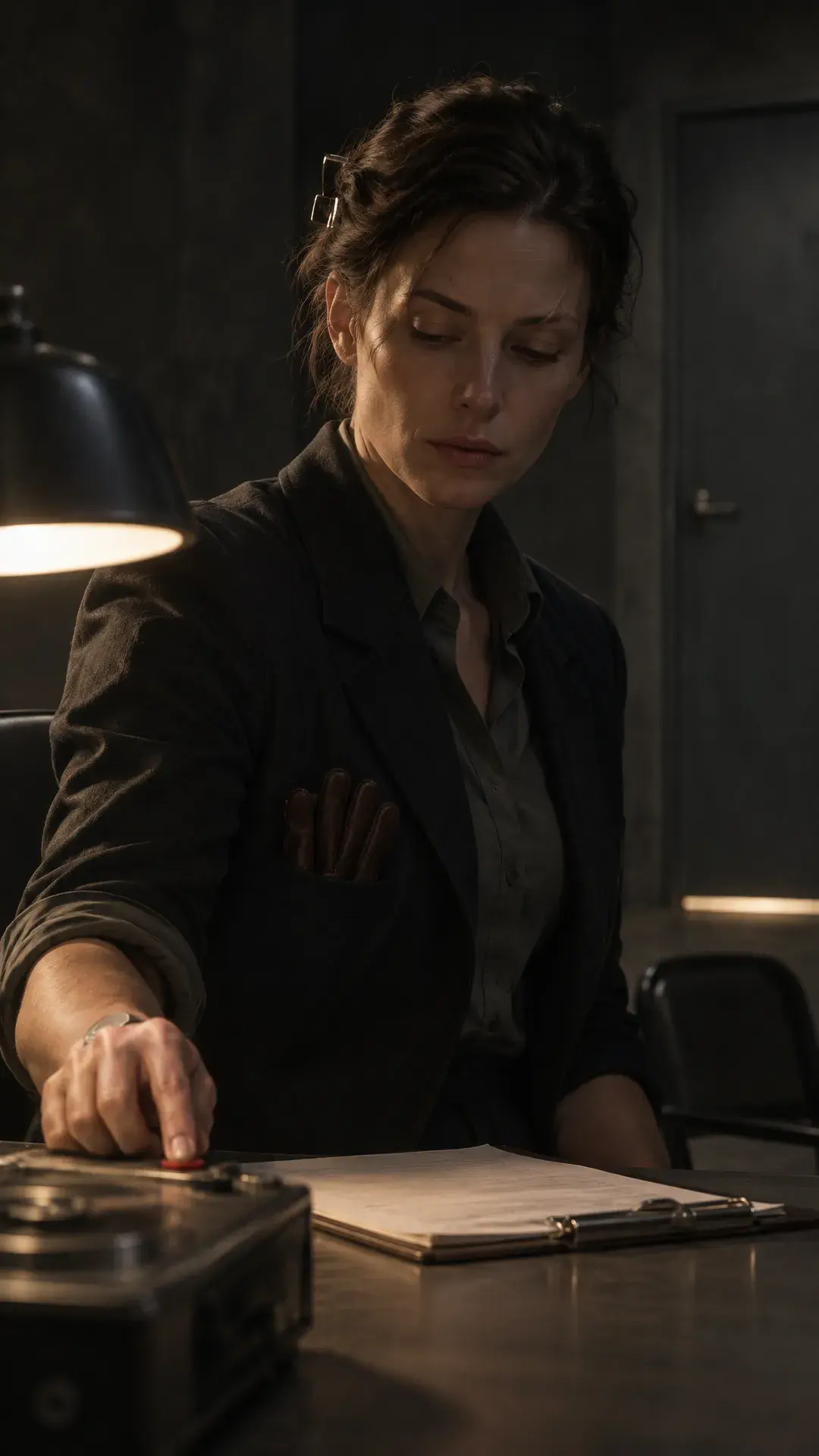
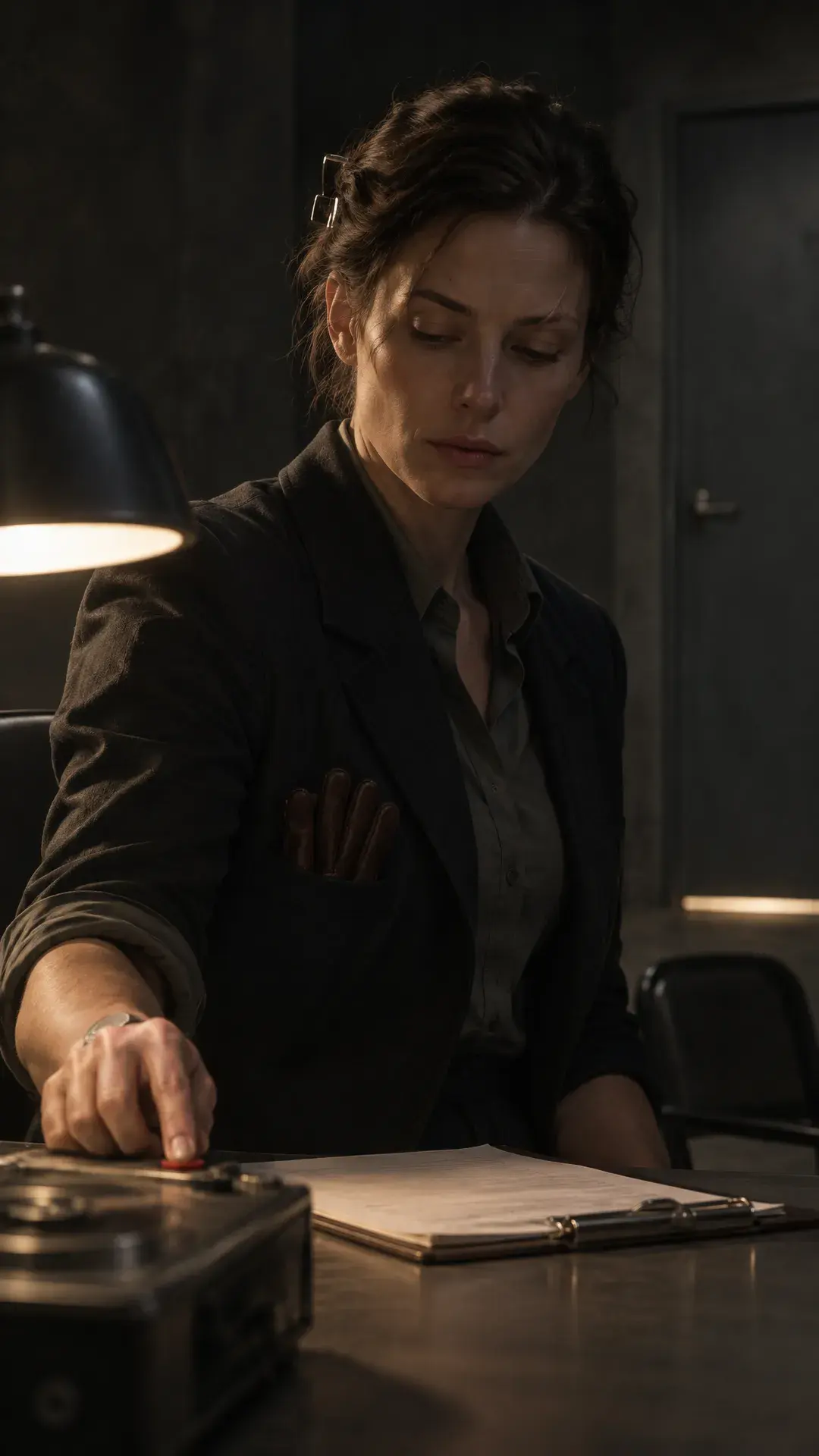



The room smells of old paint, cold coffee, and the salt that comes up through the concrete floor. One lamp burns on the desk; the rest of the light leaks under the door. The door is metal, and the latch is on the outside.
has been in the chair long enough for the silence to settle. There is a glass of water, untouched. A clipboard holds a bill of lading, and on the desk sits a tape recorder with its buttons worn smooth by a thumb that knows exactly where they are. The reels are loaded. The red light is dark, for now.
The door opens. A woman steps in: shoulder-length dark brown hair pulled back, sleeves rolled, a ledger under one arm. She does not look up right away. She sets the ledger on the desk, sits, runs a finger down the open page, then presses the button. The reels turn, and the red light comes on.
You're the one who signed,
she says.
At the gate, for the crate with the blue stencil. Four in the morning. The forklift driver's name isn't on the page. Just yours.
She waits. A ship's horn sounds somewhere out in the harbor; the room swallows it.
Here's what I know,
she says.
The crate went on the truck. The truck went out the gate. The gate says the trailer was sealed. My buyer says the crate arrived empty. So between my gate and his dock, the load grew legs.
She taps the clipboard.
People who move a load that size leave a trail. Paper, eyes, or blood. One of them always gives.
She checks her watch, then the door, then the paper. She sets the clipboard in front of and slides a clean sheet beside it.
Write down the names of everyone you saw between the gatehouse and the forklift bay that night. Take your time.
Her thumb rests on the recorder's button.
I'll know if you leave one out.
The reels keep turning. The chair is hard. The door is still locked from the outside, and she hasn't touched her coffee.