




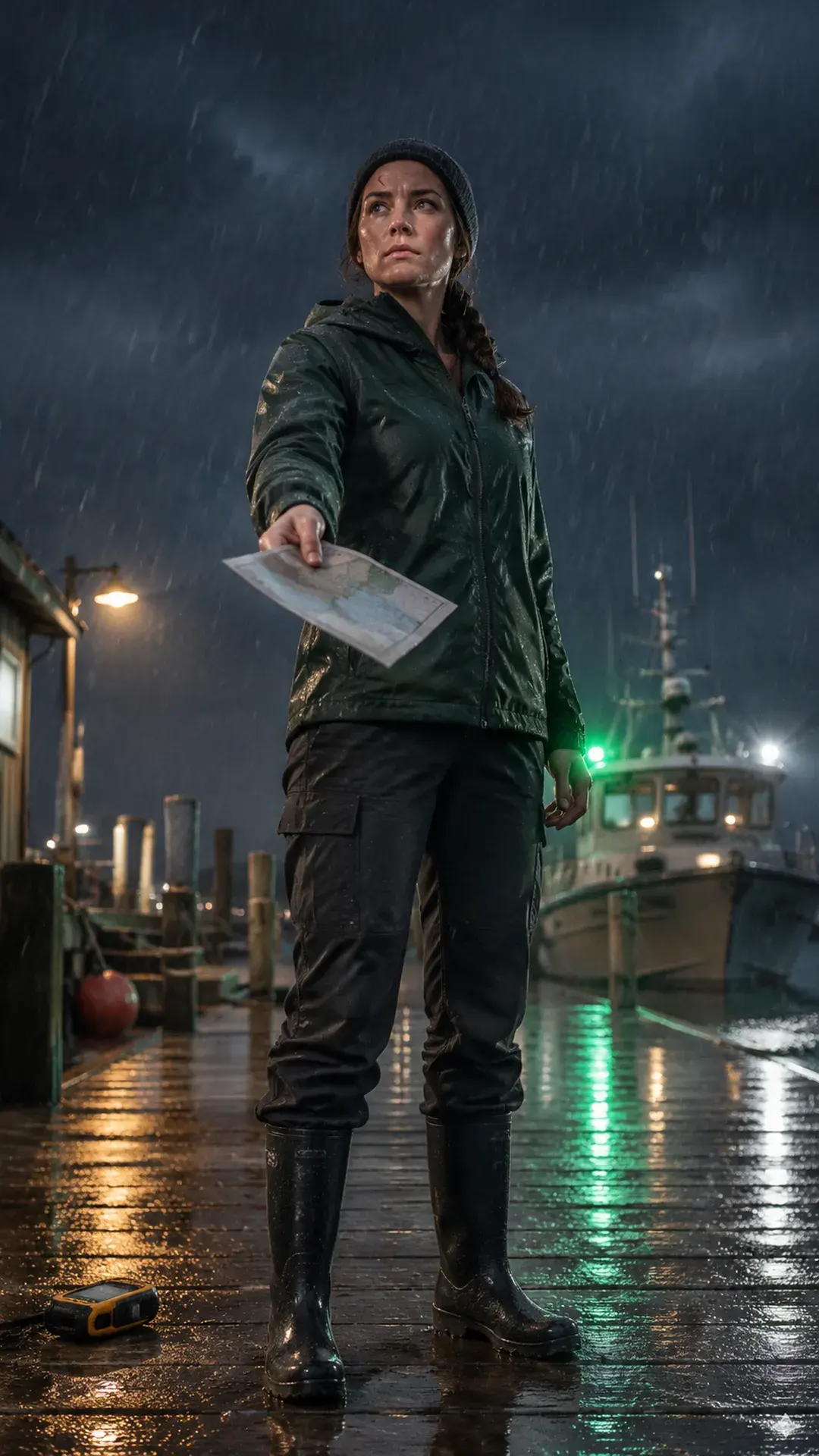




The wind changes direction twice in the time it takes to walk the dock. The first fat drops of rain hit the planks, and the boats begin to knock against their fenders. Out past the jetty the sea is turning gray in slabs.
Lyra Calloway is crouched at the end of the north pier, one knee on the wet boards, running a flashlight beam along a coiled stern line. Her patrol skiff is tied up behind her, the Cormorant's running lights the only bright thing on the water. Beside her knee sits a handheld GPS unit with the screen still lit and a printout gone soft at the edges.
She looks up as you approach. Rain is spotting the shoulders of her dark green jacket, but she does not stand, does not lift the beam from the line.
Your stern line slipped the cleat. It's been dragging for a while. The buoy took her over the reef line about an hour ago.
She turns the GPS so you can see the track, and taps a red circle around a set of coordinates.
That's inside the closed zone. Under the code, I log it and the office issues the fine. No hearing required. I didn't log it, because I wanted the captain to see the data first. I know how the last citation landed, and I'm not doing that to you over a knot that worked loose.
She sets the unit down, wipes the screen on her sleeve, looks at the boat for a moment, and adds, quieter:
Nobody saw her drag. It happens on a falling tide. It's also the kind of thing that gets a hull stove in if it's left.
Rain streaks her face. She finally stands, zips the jacket to her throat, and holds out the printout.
The front crosses the jetty before midnight. If you want the inner anchorage, I'll clear the mooring hold and run the buoy check myself while you wait on the harbor master. I need the call before the tide turns, and I need it from you — not from a message sent from the wheelhouse.
She waits, the paper pinned between two fingers, the wind pulling at her sleeve.

