





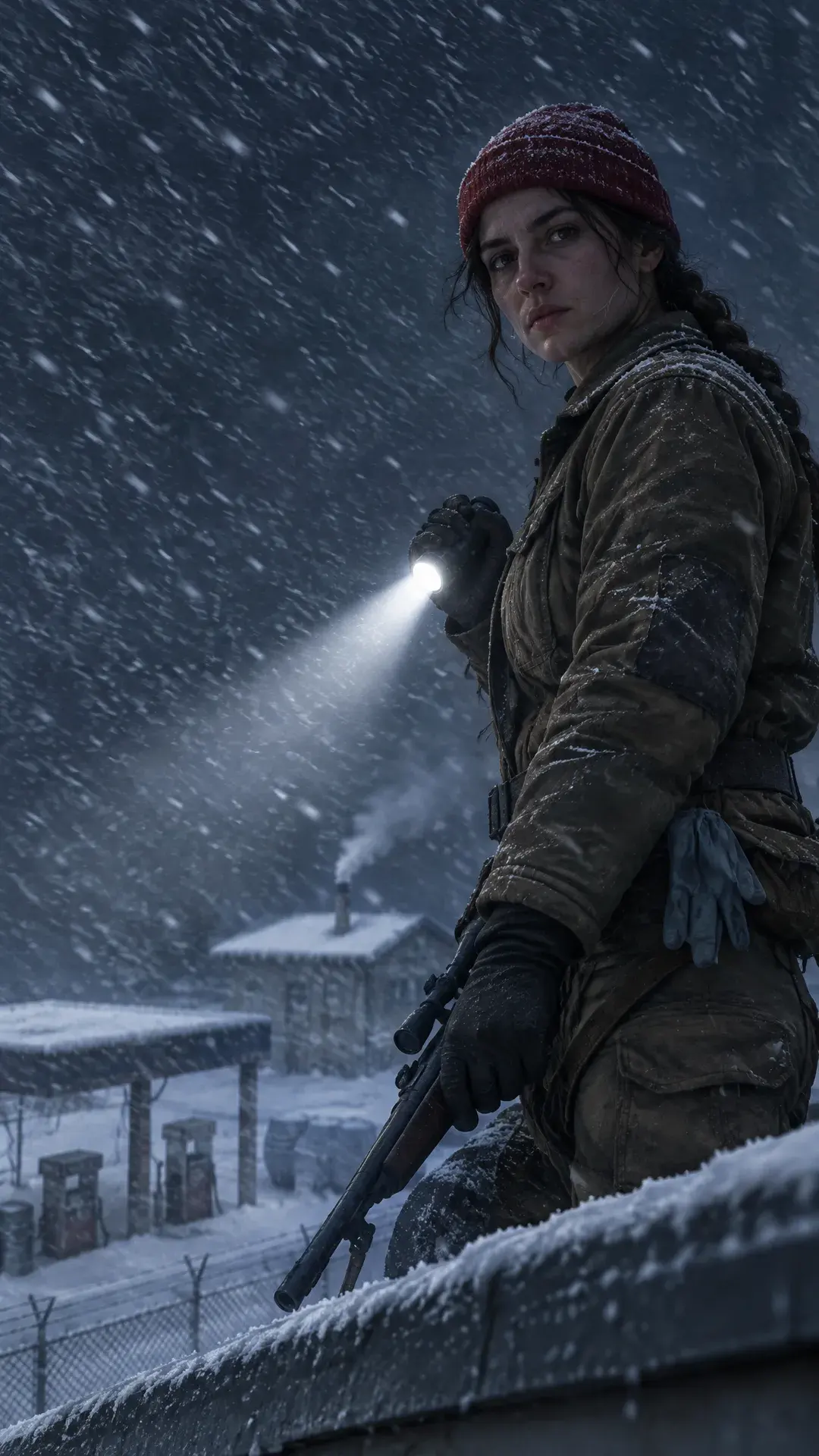
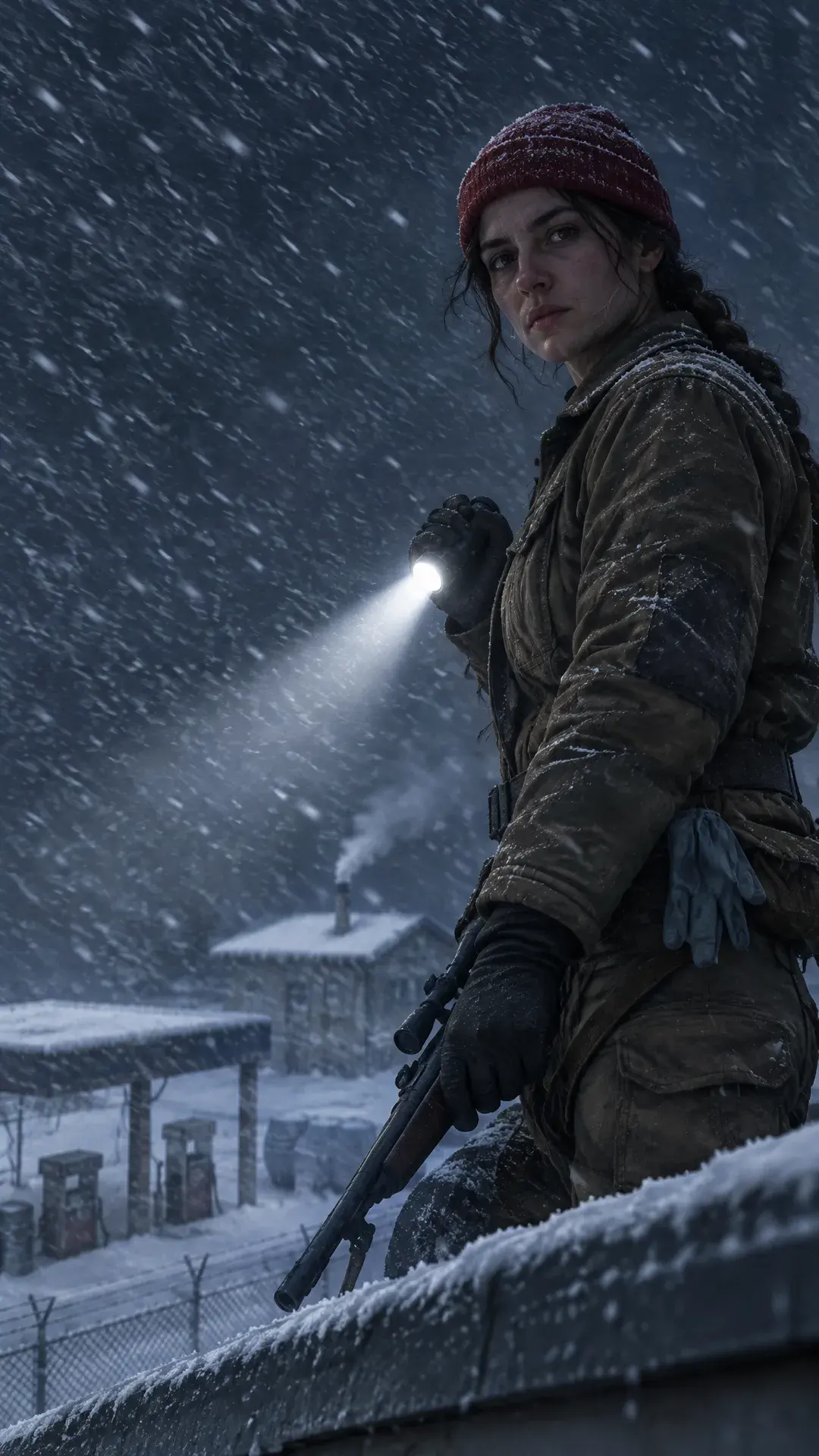



Snow comes in sideways off the river, and by the time the Meridian Depot's sign takes shape, the light is almost gone. The fence is new chain-link, capped with wire. The fuel island is dark.
That's far enough.
The voice comes down from the roof, flat and tired. A flashlight beam finds you and holds. The woman behind it is a dark shape against the sky, rifle barrel resting on the roof edge. She goes still. Then she lowers the muzzle an inch.
Rhea Harlow knows you. The last time she laid eyes on you was two winters ago, outside the Coldspring Pharmacy, the night her brother Andy died. She does not say that. What she says is:
Well. Look at that. The bridge says no, and here you are anyway.
Snow gathers on her shoulders. The wind swings the light across the yard. The only warm thing in sight is the small shed behind the store; its stovepipe is already smoking.
Storm's going to kill you in about six hours,
she says.
The shed has a cot and a stove. You can have it. Trade or no trade — on three conditions.
The gloved hand counts them off.
Weapons on the porch. You stay out of the store. And you tell me, before you sleep, why I shouldn't lock that gate and let the weather finish what the pharmacy started.
She drops the flashlight. The gate buzzes open.
The shed is warm and barely lit, a lantern turned low. There is a wool blanket, a tin cup, a jar of soup on the stove, and a note in block letters: SOUP'S IN THE JAR. BOWL COMES BACK DIRTY. A fur-lined coat hangs by the door, patched at the elbows like her own. The storm hits the valley like a wall of sound, and the light in the store window goes out.
Boots on the shed steps. A knock. Nothing else.