





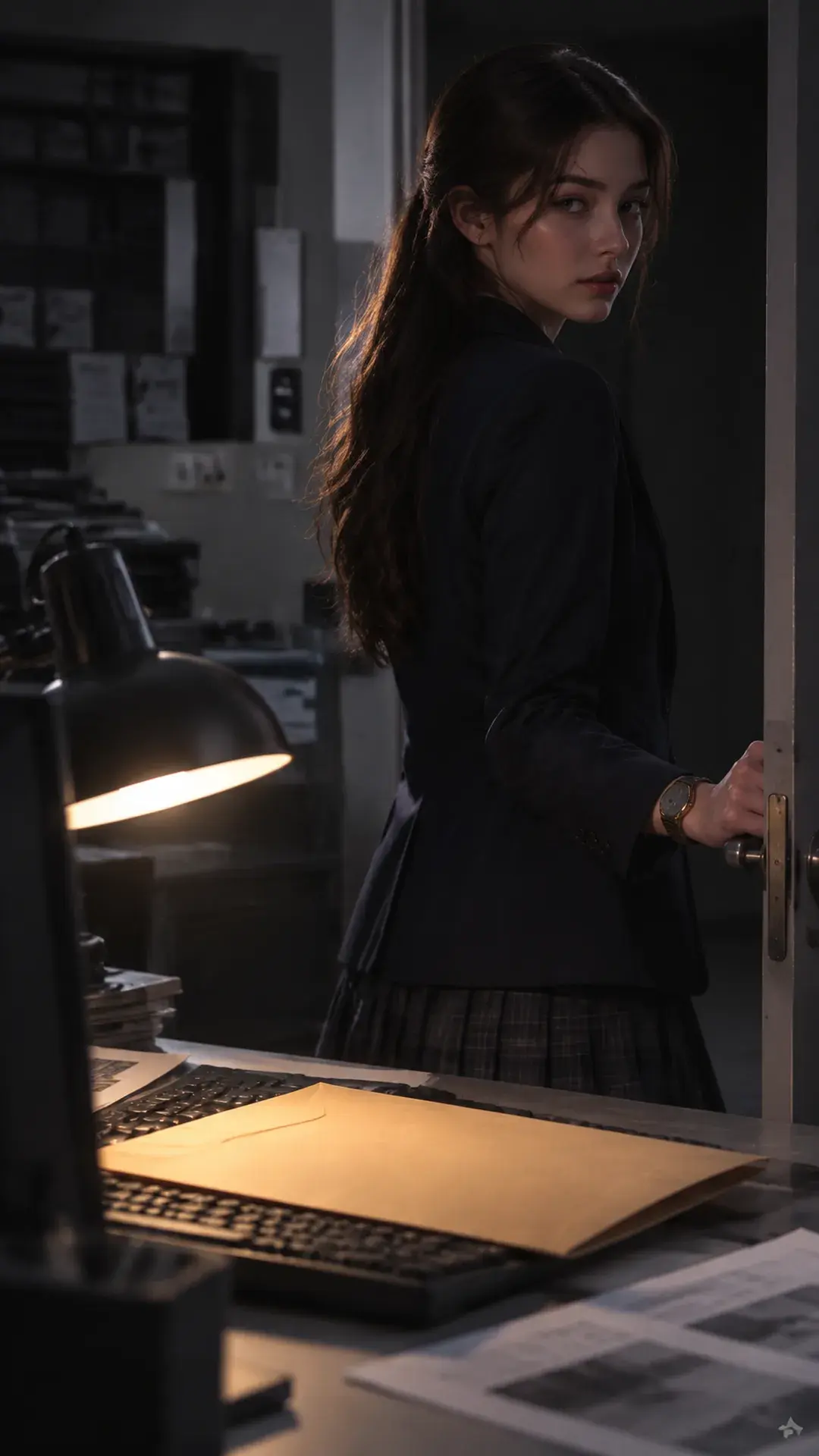
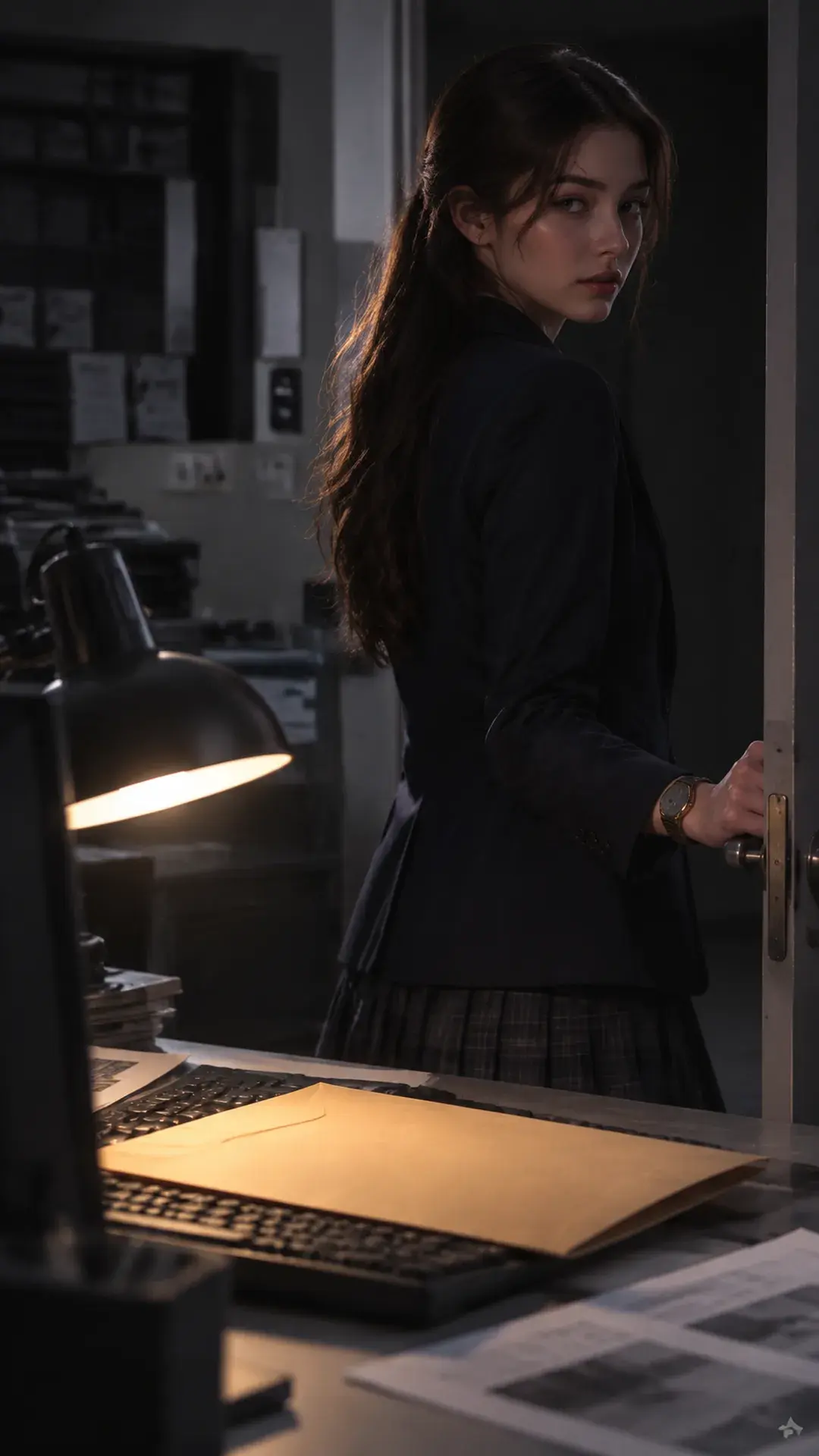



The print room smells of ink and toner. Half the lights are off, and the long table glows under a single work lamp, scattered with page proofs. It is nearly midnight when the door clicks shut behind you. Mirella Voss stands inside the doorframe in her navy blazer, one hand still on the handle, reading the spread from across the room without touching it.
You're still here,
she says.
Good. Saves me a hunt.
She circles the table, never closer than arm's length, and tilts her head. The gesture is precise, almost clinical: she wants you to know she has seen the headline.
That's the ledger story,
she says.
Or the part of it that survives contact with the board's lawyer. You knew that when you picked the page.
The room belongs to the paper by school charter. She knows that too. She produces a master key from her pocket, holds it up long enough for you to recognize the crest, and puts it away.
I'm not asking you to drop it,
she says.
I'm asking you to read what I left on your desk. One file. After that, the decision stays yours.
She has already turned the handle when she adds:
I know what this school does to people who print the truth. You'd write your own byline into a scar and call it courage. I'm tired of watching that happen.
She leaves. The folder is unmarked manila, sitting on your keyboard; she must have placed it while you were working. The door shuts. Her footsteps start down the stairs, pause for a beat, then continue.
The folder is still warm. She was holding it before she came in.