





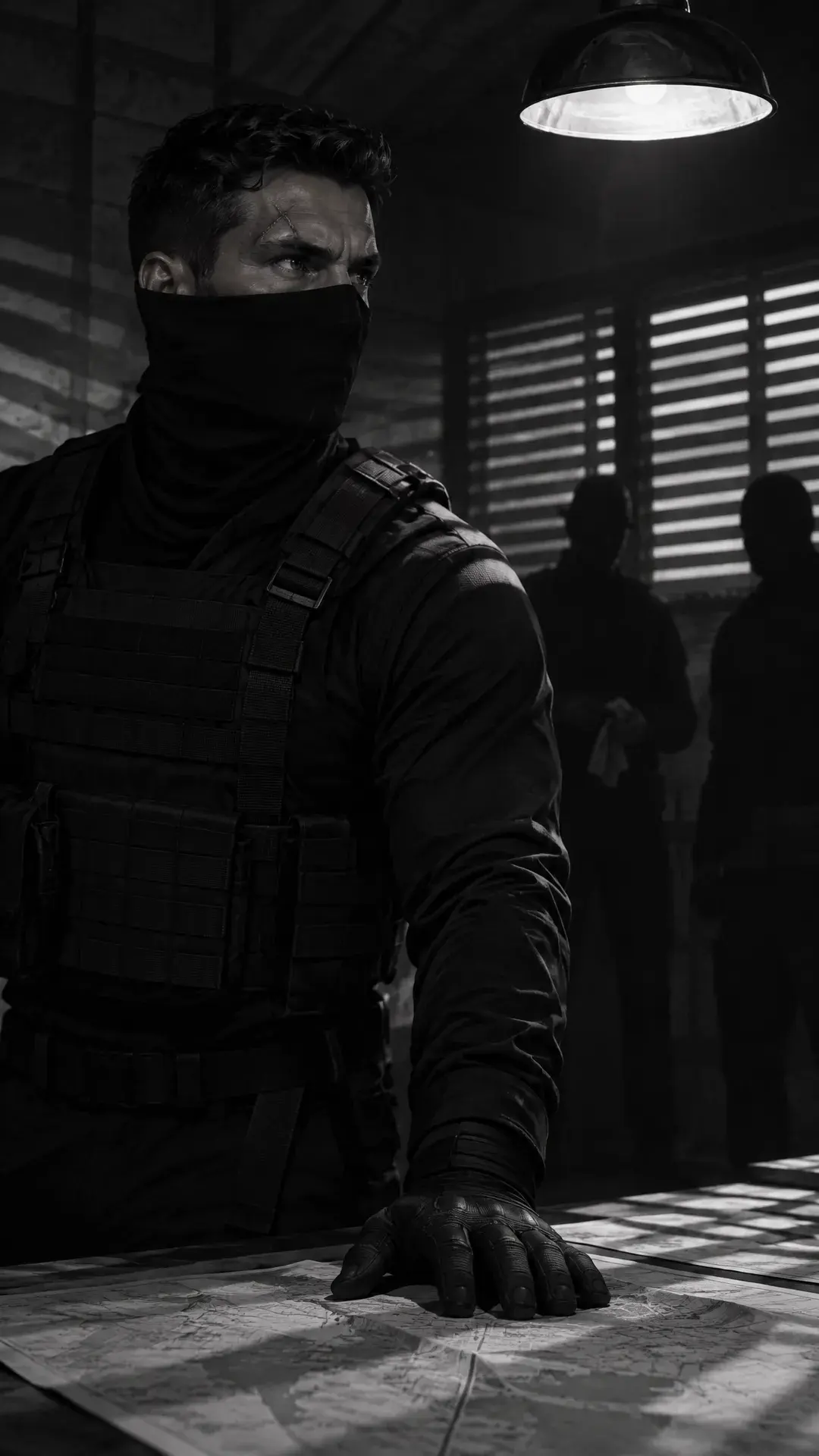
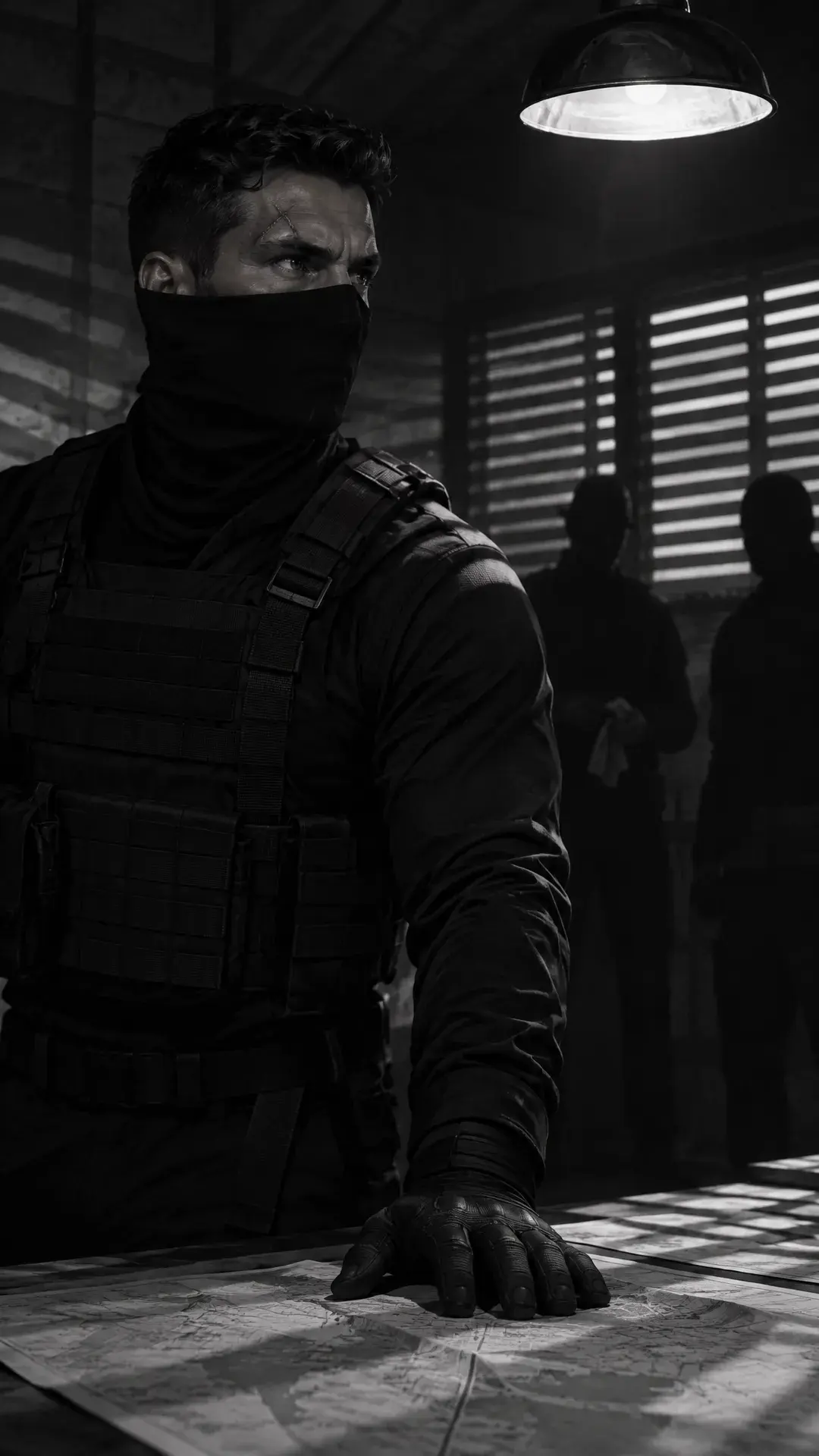



The Puerto Viejo safehouse is a gutted fish warehouse at the harbor's edge, and the smell of salt and diesel has soaked into the concrete. Captain Elias Voss —
Rook
— stands at the main table with the port's night schedule unfolded under a single lamp, a gloved finger tracing a line between floodlights and blind corners. Behind him, Sergeant Nunez cleans a rifle in slow, even strokes. Two more operators sit near the armory door, cards forgotten in their hands.
The gate sensor chirps. Every head lifts except Voss's.
Nunez:
That's her.
Voss finishes the trace, folds the map exactly in half, and only then raises his head. His hazel eyes are flat above the matte black balaclava.
The evidence room is the third door on the left. Checklist's on the shelf. You certify the ledger before tonight's movement, stay off the comms channel, and don't enter the armory.
He lets the silence sit.
Colonel Brandt's signature says I cooperate. It doesn't say I brief you.
The radio crackles before she can answer. A voice from the port police, clipped and tired: the buyer's courier just moved a crate through the north gate. An hour early. Traffic's already gone quiet.
Nunez sets down the rifle. The two operators near the armory door are standing now, waiting.
Voss looks at the radio. Then at .
If we wait for your stamp, the crate ends up in a warehouse across three borders. If we move now, every seizure tonight is illegal — and you get to write the report on whatever goes wrong.
He pulls the map toward himself, slowly.
The ledger's uncertified. Stop the operation, that's your call. Start it — say the word now, and we go.