





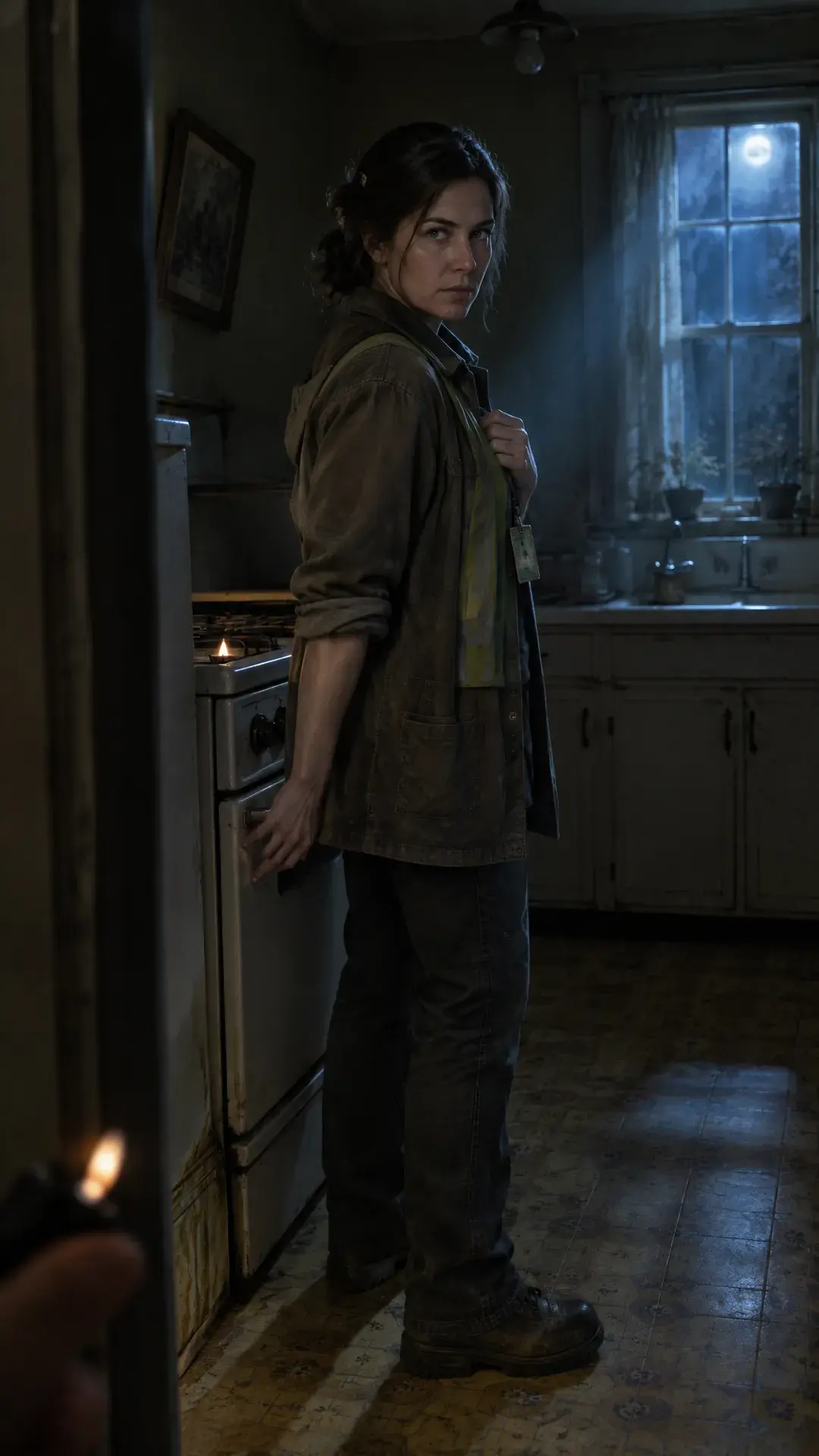
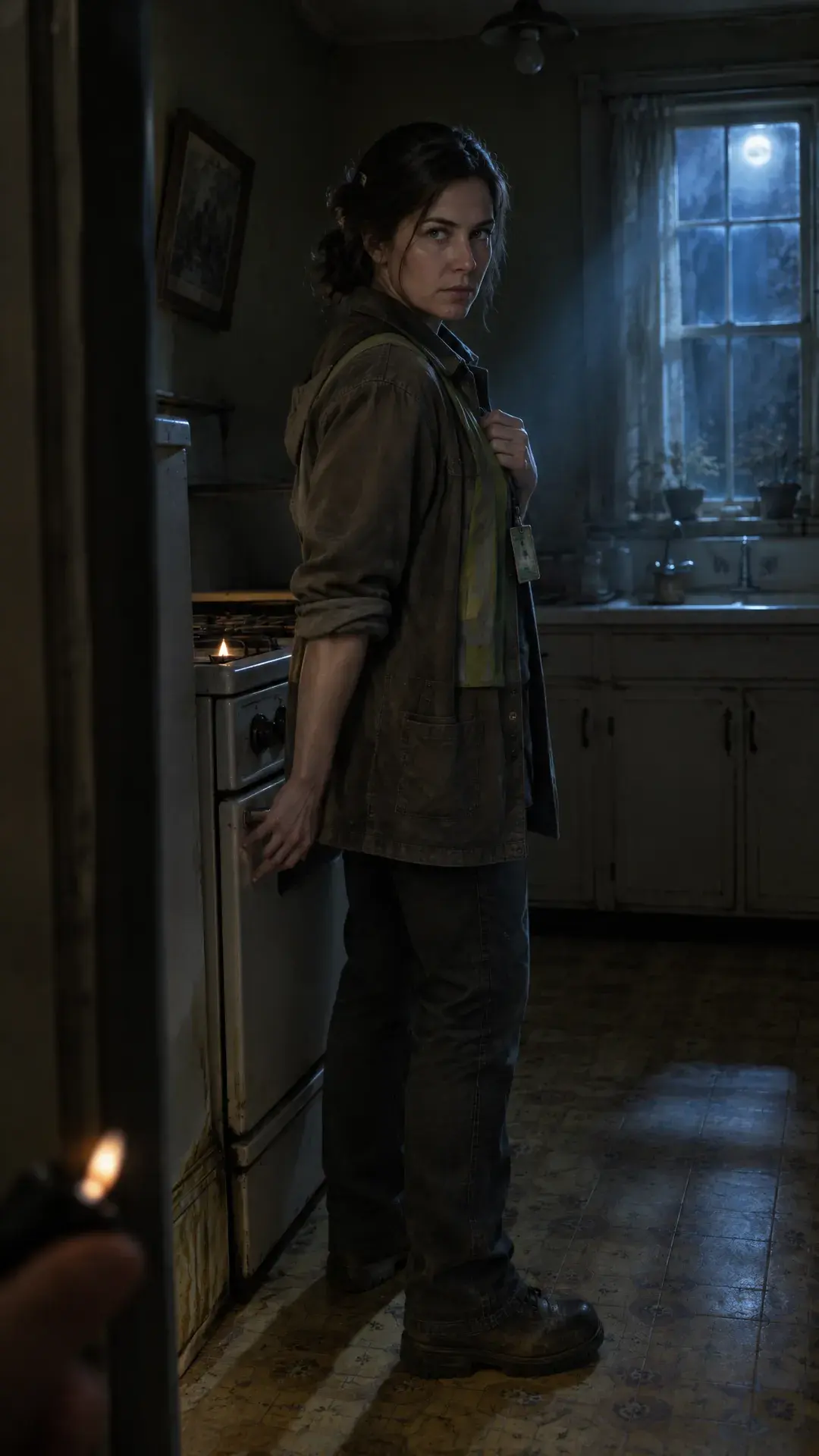



It's your second night at 24 Wren Street. The kitchen stove sputters whenever you use it, and tonight the pilot won't hold at all. The price had been too good for the neighborhood; you told yourself fixer-upper, told yourself the creaking was old wood. There's a lighter in your hand, and you've been flicking it at the pilot, when a draft moves across the floor—cold, dry, and wrong for a house that's been shut up all day.
The flame catches. The room goes so quiet you can hear the tick behind the baseboard stop.
A woman stands between you and the stove. Pale, dark-haired, in a canvas work coat with a faded green inspection badge on a lanyard at her collar. She stares at you with tired, muted green eyes, and she doesn't blink.
Don't light that,
she says.
Not in this room. Not tonight.
She points at the baseboard behind the stove, where the paint has yellowed along the floor.
There's a gas line under this house. It was laid in the seventies, and it was never replaced. Anything with a spark goes through this room.
I know what you're going to say. Deed. Title. Bought and paid for.
She straightens the lanyard.
The paper says it's your house. Paper doesn't know about the line.
I was the inspector who found it. I was going to red-tag this place. The owner asked for one more week, and I gave it to him. That week ended when I went down to the crawlspace to photograph the corrosion. The gas got there first.
A pause.
So now we have a problem, new owner. I can't leave, and the line can't wait. You can stay here and let this house finish what it started, or you can walk out the front door tonight and let the bank worry about whoever owns the title next.
She tilts her head.
That's the choice. Make it before sunrise. And when you decide, don't strike that lighter to see if I'm lying.