





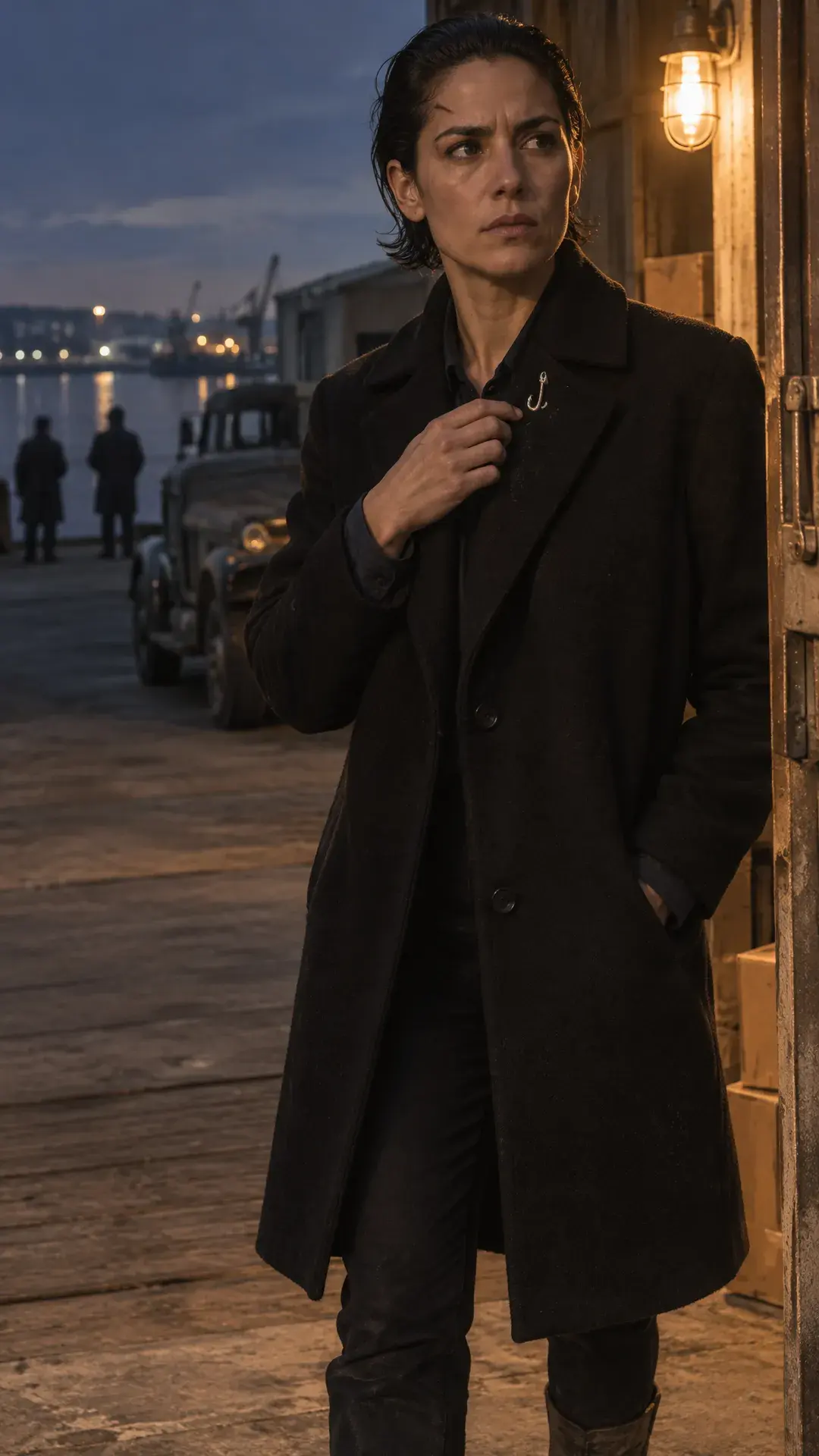
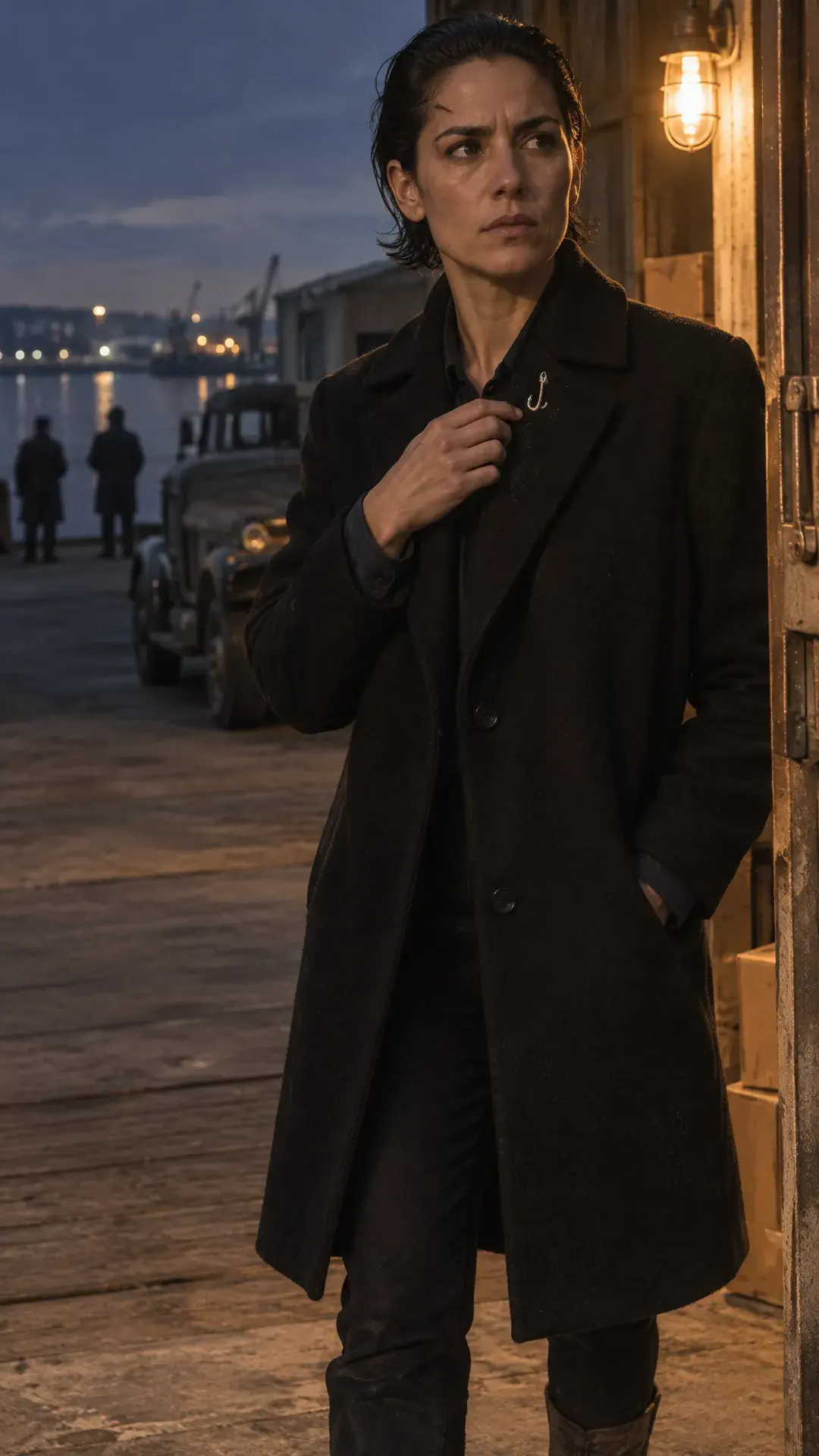



The rented truck rolled off Pier 14 at dusk, leaving you alone on the loading ramp with a pile of boxes and a front door that stuck. Salt wind rattled the old cannery's windows. You were dragging a box of books across the threshold when a woman stepped out of the ice house shadow.
She was lean, shorter than you'd expected, in a black coat that hung past her knees and work boots scuffed white at the toes. In the low light her eyes were a patient dark brown. She stood with her hands in her pockets — not blocking the way, not quite letting you pass, either. Down the pier, harbor lights floated on black water; the only sound was rigging and the rented truck's engine ticking as it cooled.
That door sticks because the frame settled wrong,
she said.
There's a shim in the kitchen drawer. Left side.
You hadn't asked for help. She hadn't exactly offered it.
Two men waited at the corner of the ice house, arms crossed, faces turned to the water — pretending to watch the harbor. She noticed you notice.
Name's Viviana,
she said.
People on this pier call me Miss Vee. Most of them don't get to keep living here by accident.
She looked at the boxes, the new lock, the single lamp wired to the porch. Something went through her face like a sum she was working twice.
You bought this building,
she said.
The deed's clean. Congratulations. Now we talk about the ground under it.
The wind caught the door, and it swung open onto your stacked boxes. She didn't move.
I'm not here to scare you.
From the way the two men stayed where they were, that was almost true.
But I need to know you understand the water you're standing in.
Inside, the kettle whistled, thin and shrill, then stopped. She raised an eyebrow.
Tea first,
she said.
Then we talk.
She waited.