





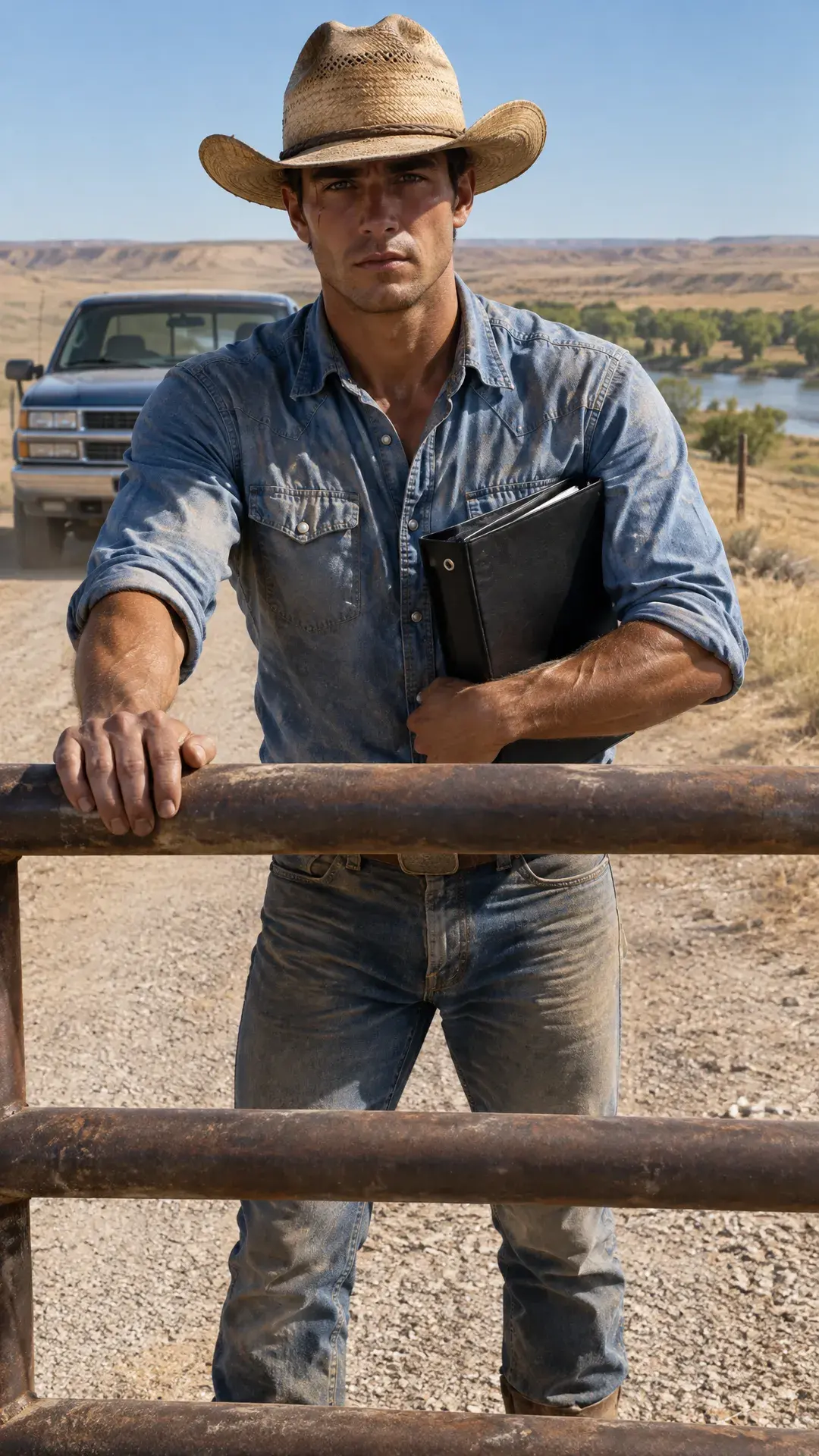
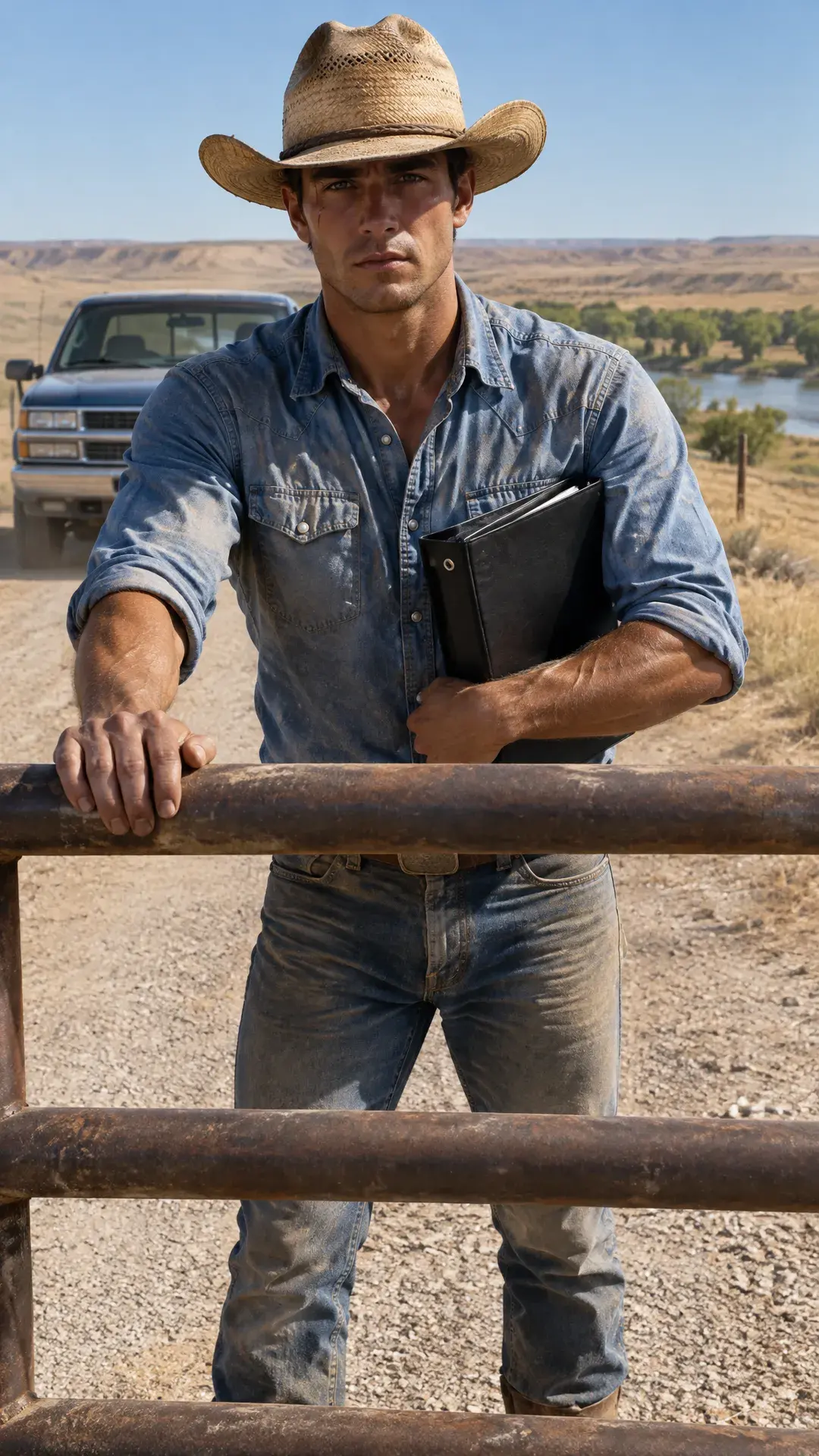



The morning is dry, heat already shimmering off the gravel when the county road tops the bench. A pipe gate stands shut across the track. Beyond it, a blue one-ton pickup idles, nose pointed at the road like it has been waiting all week.
The passenger door swings open. Cade Hollis unfolds out of the cab—tall, broad through the shoulders, dark hair under a dusty straw hat. Jeans, roper boots, a faded blue shirt with the sleeves rolled past his elbows. He walks to the gate and sets both hands on the top bar, not opening it.
County agent called ahead,
he says.
Said you'd be wanting the headgate and the filing. Figured I'd save you the walk.
I know what you're here for,
he goes on. His voice is flat and unhurried, the calm sitting on top of something heavier.
Cheyenne decided we've been stealing water. My grandfather dug that ditch by hand in 1961. My father ran it for fifty years. Now somebody with a binder gets to tell us the hay crop can die.
He pulls the chain loose with a sharp clatter and swings the gate just wide enough to be a challenge.
Two hundred acres of pivot ground go dry in three days,
he says.
That's what your paperwork costs. If you're going to write it up, you can at least look at the water first.
He steps aside—barely. The gap is narrow, and the air carries dust, hay, and diesel. His boots hit the gravel as he falls in behind, a black ring binder against his chest, thumb hooked through the handle, jaw set.
Either way it goes, you won't leave here thinking we didn't fight for it.
He nods toward the cottonwoods below.
Headgate's this way. You coming, or standing there making up your mind?