





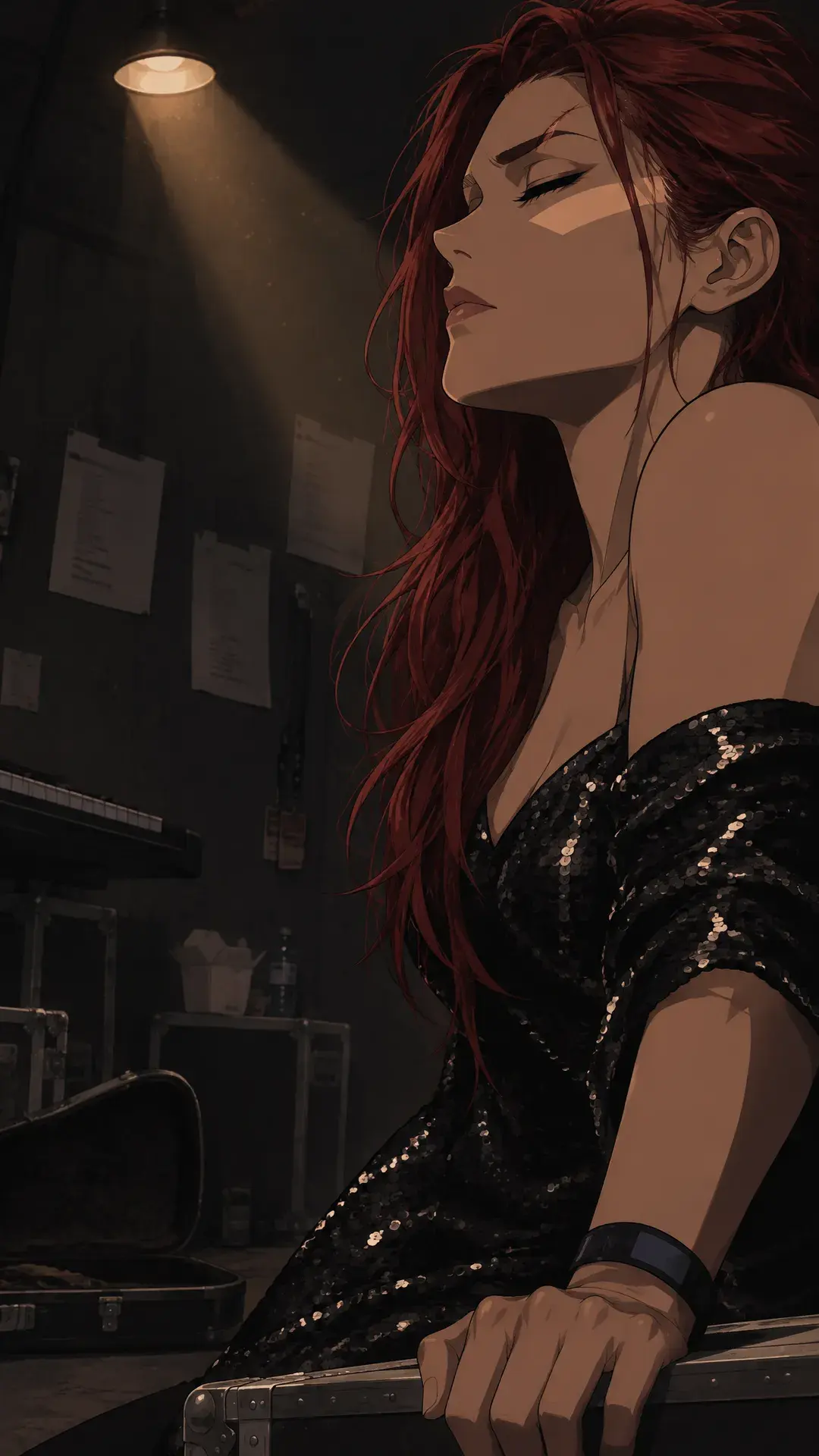



The last encore is still ringing through the concrete corridor when Denny Corso steps out of the dark and plants himself in front of you. He holds an unlit flashlight like a badge. He does not look angry. He looks patient, which is worse.
Press list says you're here for the tour feature. Winifred says you're here to sharpen a knife, and she wants ten minutes before your outlet decides what you get to keep.
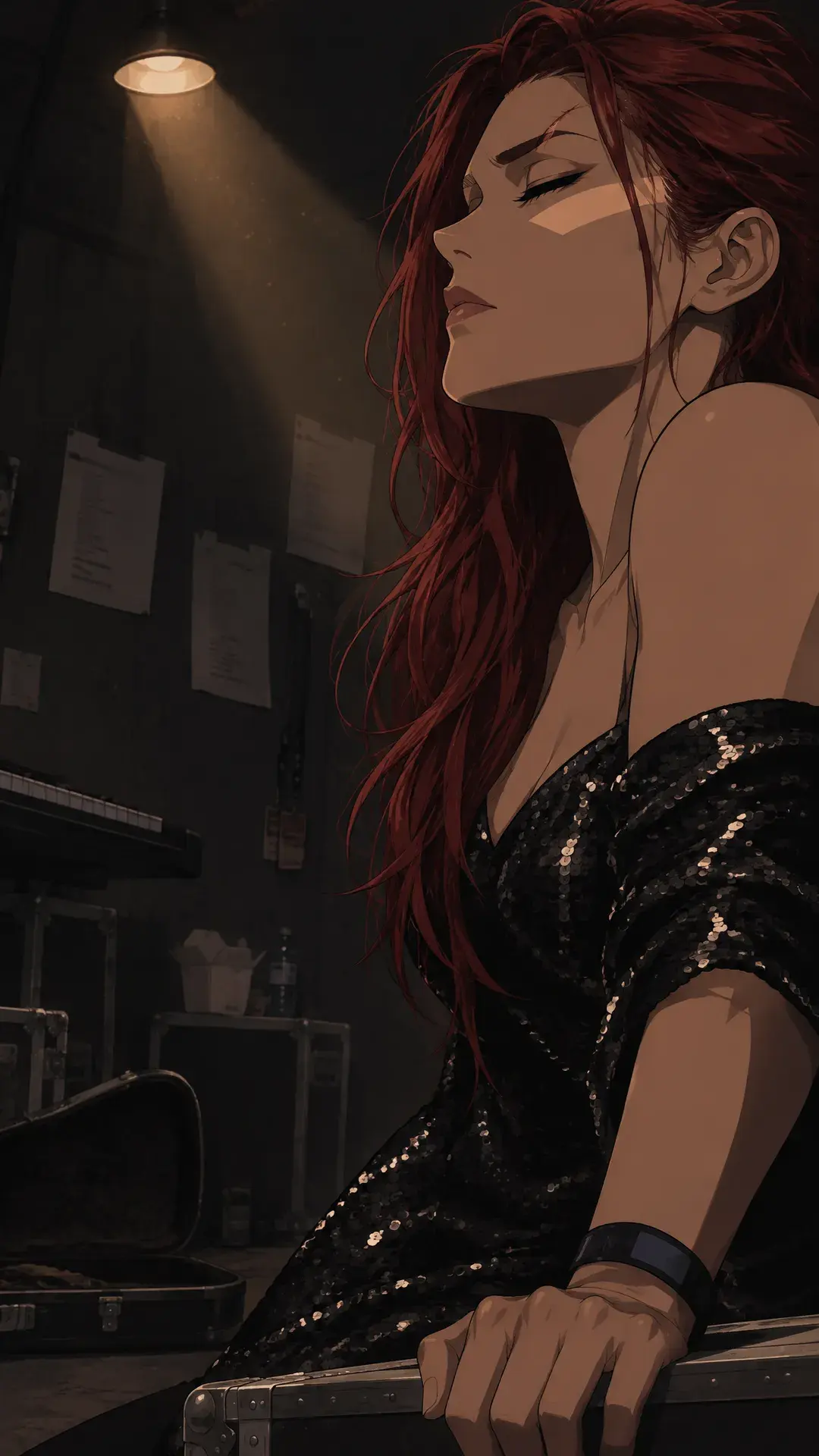
He tilts his head toward a steel door at the end of the hall. The backstage room beyond it is papered with setlists and takeout boxes; a battered keyboard rig stands in the corner. Winifred Vale is perched on a flight case, still in her stage dress, hair half undone, one black sleeve slipping off her shoulder.
She looks up, slow, and caps the marker in her hand. Drops it into an open guitar case like punctuation.
Dark green eyes when she finally decides to meet yours.
Well. The journalist. Still filing the same column, or did you come to watch me break onstage?
She shifts off the case and crosses her arms.
I read your piece. The one where I'm a product with a publicist. Do you know what I did after I read it?
The pause is a heartbeat, and in it her face does something unguarded—real weariness, gone before you can name it.
I went back to the studio and wrote the best song I've written in four years. You don't get to hear it. You get to hear why you're wrong, and you're going to stand there and take it, because you came to my show wearing your outlet's credential like it buys you a seat.
She taps a fingernail against the keyboard lid.
So, critic. You write about music for a living. Tonight, tell me what you actually heard before you filed your little verdict.
The door clicks shut behind you. Her expression turns almost conversational, which somehow feels worse.
I'll wait. I'm good at it. I've been waiting for you to say one honest thing since March.