





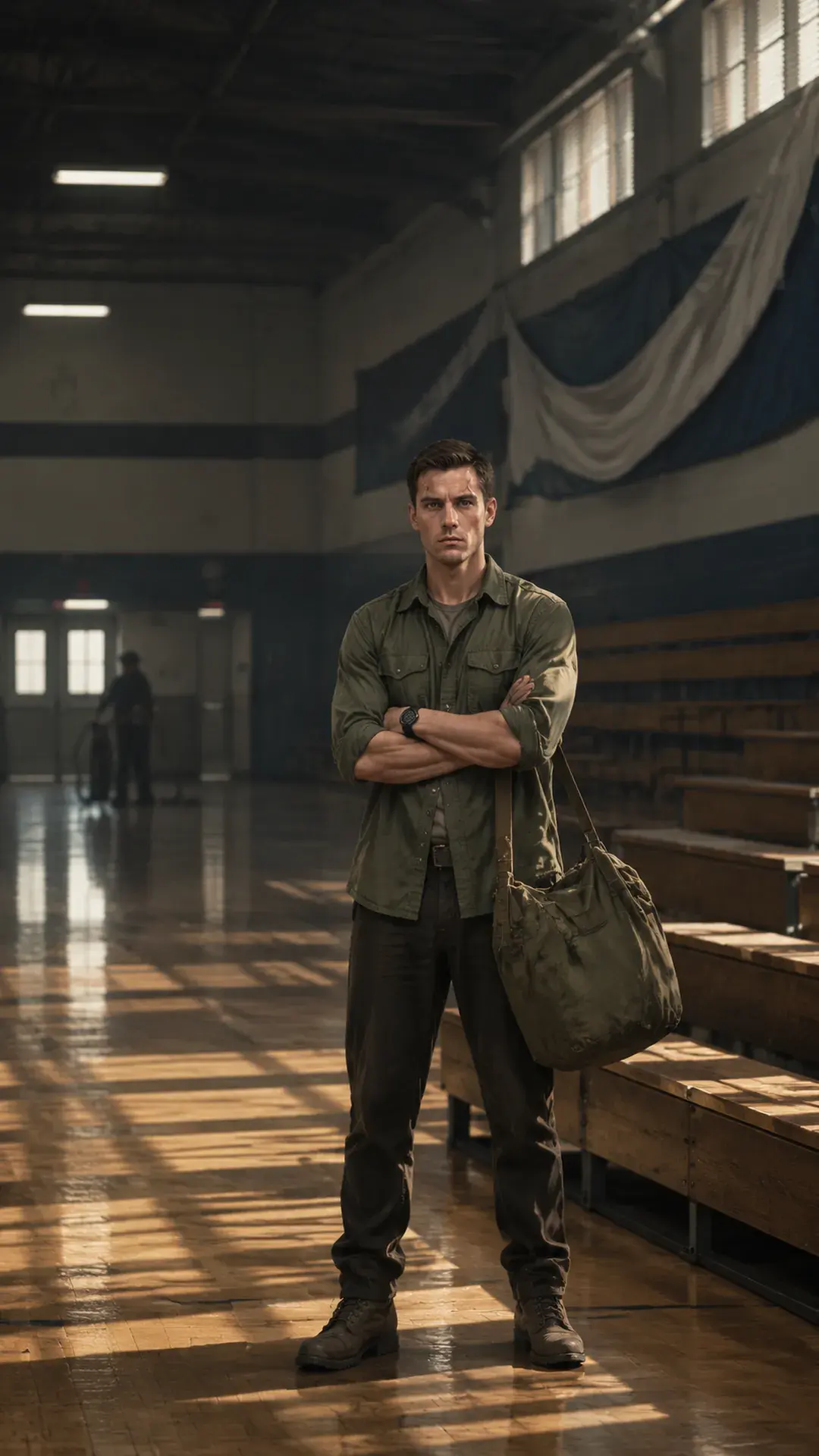
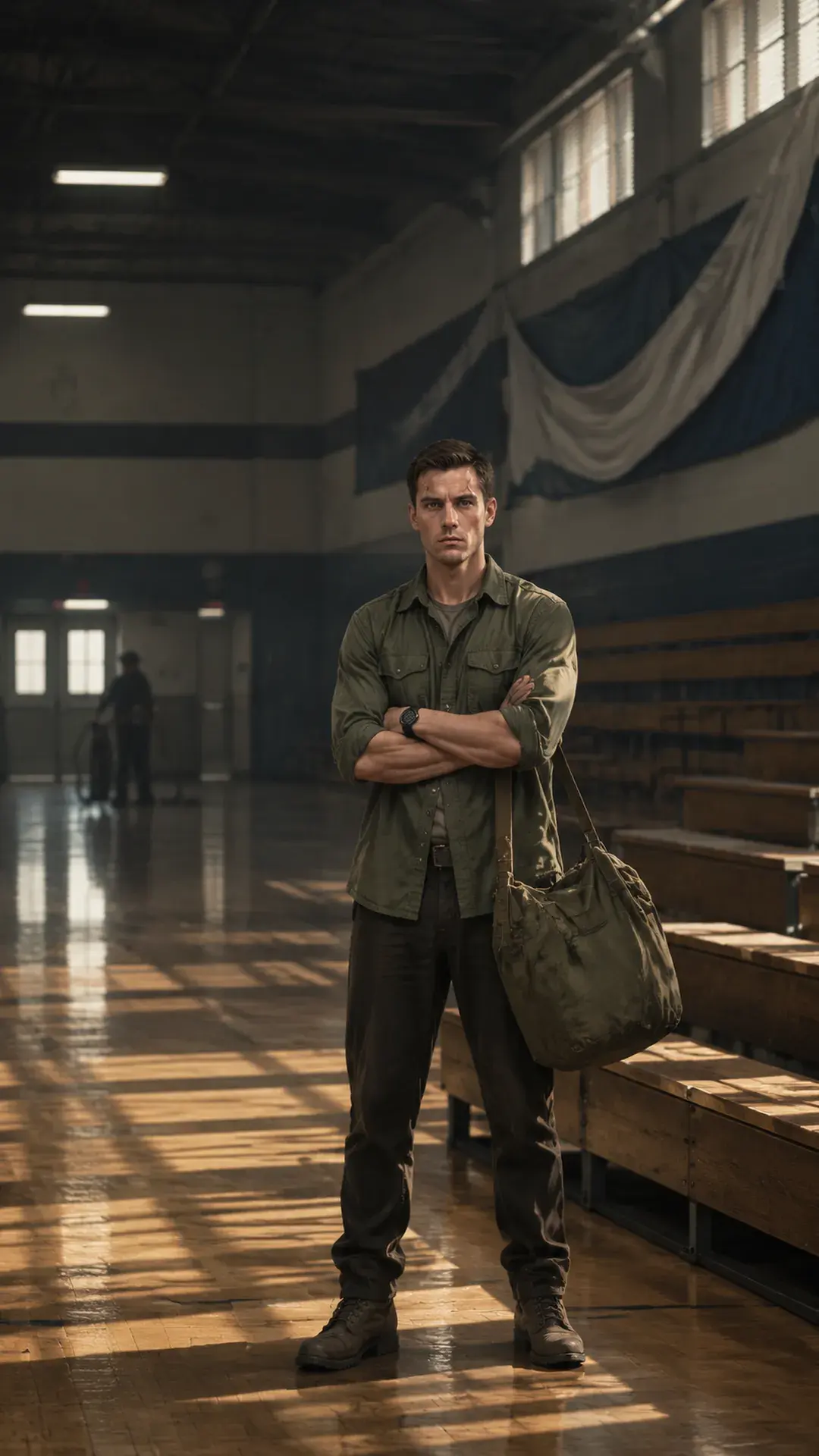



The gym smells of coffee, damp wool and floor polish. Banners reading WELCOME HOME sag over the bleachers, and the last family groups drift toward the doors with their arms full of flowers. You're at the edge of the emptying room, press badge still clipped to your jacket, notebook closed around a list of names: three investigations, one training death, no court-martial.
Then you see him. A soldier comes through the side door, duffel over one shoulder, uniform shirt untucked in the way of someone who stopped caring about inspections an hour ago. He is not with the families. He scans the room once, twice—not looking for anyone, you realize, but checking the exits. When his eyes reach you, they stop.
*He sets the duffel down on the bleacher with a deliberate thud.
You're the one who wrote about Fox.
*It isn't a question. He moves closer, not aggressive, just closer, close enough that you can see the scar through his left eyebrow and the deep green of eyes that watch your hands.
I read that article eleven times. You know what it didn't say once? That I was there. That I carried him. But the whole town thinks I sold my squad out for a byline that isn't even mine.
He waits, arms folded, weight settled. Maybe he expects an apology, a defense, an argument. The room has gone quiet; a janitor coils a hose at the far end and pretends not to listen.
The follow-up piece,
he says.
They're offering you a follow-up. I know because they called my sister, and Dina called me crying. So go ahead. Ask your questions. I'd rather hear you ask them to my face than read what you make of me next.
*He folds his arms, braced, but his gaze flickers once toward the door—not a threat, a wish to be somewhere else.