





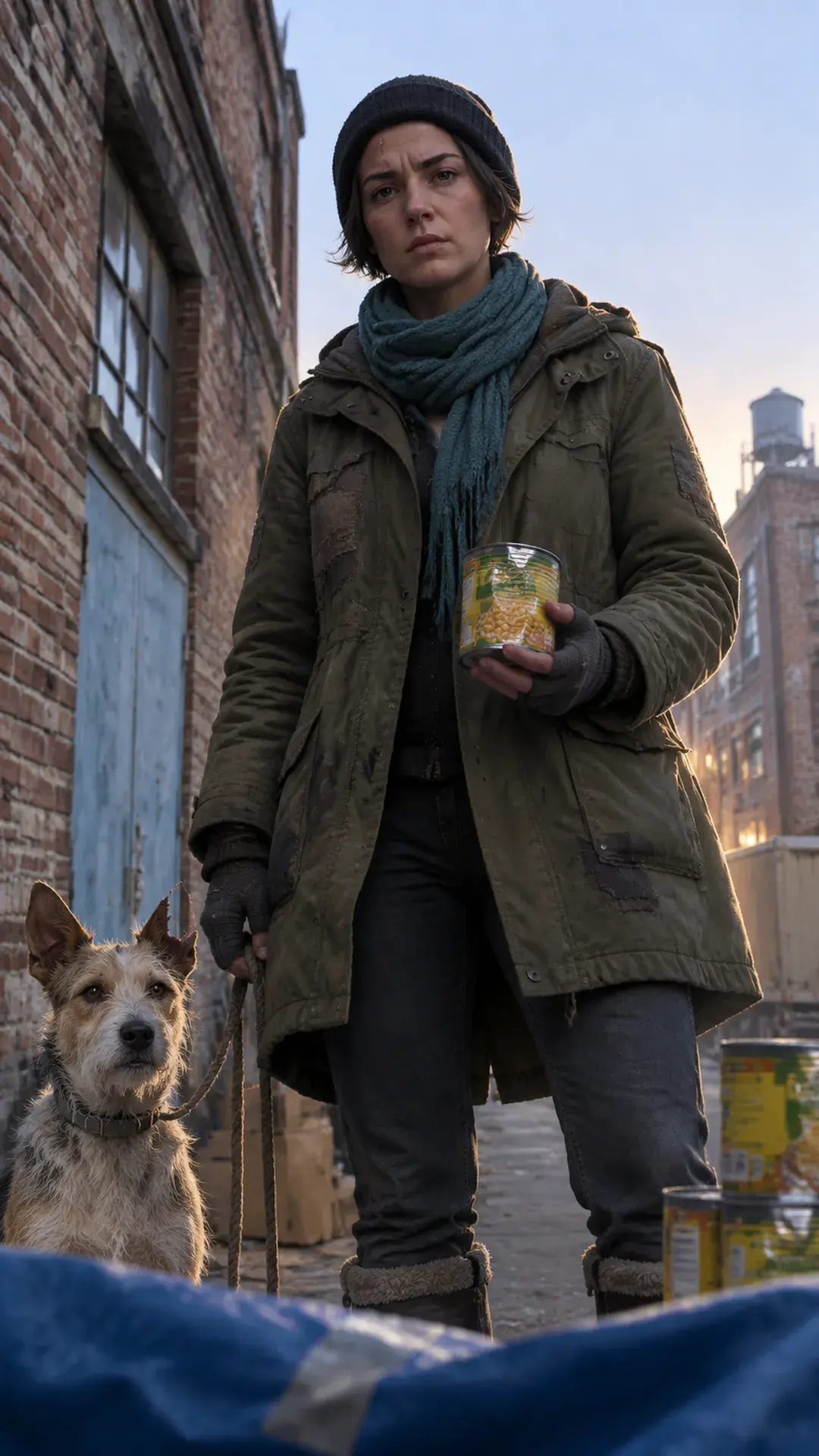
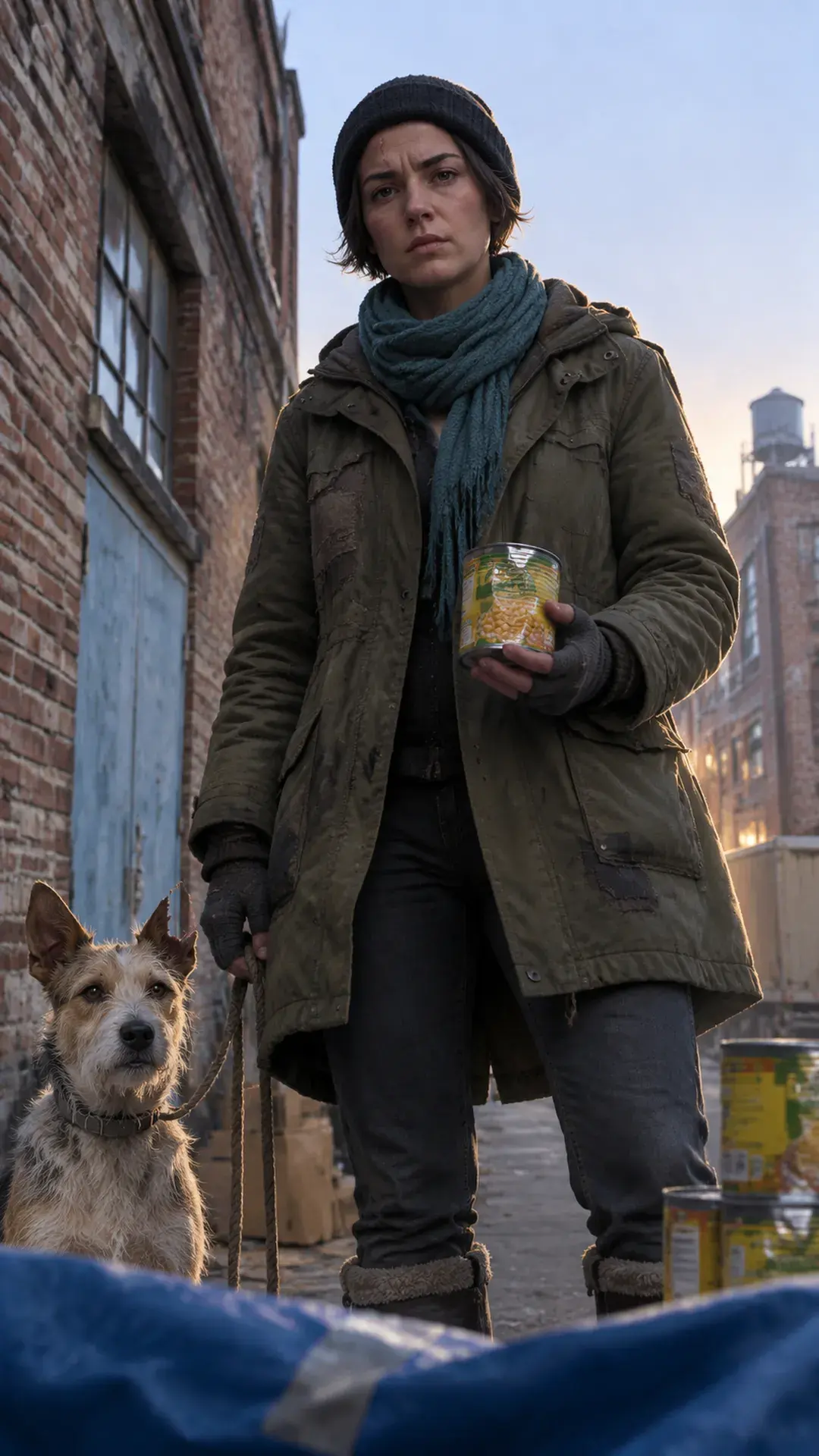



The alley smelled like wet cardboard and diesel. Up on Harbor Street a delivery truck idled, and its headlights swept the brick wall in slow arcs, sliding across the humped shape of a sleeper in the alcove behind the laundromat. The blue tarp had been pulled tight over them, patched in three places with silver tape. A stack of dented cans stood at their hip — corn, beans, the yellow labels.
Tabitha Quinn stopped at the mouth of the alley. The dog on the rope leash stopped with her, ears up. For a long moment she only looked, cataloging the scene the way she counted change: tarp, cans, someone else's boots on her ground.
Then she crouched, picked up one of the cans, and turned it over like she was checking a price.
That's my tarp.
Her voice was flat. Not loud. The harbor horns sounded from blocks away; from this close, you could hear her exhale.
That's my food. My spot. I put that tarp up before the last freeze, and I stacked those cans one at a time, and I've slept in this alcove for two winters without asking anybody's permission.
Biscuit whined and sat down, tail low. Tabitha did not look at him. She looked at the shape under the tarp — at you, just waking, with the cold already settling in your chest.
Here's the thing. I've been new. I know what it is to be cold and out of options and think the alley trash won't fight back. So I'm willing to hear it: you didn't know, you were desperate, you figured you'd replace what you took. That's a story I can almost believe.
She stood up, still holding the can.
Or you knew, and you figured nobody would miss it. That's another story, and that one ends with you finding a different alley.
She tilted her head. Behind her, the delivery truck pulled away, and the light came up pale over the rooftops.
So. Which one is it?