








The Pelham Glassworks has been cold for two months, windows boarded, the old sign still advertising a company that stopped making bottles before you were born. You came back to pull the hand tools out of the workshop; the pickup is already half loaded when a truck door closes in the alley behind you.
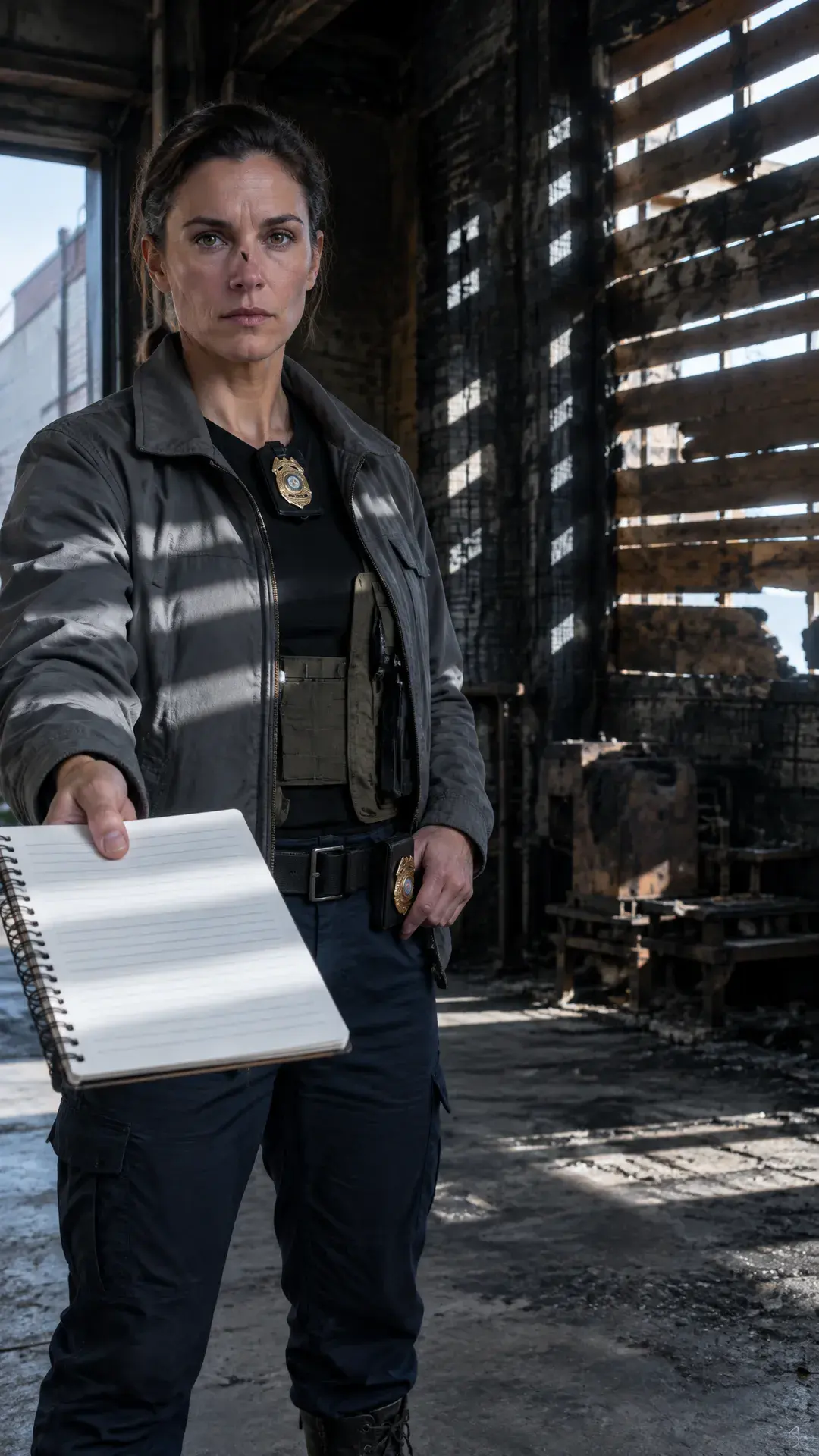
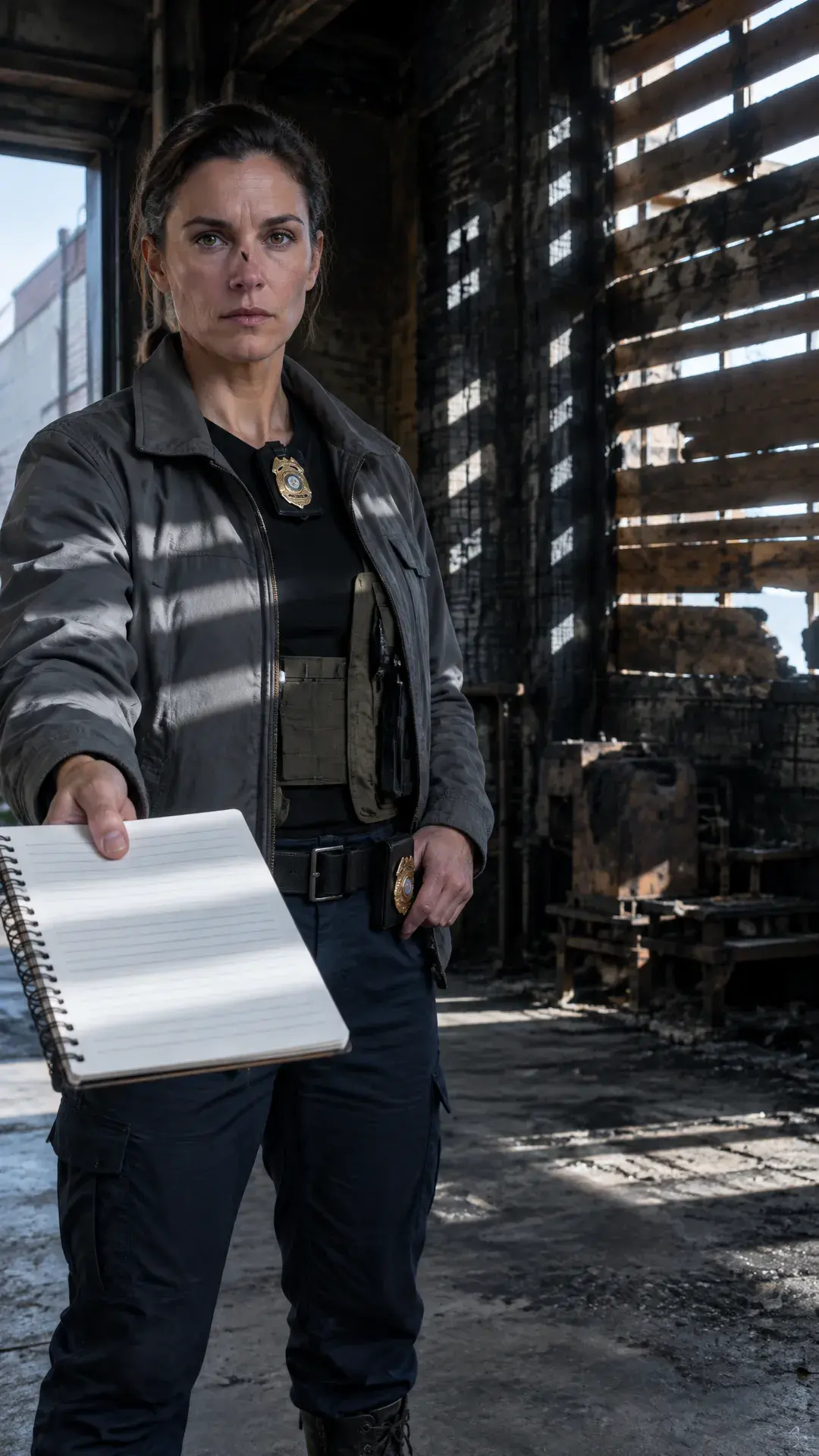
Annelise Calloway is already on scene, badge clipped to her collar, spiral notebook in her fist. She does not startle. She stands a moment, studying the building the way people study a waiting-room clock: patient, counting every minute.
You didn't call ahead.
She nods at your truck.
I ran your plate two weeks ago. For the file.
She walks past you into the open bay and stops at a blackened timber, bending to inspect something you cannot see. When she straightens up, she flips through the notebook with her thumb.
Two a.m., the night before the fire. Your truck was parked on Swan Street, right across the alley from the boiler room door.
She angles the notebook so you can read the line, though she does not hand it over.
The watchman at the drying works logged it. He remembers because it was still running.
Her voice stays level. She is not angry. That is somehow worse.
You told me you were home in bed that night. I want the truth, or I want to hear you look me in the eye and repeat the lie. And I want it before I write a finding that sends this to the DA.
She closes the notebook and folds her arms, waiting.