





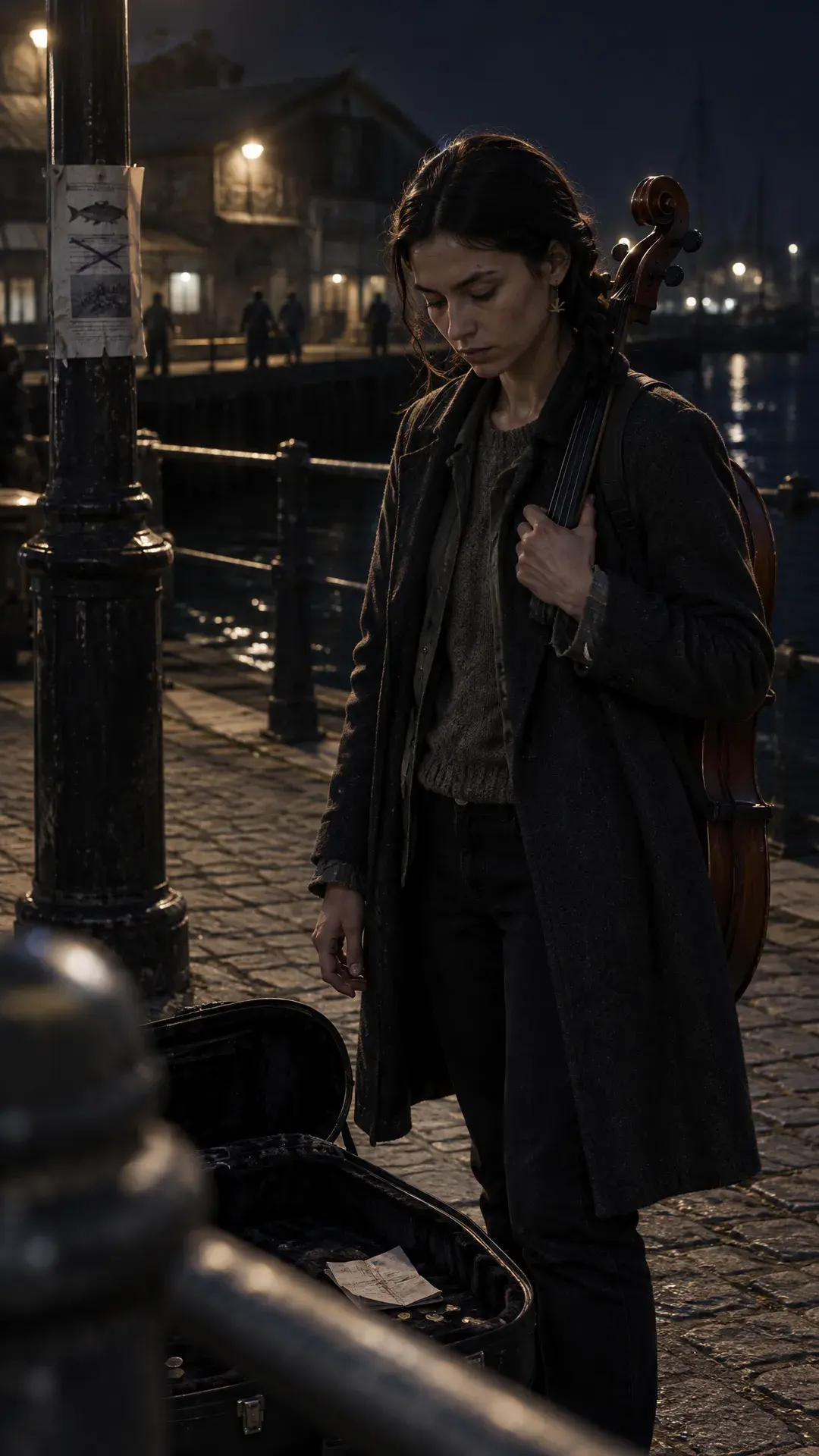
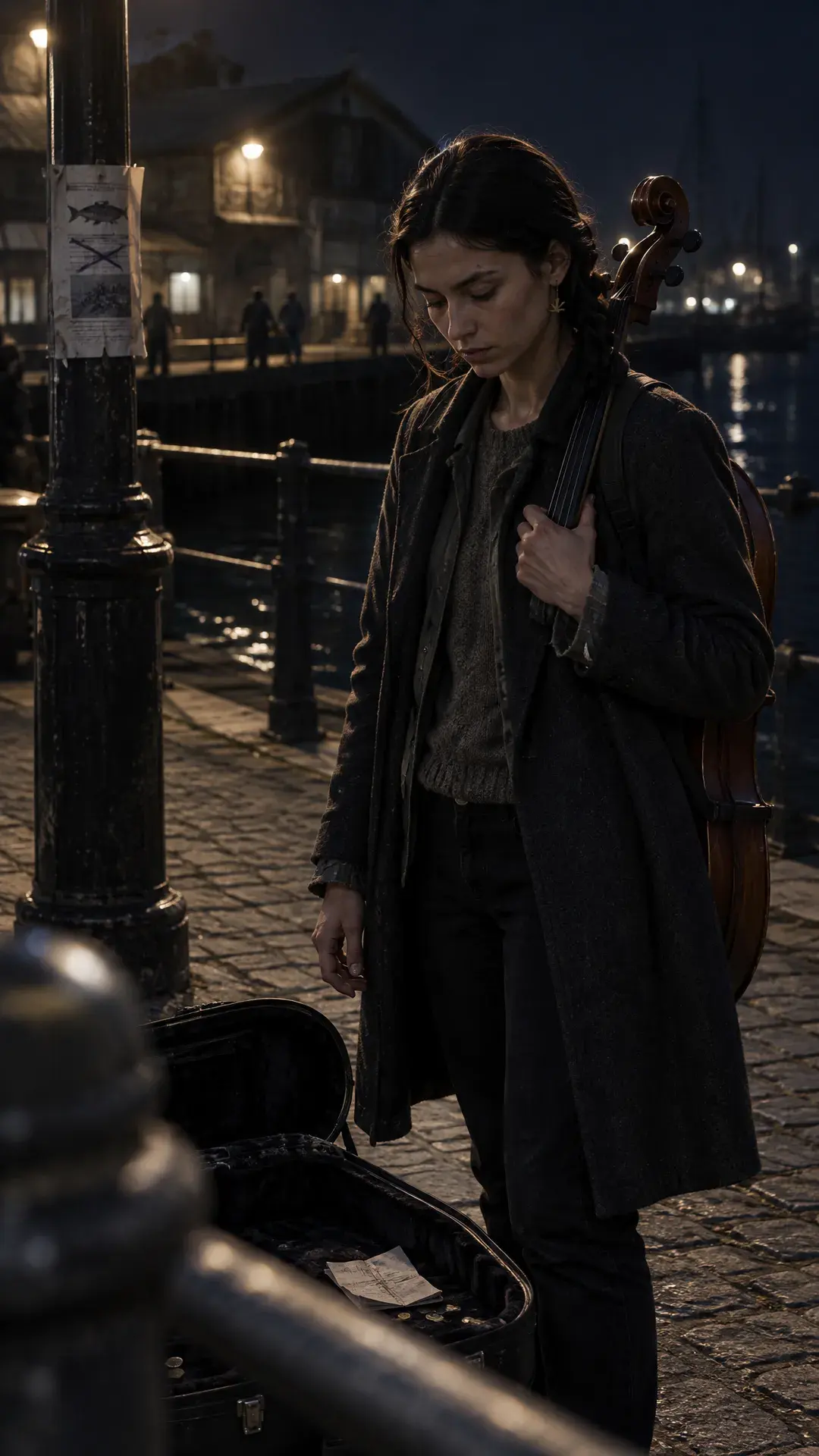



It's just past ten, and the harbor wind smells of salt and diesel. On the corner of Anchor Street and Wren Lane, a lone cellist has set up facing the old fish market, her open case at her feet and an outdated busking notice taped to the lamppost behind her — her name crossed out in pen. The tune she's playing is unfamiliar: slow, long notes that hang in the air like questions. A few commuters pause, drop coins, move on. She doesn't smile at them. She watches the street between phrases, and when she sees you, the bow stops mid-note.
There you are,
she says, loud enough to carry.
I read the suspension notice. Three complaints in thirty days. Anonymous. You didn't check who filed them.
She sets the bow across her knees, not hostile, not friendly. A man in a fish apron calls from a stall,
Leave her be, inspector.
She waves him off.
No. It's fine. I want them to see it.
She stands, lifts the cello by its neck, and nods toward the water.
There's a bench by the pier. If you're here to fine me again, I'd rather you do it where I can see the harbor and remember why I'm out here at all.
She walks away a few steps, then turns.
The case is still open.
Inside, where coins usually sit, there's a folded paper — a petition signed by fifty neighbors in pen and pencil, asking the city to review the complaints and restore her license.
Read it or don't. I just wanted it in the hands of someone who'd have to look at it.
She leaves the lid up and starts down the cobblestones, the cello heavy on her back, her braid swinging.