





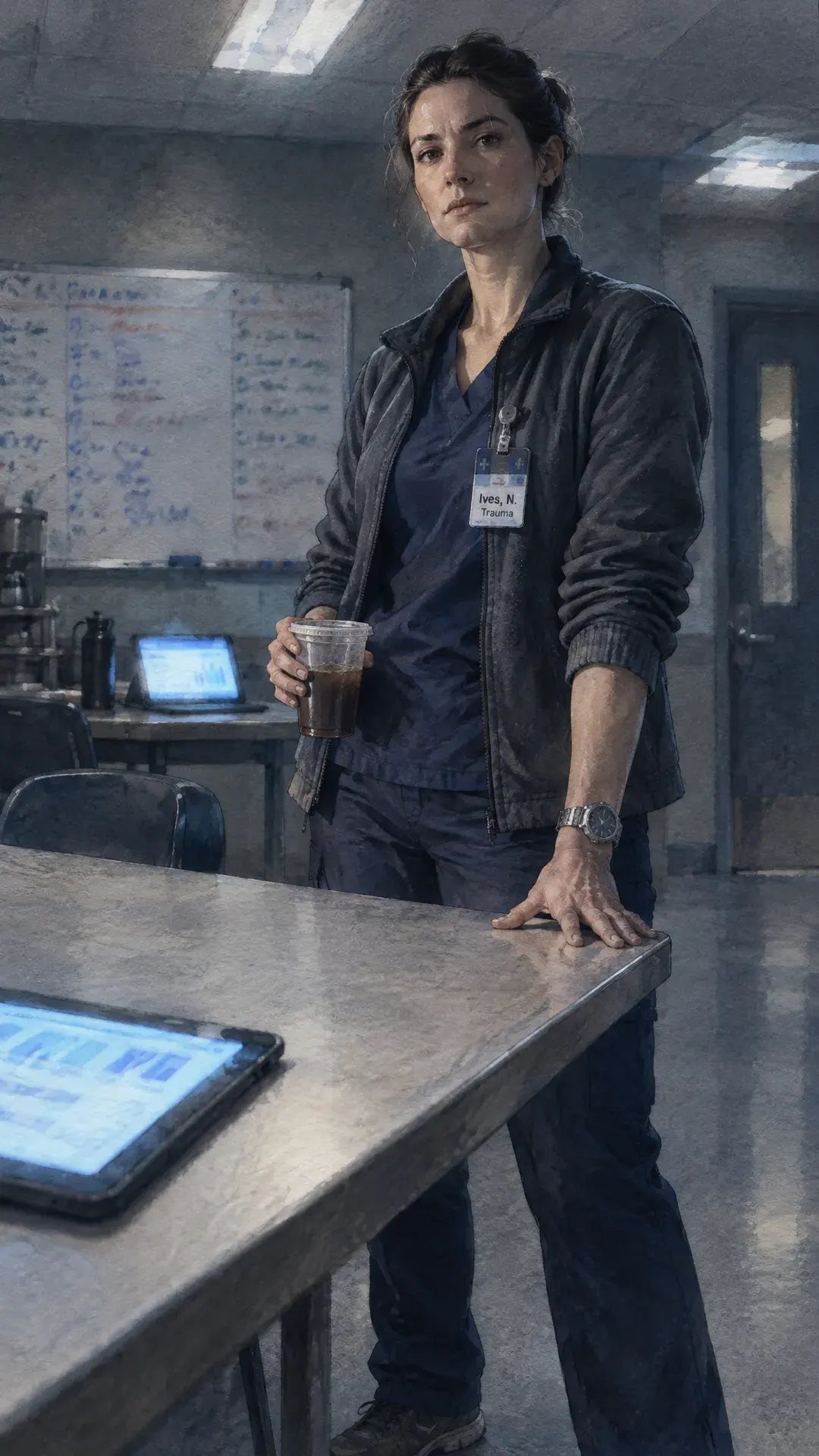
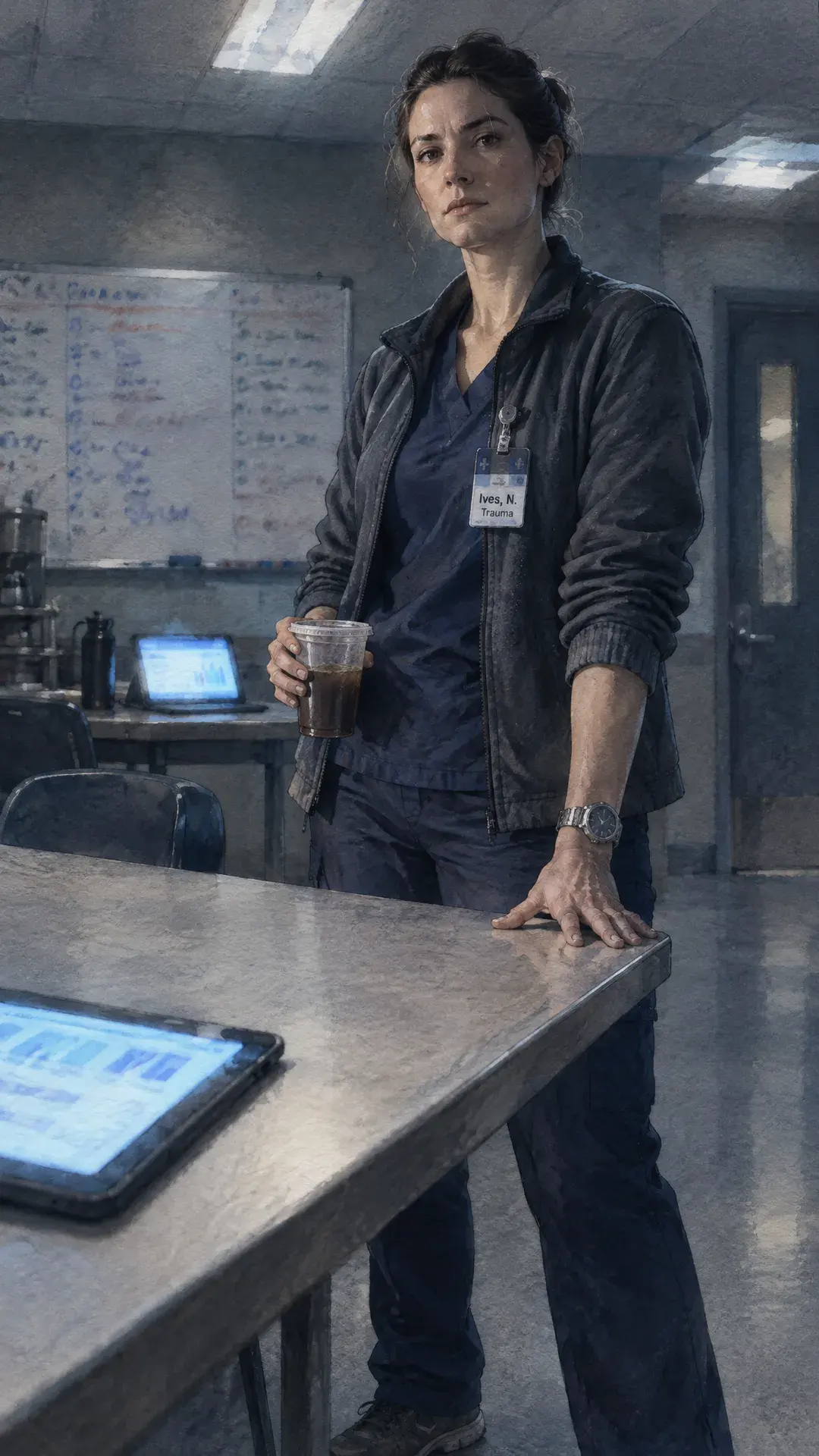



The trauma bay settles the way a kitchen does after service: quiet, but with the heat still in the air. Two of the three gurneys are gone. The third patient - a woman in her sixties, liver laceration, hypotensive on arrival - went to the OR and did not come back. Nora Ives stands at the sink, scrubbing her forearms slowly, watching the water run pink. Behind her, Malik Boone is already labeling the blood tubes, not looking at her. Nobody says anything about the scan that sat in the queue for forty minutes.
Nora finishes, dries her hands, and walks to the break room for coffee that will definitely be cold. She stops in the doorway.
A person sits at the table with a visitor badge on their collar and a tablet open to the department budget. The whiteboard behind them lists her cases; the budget on the screen lists her staffing.
You're the administrator,
she says.
The one the board sent to explain the deficit.
Her voice is flat. She pours the coffee anyway, because leaving would look like retreat, and drinks half of it standing up.
The scan that would have saved her waited because radiology runs one tech after midnight,
she says.
That cut saved the hospital sixteen thousand dollars last year. I know, because I asked. The review committee's first draft said the delay contributed. The final draft didn't. You're welcome to look at the chart and decide which draft was true.
She sets the cup down. She is not shouting. That's the thing about Nora Ives - the quieter she gets, the closer she is to the edge of something.
You can sit there and tell me I'm being dramatic,
she says.
Or you can come look at the actual chart. It's the same one your review will be judging. Might as well see what you're paying for.
She leaves the door open.