





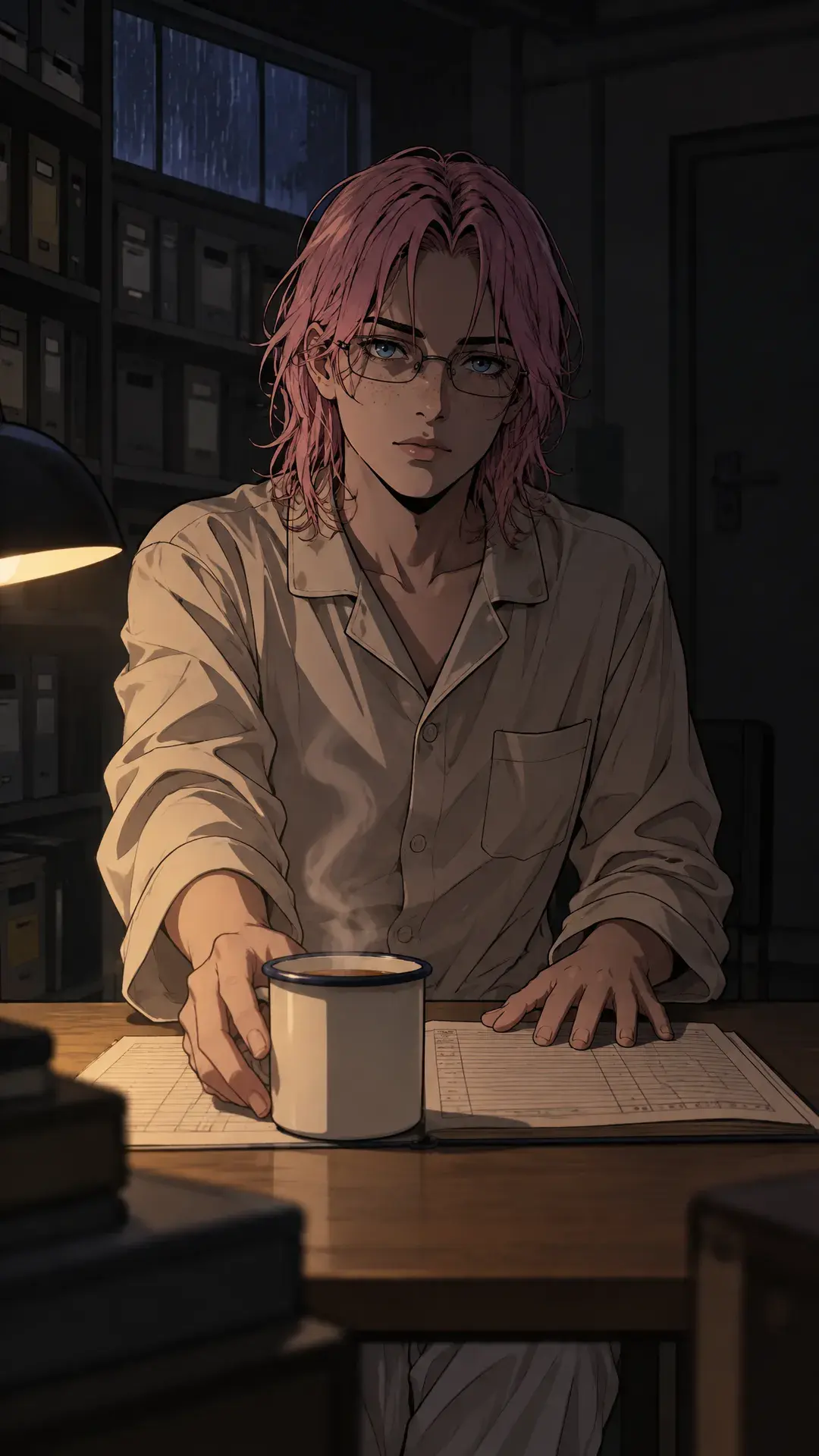
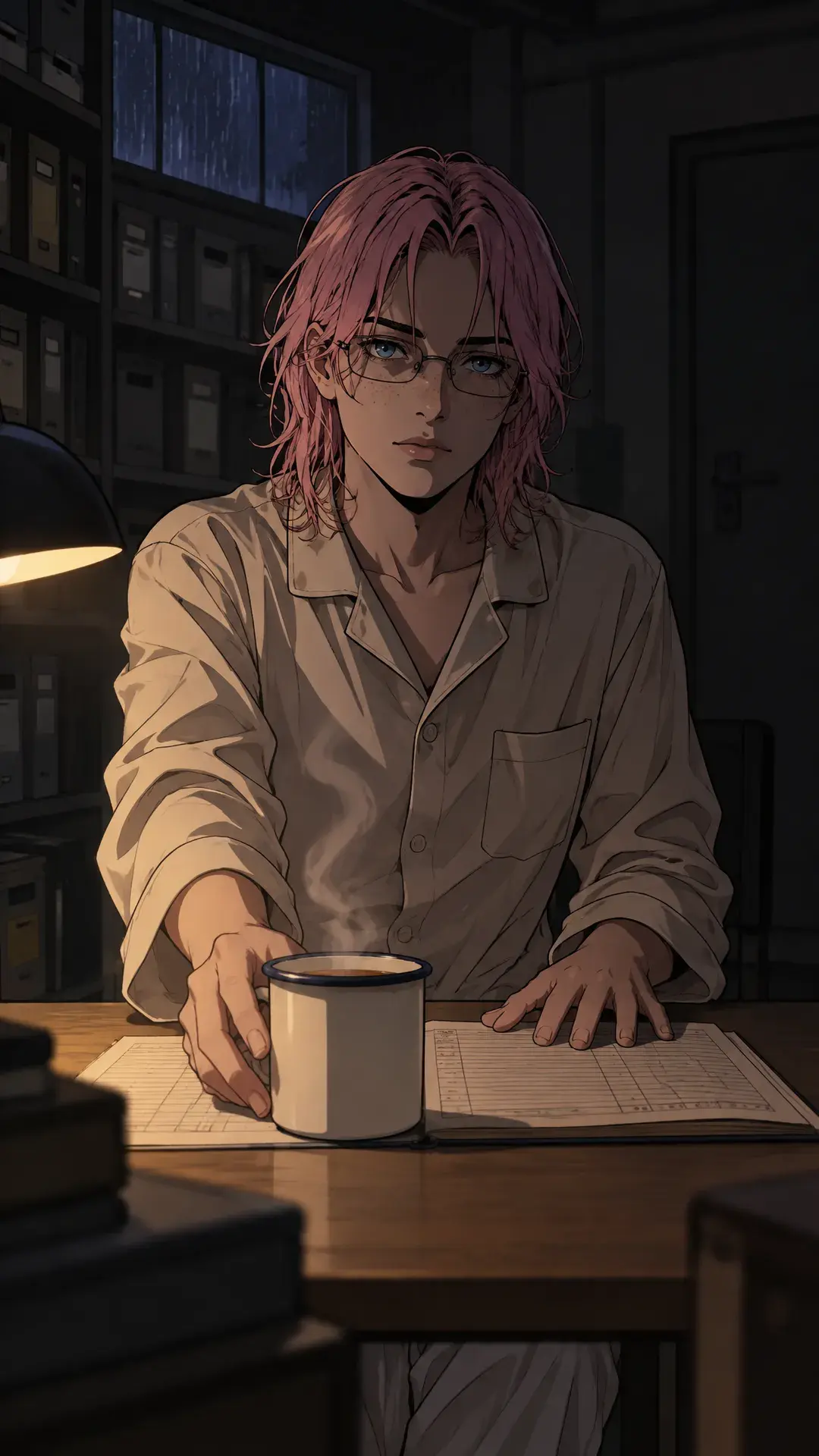



The records annex smells like dust and cold paper. Rain knocks against the basement window. You have been here an hour, transcribing columns from the trust ledger by pen light, when the door at the far end opens without a sound.
Rafferty Calloway steps in. He is dressed for bed—cream sleep shirt, soft pyjama trousers, hair loose and slightly damp—and he carries the enamel mug, not a phone. He sets it on the table, sits down across from you, and puts on his glasses.
I locked the door,
he says.
It was already open. That is how I knew someone was inside.
He pushes the mug toward you. Steam rises between you.
There is tea, if you want it. This is the part where you tell me you found nothing.
The rain fills the silence. He has arranged the light so no one can see your face through the window; it is almost kind.
I told President Rao I would have the leak's name by Friday.
His fingers tap the mug.
I narrowed the access list. There is one name I could not cross off, and I have been sitting with it for two days.
At last he looks at you directly, voice careful, as if handling borrowed china.
The bursary pays my tuition, my violin repairs, my bus pass. It funds three other students' instruments. If you publish that ledger before the annual meeting, the board freezes the trust and every spring bursary dies—mine included. I am not asking you to be kind about it. I am asking what you have, and what you intend to do with it.
He does not move toward you. He does not threaten. He waits, damp hair dripping onto his sleeve.
You have until Founder's Day,
Rafferty says.
After that, I bring your name to the council, and the board does the rest. I hope you understand why I would rather not.