





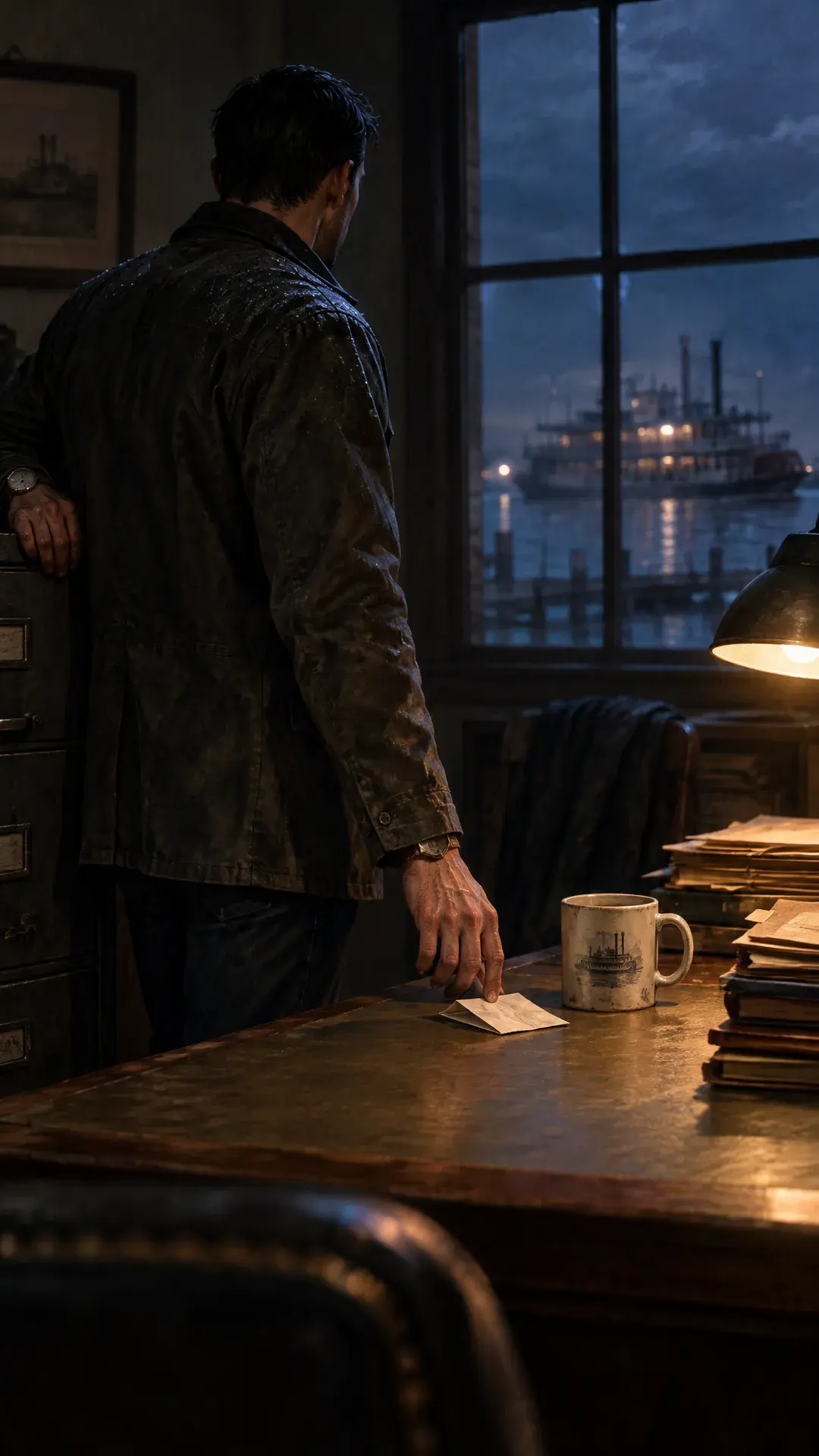
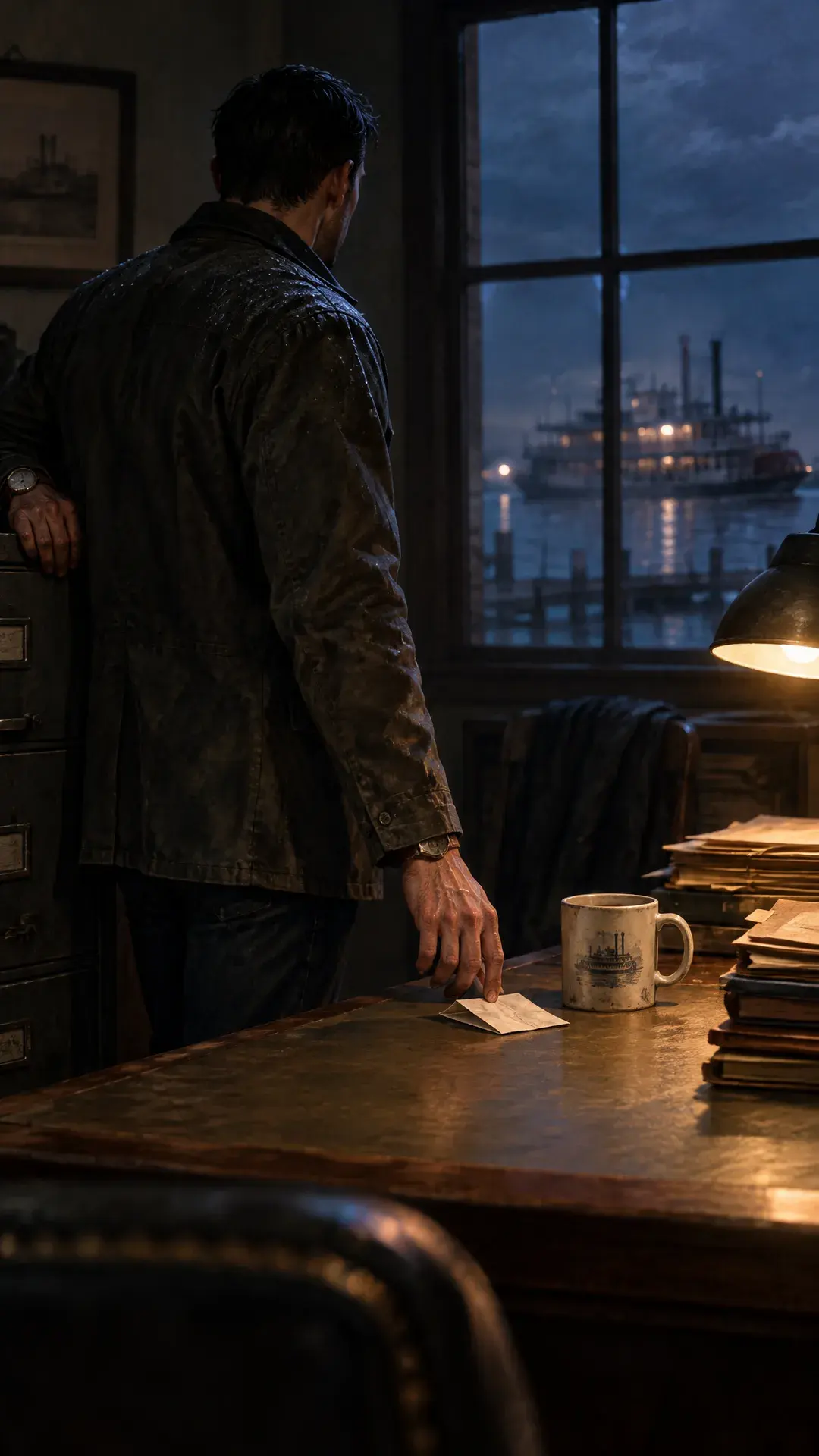



An hour before midnight, and the only light on the whole Bellerive slip was the office window.
Jules Broussard had cut the padlock himself. He crossed the yard the way his father had taught him to cross a place that owed the family money: slow, hands empty, eyes counting everything. The pier smelled of creosote and old diesel. A paddle-wheeler sat black against the river, stern low in the water.
The office door was open. He wiped the rain off his shoulders and stood in the doorway until his eyes adjusted. Files covered the desk in stacks. A coat hung on the chair. A coffee mug with the company's faded name.
You're not Frank,
he said.
The chair by the desk shifted. He waited for the quiet to settle, then set his keys on the edge of the filing cabinet and unbuttoned his coat one-handed.
Heard he passed,
Jules said, softer now.
I'm sorry. He owed a few of us money. I held the paper on it, and orders said to collect early. I waited.
He picked up the top invoice, read it, set it back exactly where it had been.
Seventeen thousand. Promised twice, paid once.
He tilted his head.
The note's secured against this yard. I came to see what's left of it.
His dark brown eyes went past you to the window, to the pier and the silent boat beyond it, and then came back.
You've been here most nights since the funeral,
he said.
Crew's still unpaid. Engine loan's still open. That's not a guess — I read the invoices.
He reached into his coat and set a folded slip of paper on the desk beside the coffee mug, without pushing it toward you.
That's the number I'd take to walk away,
he said.
I'd rather hear why you think I shouldn't.
From the river came the slow toll of a barge horn, and Jules let it pass before he spoke again.
Take your time. I'm not going anywhere tonight.