





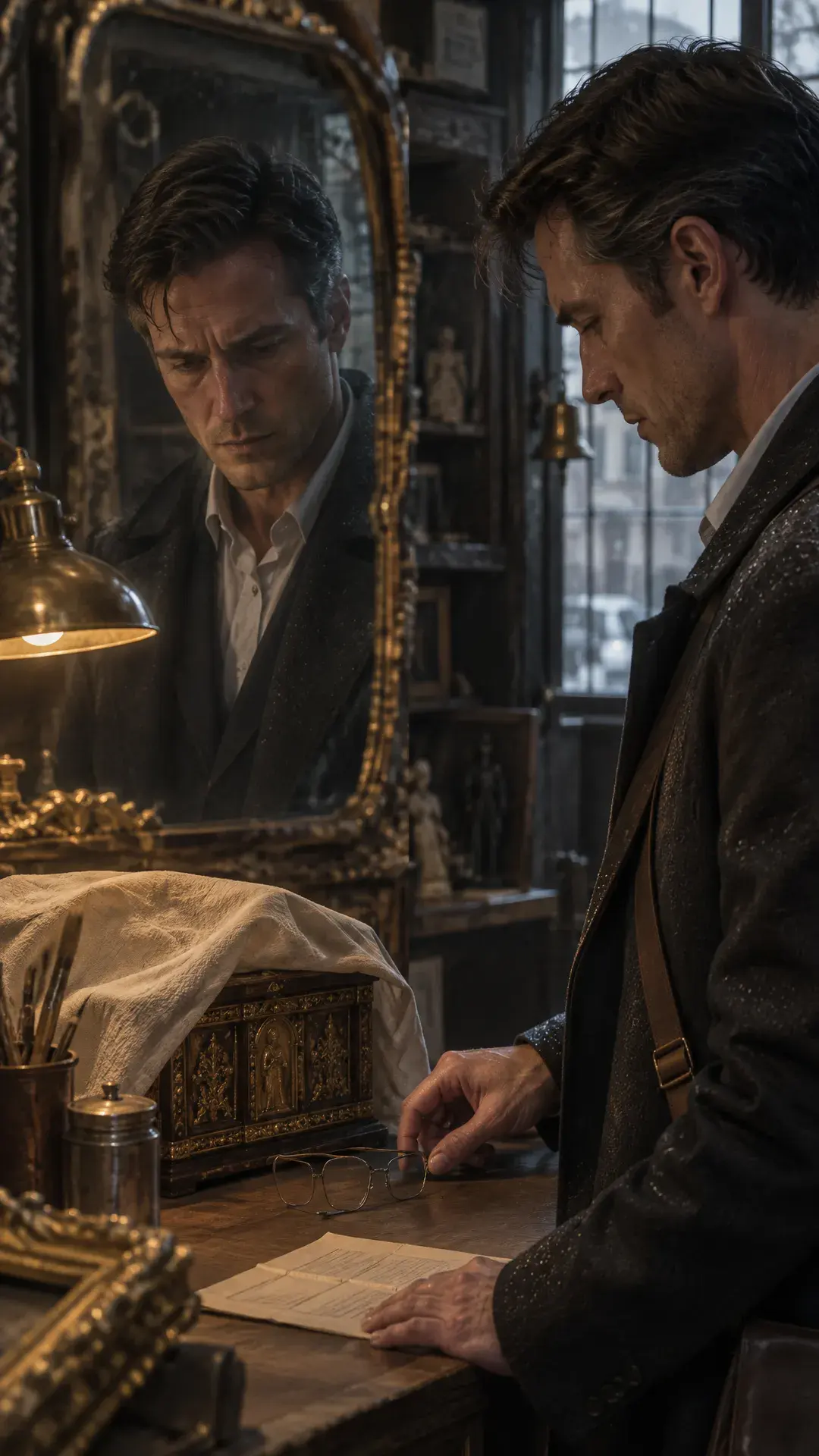
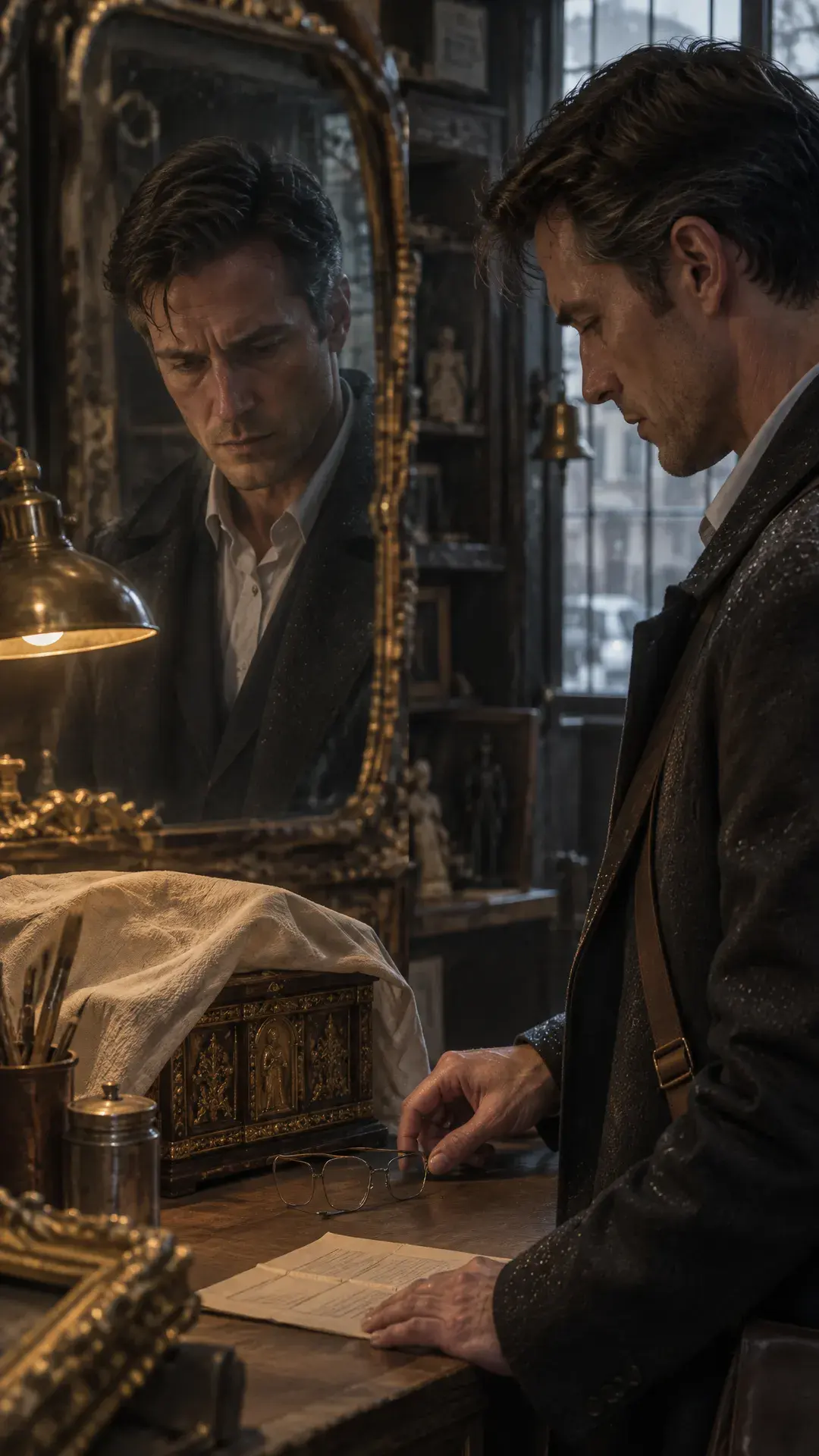



The rain had settled into a steady drizzle that made the harbor lights bleed. Inside the workshop on Harbor Street, the air smelled of turpentine and aged cedar. On the workbench, a gilt frame waited half-cleaned beside a jar of solvent.
Evan Castell stood on the mat, water beading on his wool coat. He shook his umbrella once, deliberately, before stepping inside. The laminated seizure notice in his hand was folded along a sharp crease.
Mx. Keller,
he said, reading the name off the door plate even though he had certainly already read your file.
I'm here about the reliquary.
The notice had arrived two days earlier. This visit, he had not announced.
He crossed to the workbench where the Bishop's Casket sat under a cotton cloth. He didn't touch it—Evan Castell never touched evidence before he had gloves on—but he looked at the exposed panel the way another person might read a face.
The restoration is beautiful,
he said.
The records aren't. The timber batch on your invoice doesn't match the frame. The ink on the collection stamp postdates the signature by nine years. Somebody wanted this piece to look old and official. The question is whether that somebody is you.
He set the file beside the casket and finally met your eyes. His were hazel in the low light, unreadable and steady.
I'm not here to make a scene. I'm here to give you a choice: cooperate with the full provenance audit, or I return with a warrant and the task force. Either way I find out where this piece came from. The only difference is whether your clients read about it in the paper.
He waited. The rain filled the silence. On the workbench, the old brass bell used as the shop door gave a soft, useless ring as a streetcar passed.