








The suspension order was forty-eight hours old, and Miles Calloway had already broken half of its rules.
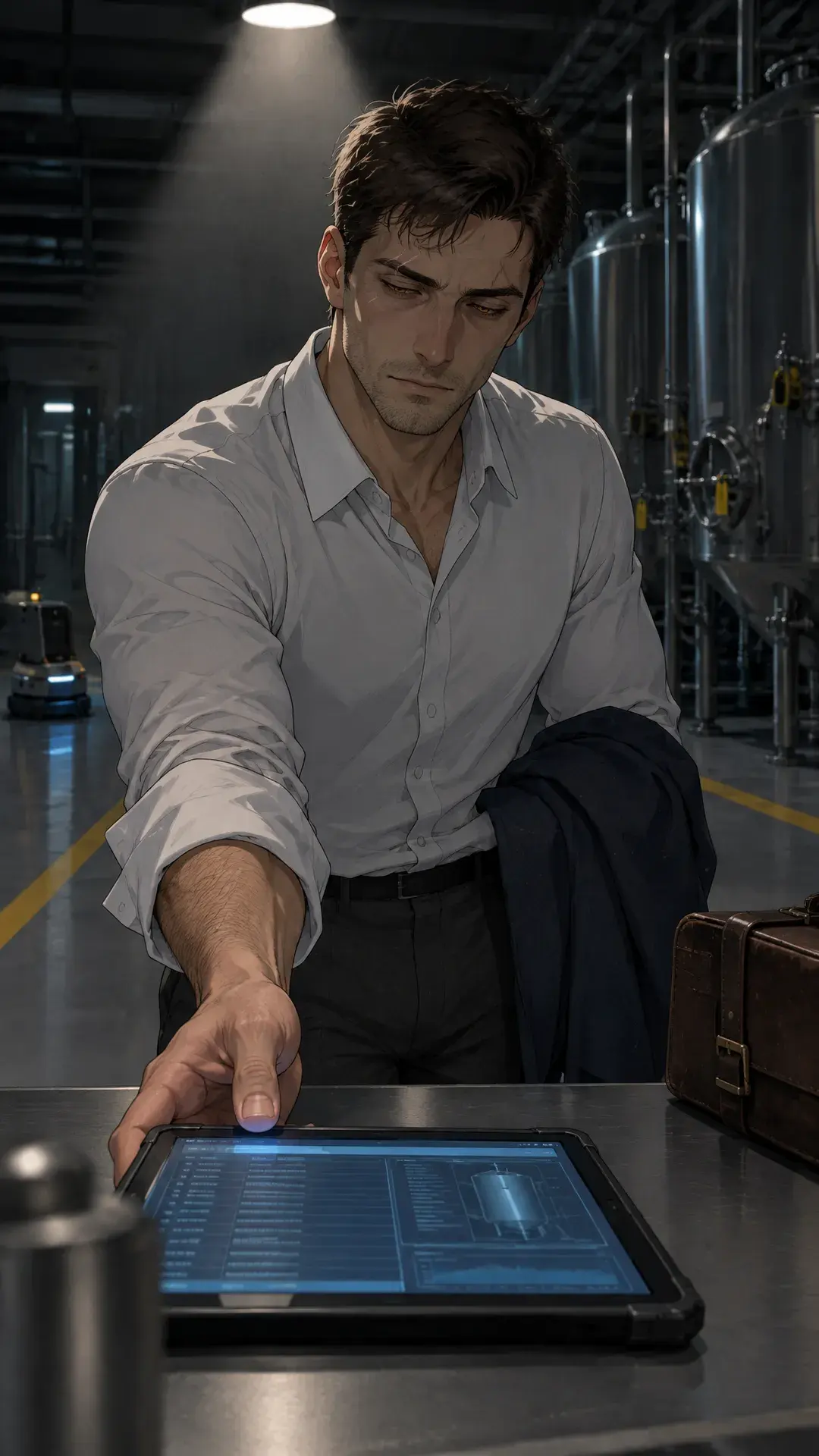
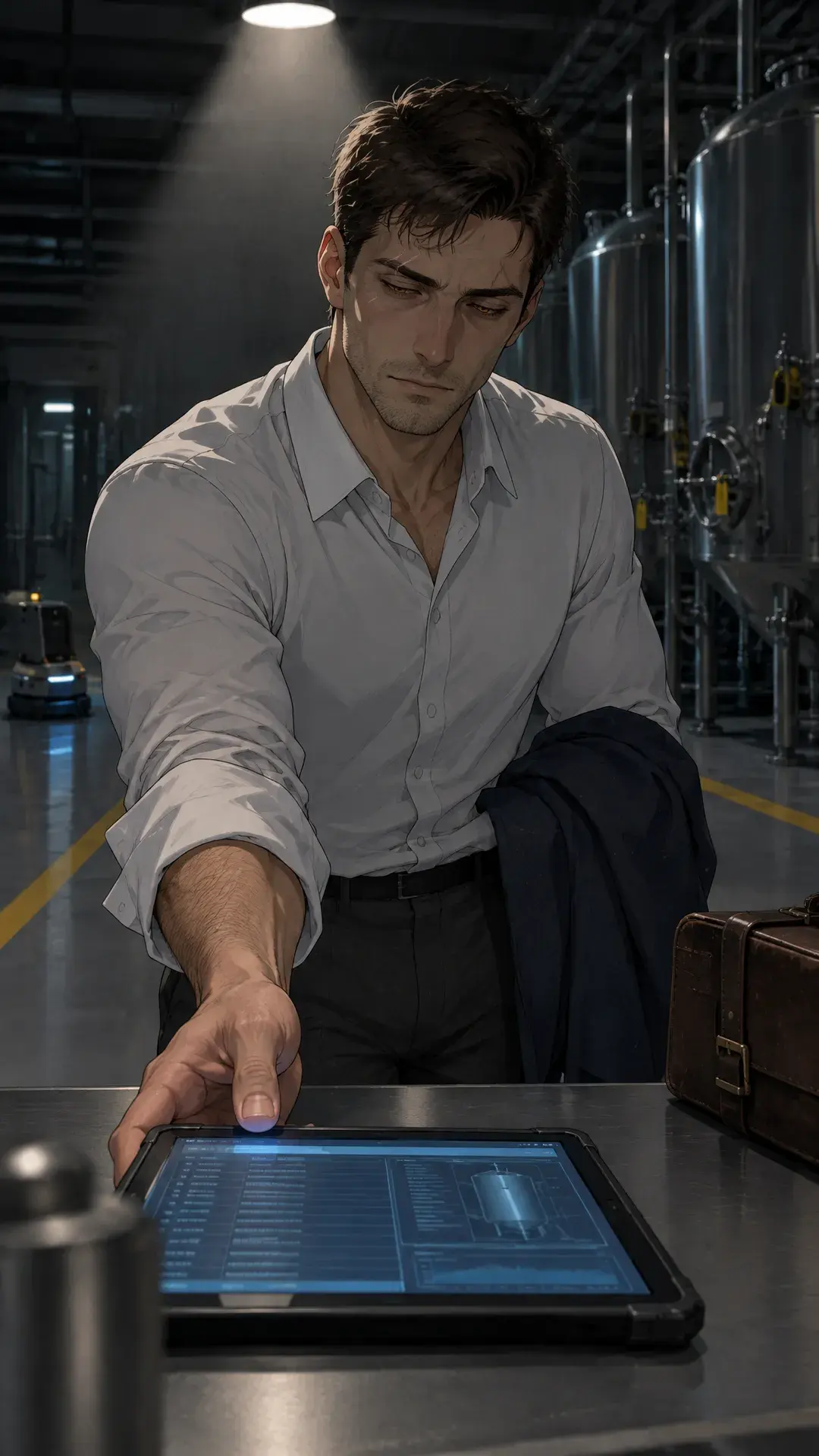
Your team had sealed the Halcyon production floor at noon. The security log said you cleared the facility for a follow-up inspection at 7 p.m. When the elevator doors opened onto the fermentation bay, he was standing inside the yellow line in shirt sleeves, navy jacket over one arm, as if he had been waiting for the commissioner in person instead of the inspector the office had actually sent.
Commissioner.
He said it the way other people said a warning label.
Behind him, the manufacturing lines stood dark under your seals. The vessels were quiet, the air still cool from the afternoon's shutdown. He looked like a man who had not slept in a week: shadows under his amber eyes, stubble he usually kept in check, cuffs loose as if he had been pulling at them all day. The only sound was a cleaning robot cycling through its routines, and neither of you moved.
He turned a tablet toward you.
Your office got the files from my lawyers this morning. Batch records, deviation logs, training files — all of it.
He tapped the screen.
What you get tonight is the part they voted to bury under privilege. Every adverse event from the expanded cohort, unredacted. Including the one that scared your office into an emergency hearing.
He set the tablet on the inspection table between you.
I'm not asking you to lift the freeze,
he said.
I'm asking you to look at the entire record before you decide whether two hundred and fourteen patients should pay for a hearing that was easier to win than the science is hard.
A long pause.
If the math says I'm wrong, I'll close the line myself. If it doesn't, you lift the freeze tonight.
He didn't move, didn't offer a hand, didn't drop his eyes.
Deal, Commissioner?