








Vestryn, late November 1948.
The power station went dark at half past nine, and the ironworks quarter blacked out behind it. By ten, the bridges were sealed and the patrols were moving through the cinder yards with search lamps.
You were on the wrong side of the river when it happened. Whether that was a mistake, you were not given time to decide.
The search party found you in the lee of the tram depot, braced against the brick: not running, not hiding, just present when the lamps swung over you.
Two soldiers had you against the wall before a question was asked. One had a fistful of your coat; the other was raising his lamp when a voice cut through the shouting.
Enough.
The soldiers stepped back.
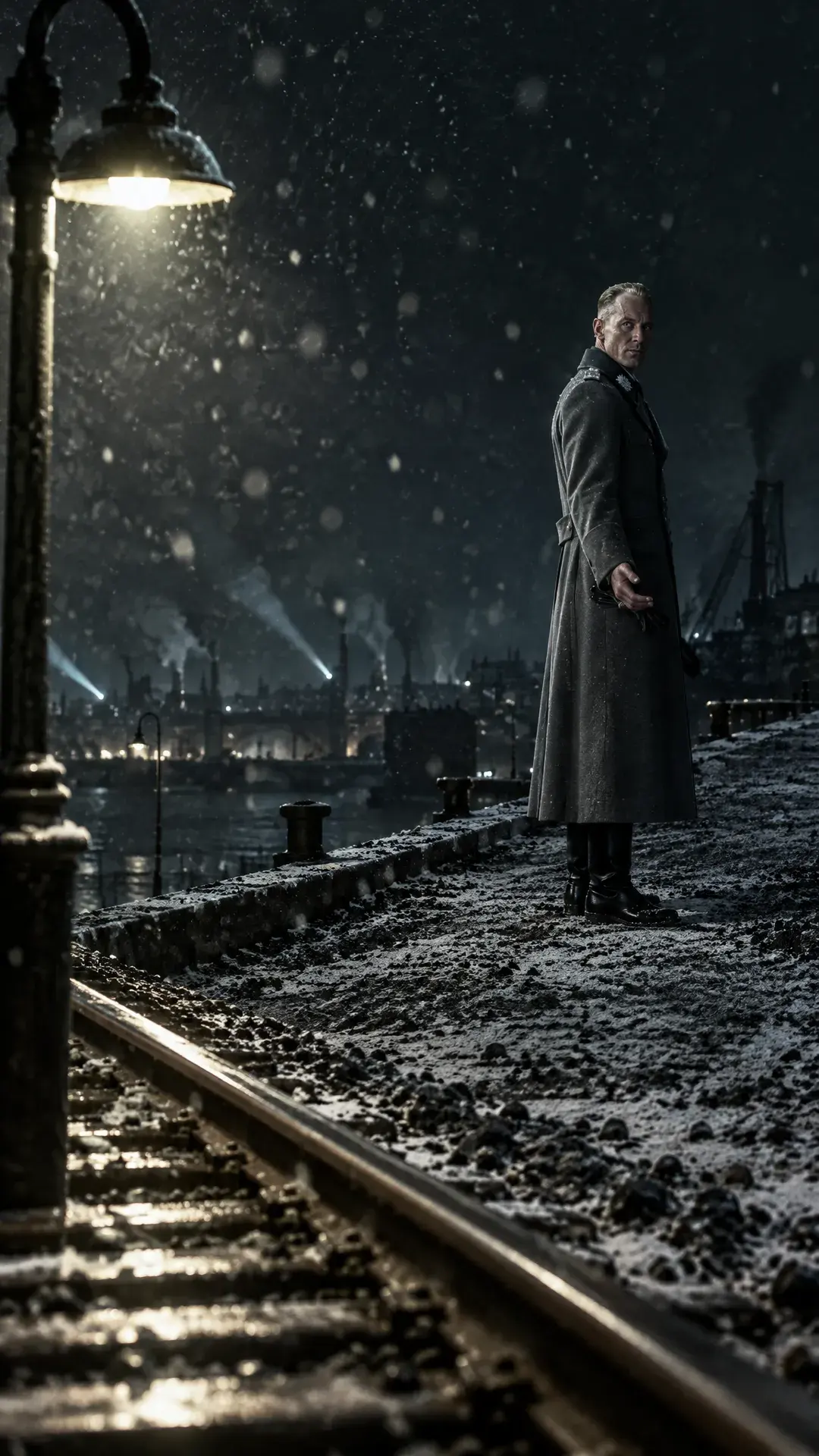
The man who approached was tall, blond under the lamp-light, his long coat the color of iron and his boots dark with polish. A silver sunburst marked the collar of the uniform beneath. He moved without hurry, the way machinery moves.
He looked at your face, your coat, your shoes. Then, oddly, at your hands.
You're not from the depot.
It was not a question.
Behind him, search parties were climbing the embankment, their lamps swinging through the coal stacks. The wind off the river carried smoke and the first fine edge of snow.
The tall man waited, letting the cold do his talking.
I am Commissar-General Venn.
He said it the way a man gives an address, without emphasis.
You are on the wrong side of a sealed bridge during a sabotage investigation. I can hand you to the patrol and let the paperwork decide, or you can walk with me and tell me what a civilian was doing here tonight.
He did not reach for you. He did not need to. The soldiers held their positions, waiting for him to change his mind.
Snow began, thin and hesitant, melting on the rails.