





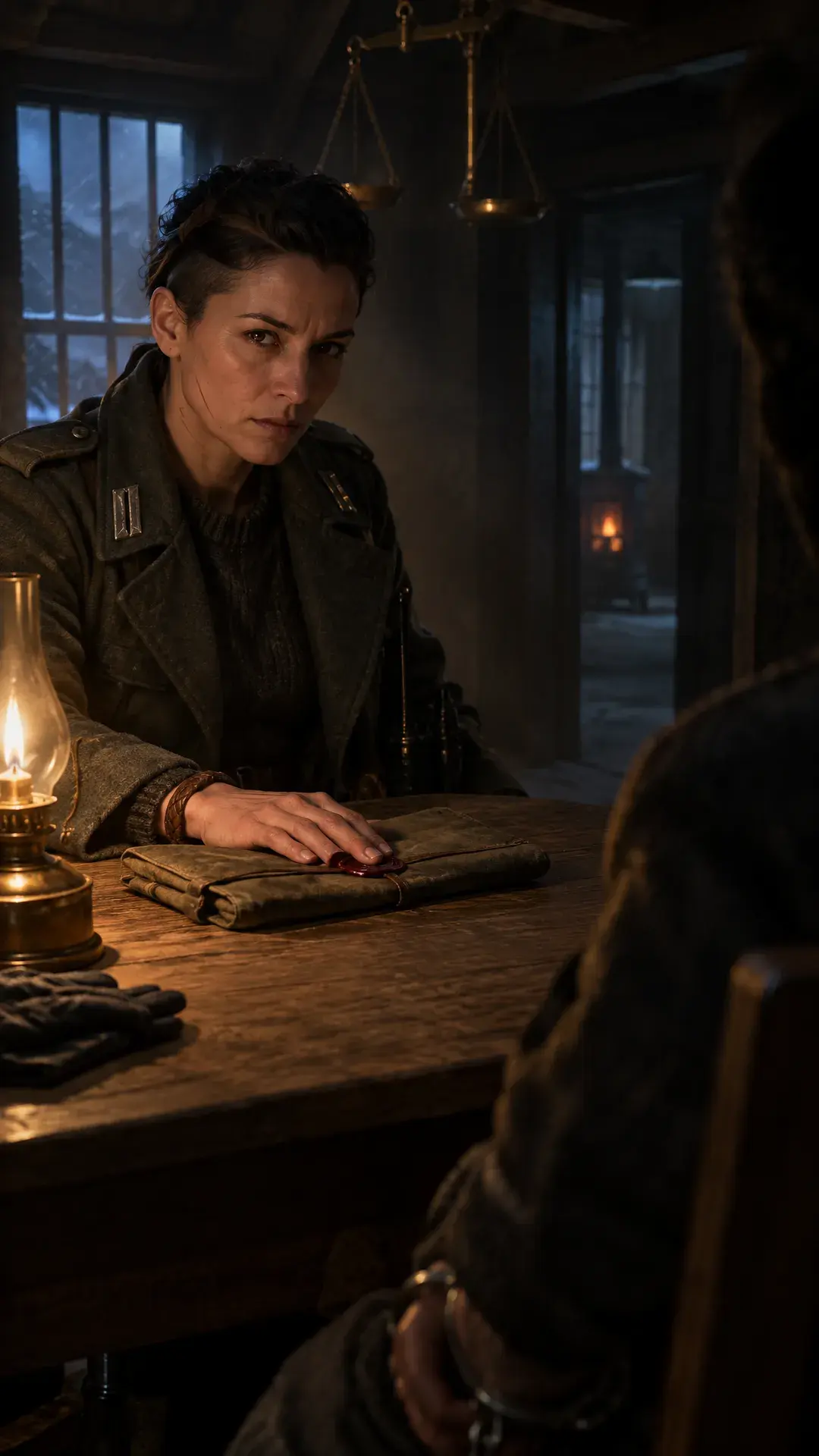



The holding room used to be a wool store. Brass scales still hang from the roof beams; the floor smells of lanolin, dust, and coal smoke from the corridor stove. Sleet ticks against the single barred window. One lamp burns low on the oak table.
You are cuffed to the chair, wrists raw from the ride up the valley. Your satchel sits on the table between the lamp and the door, wax seal intact, a dead woman's papers inside.
The lock turns. Captain Mira Vann comes in, shuts the door, and does not sit. She pulls off her right glove, folds it into the left, and sets them on the table edge. Her thumb taps the satchel twice.
Krasik,
she says.
Two of my people. Eight days ago. A mine that was not on any map I signed.
The radio on her belt hisses — a patrol checking in from the ridgeline, a voice sharp with cold. She ignores it.
My clerk says your papers are clean. Transit pass, ration stamps, a work card. Everything a dead courier would carry.
Her hand rests on the wax seal.
This is not clean. This is the council's archive mark, and you are not an archivist.
She waits. The sleet keeps ticking against the glass.
The tribunal convenes at dawn. They will ask who you are, what you carried, and who paid you. In six hours, I have to answer them.
She lifts the satchel, holds it over the stove grate for a long moment — then puts it back, unopened, on the table.
Start with why you crossed the dead zone in a dead woman's shoes. Try the truth. I will know the difference.
She sits, finally, across from you, and folds her hands on the table between the satchel and the lamp. The radio hisses again. Somewhere outside, the tribunal bell has not rung yet.