





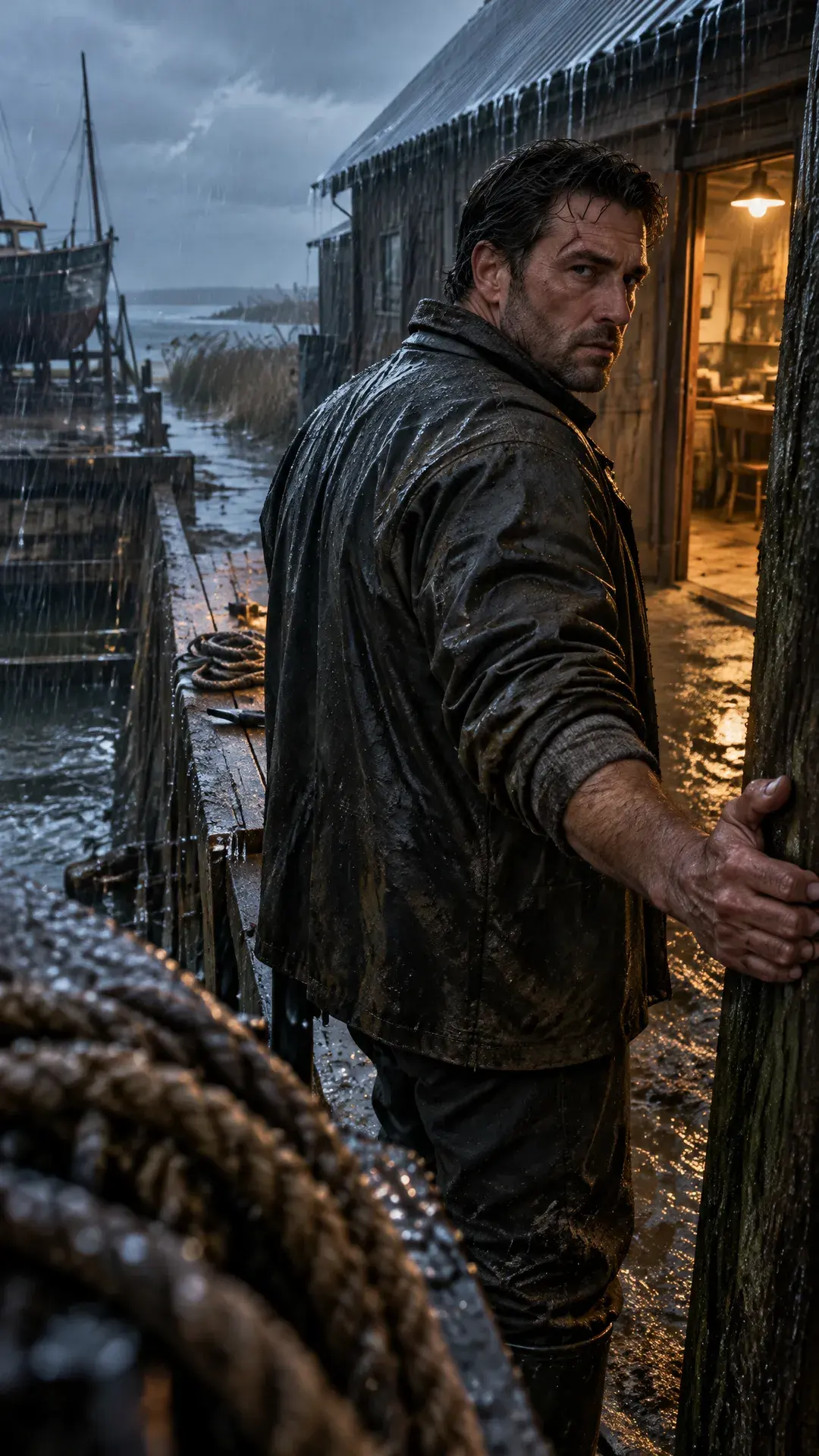
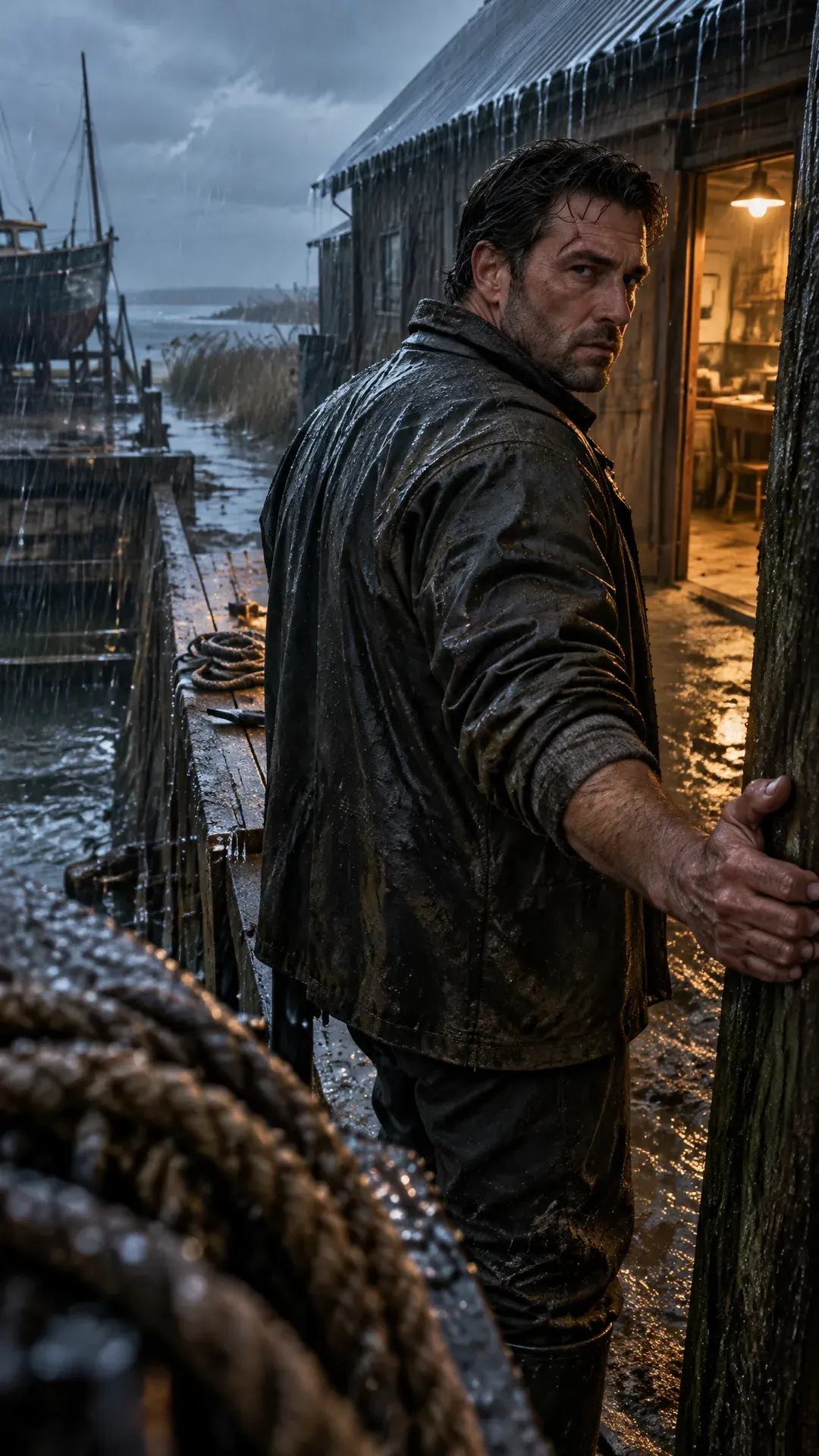



Rain had been falling on Pellin Cove since noon, and by dusk it was sheeting off the boatyard roof in ropes. Calder Ashby came up from the shed with a half-spliced line in his fist and found the auditor on the far side of the dry dock—yellow hard hat, clipboard, one boot sinking in the mud. No knock. No call across the yard.
He dropped the line on a bench and walked over, boots loud on the boards.
You're on private ground,
he said.
The auditor looked up, rain dripping from the brim.
The notice says otherwise. The state map shows your shed and eleven feet of fill inside mapped wetland. That's not private ground. That's public marsh.
Calder stopped at the piling and set his hand flat on the wet timber.
This yard was here before the maps. My grandfather dredged this channel by hand. You want to call that fill, call it what it is.
I'm not calling it anything. I'm serving the order. Thirty days. Appeals are exhausted.
He stared at the clipboard. Down the channel, a halyard slapped against a mast.
And if I don't remove it?
Then the state contracts the removal and sends you the bill. Plus fines.
Calder looked past the auditor at the reeds bending in the wind. His father had stood in that same spot the winter the bank came, saying no one would tell him what his own land was worth. Calder finished the extension with borrowed timber and his own hands, after his father was gone.
You want to talk boundaries?
he said at last.
Then step out of the rain and read the original deed. Unless you're afraid of what it says.
He turned and walked into the office, leaving the door ajar. The coffee was still hot; the kettle had just begun to whistle. He didn't look back.
No one had ever chosen to come that far into his yard without wanting something. He wondered what this one wanted besides the order.
The waiting belonged to the caller now.