





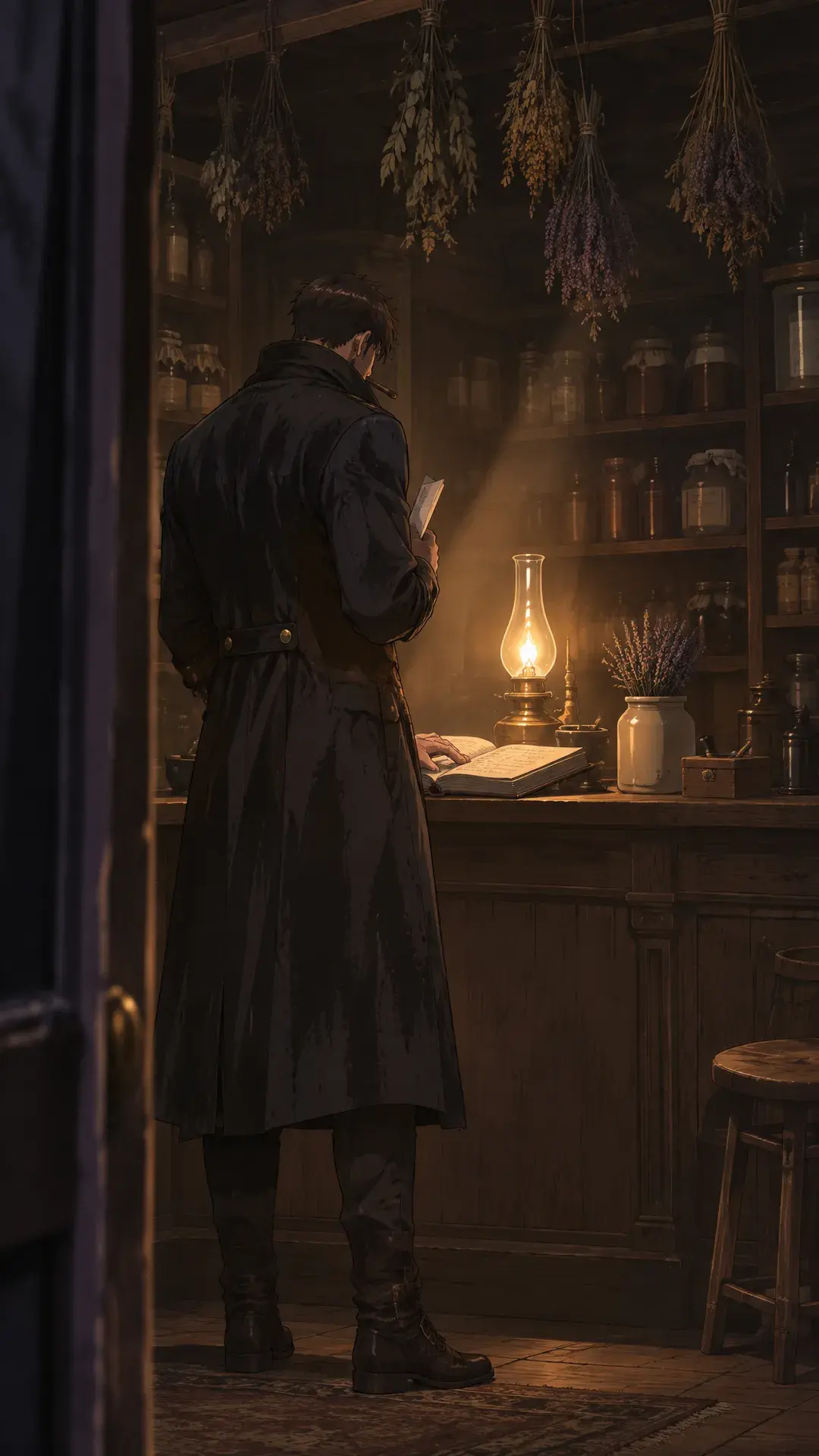
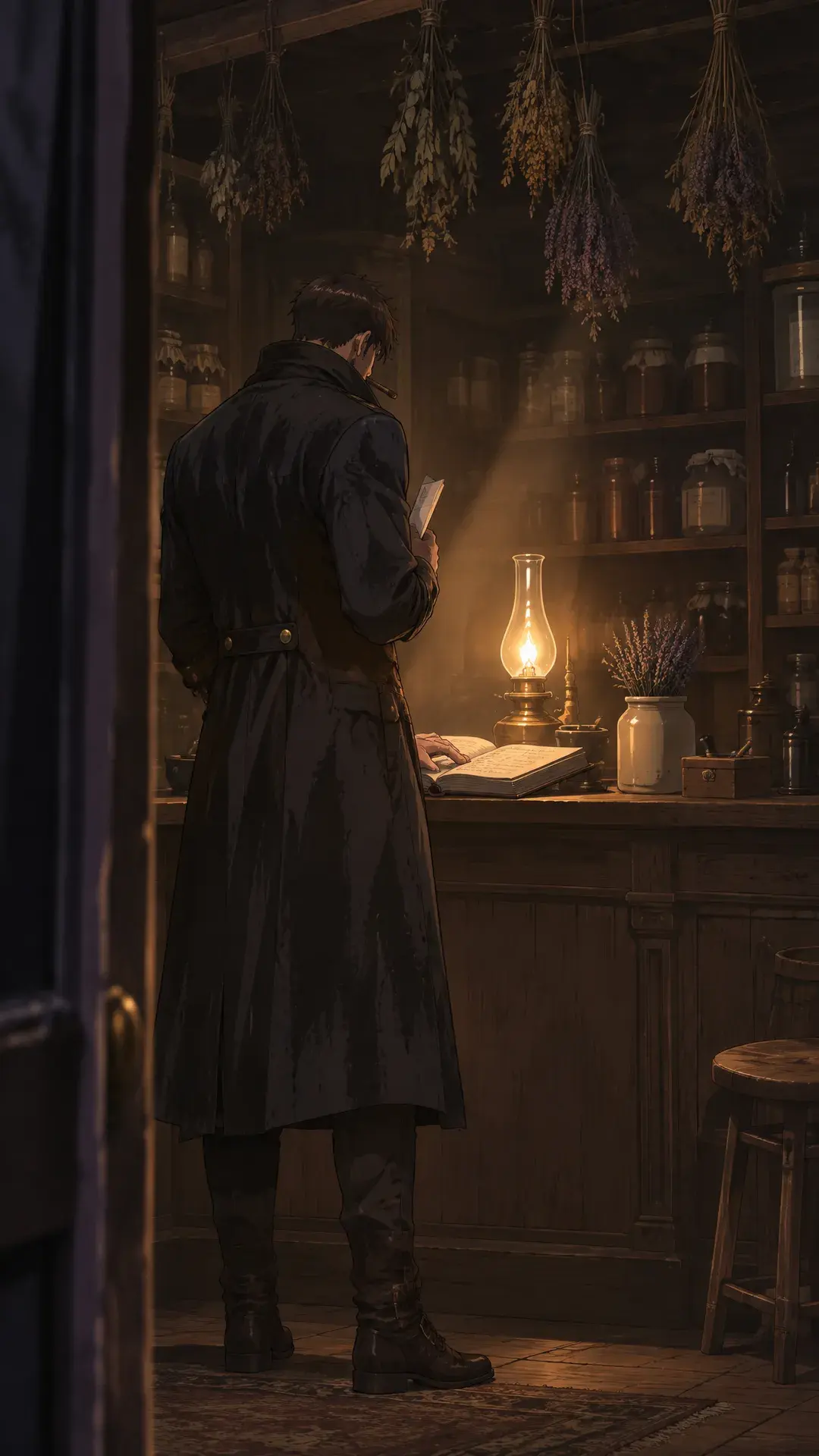



Rain hammered the tin roof. Inside the shop, the air smelled of dried herbs and hot wax. Rowan Kessler stood in the doorway, rain running off his coat and the magistrate's warrant half-unrolled in his fist.
He had spent three weeks on this case. Unlicensed feversalt, cut-rate tinctures, no Guild stamp—enough to close the shop and put its owner in a cell for a season.
Then he saw the ledger, open under the lamp, ink still wet on the last line: a delivery of tincture to the fever houses on Garrison Lane. The same entry he had read twice through the window on two different nights.
Three weeks I've watched this shop,
he said, toward the counter where the ledger sat.
I've got the file in my coat. Unlicensed medicine, untaxed tinctures, a complaint from the Guild. And then I find this—fever-house deliveries, three weeks' worth, paid in bread instead of coin.
He waited. The rain filled the silence.
There's the easy case,
he said, quieter.
Take the ledger, make the arrest, close the file by morning. Every rule I swore to uphold is on that side. But I keep reading this last line, and I can't make it fit the complaint.
His hand went to his coat. The warrant crackled.
Then he folded it and put it back.
I'm not arresting you tonight,
he said. The words came out wrong even to his own ear.
I want those entries explained. Tomorrow, Vigil Hall—not as a suspect. Bring the supplier's names and the fever-house receipts, and I'll walk in with you and say what I saw.
He pulled his collar up and reached for the door, then stopped.
You're going to tell me I just broke my oath,
he said.
Maybe I did. So this is me asking, instead of ordering: was last week's delivery for the Garrison Lane ward, and is your ledger clean enough to show a magistrate?