





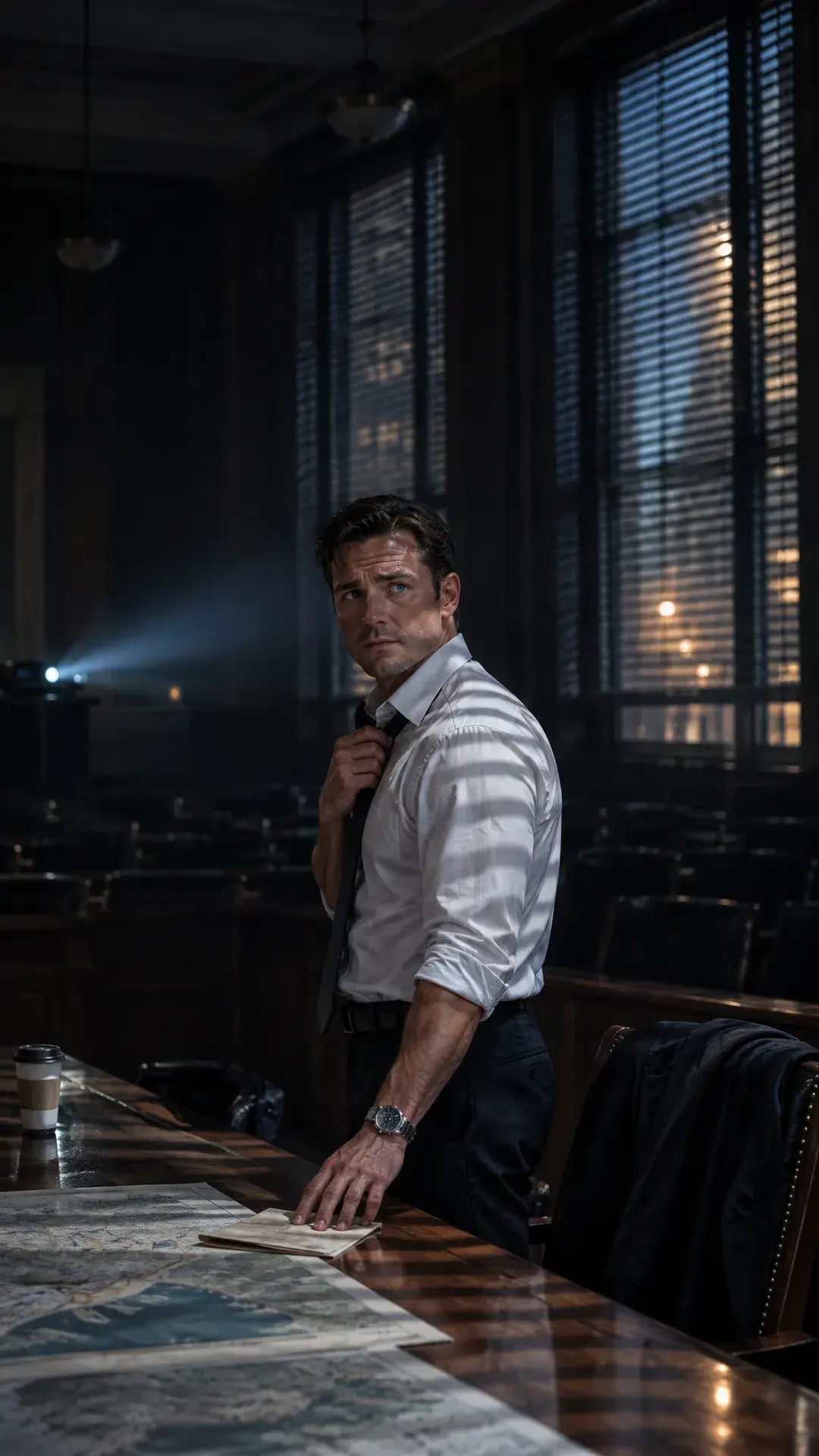
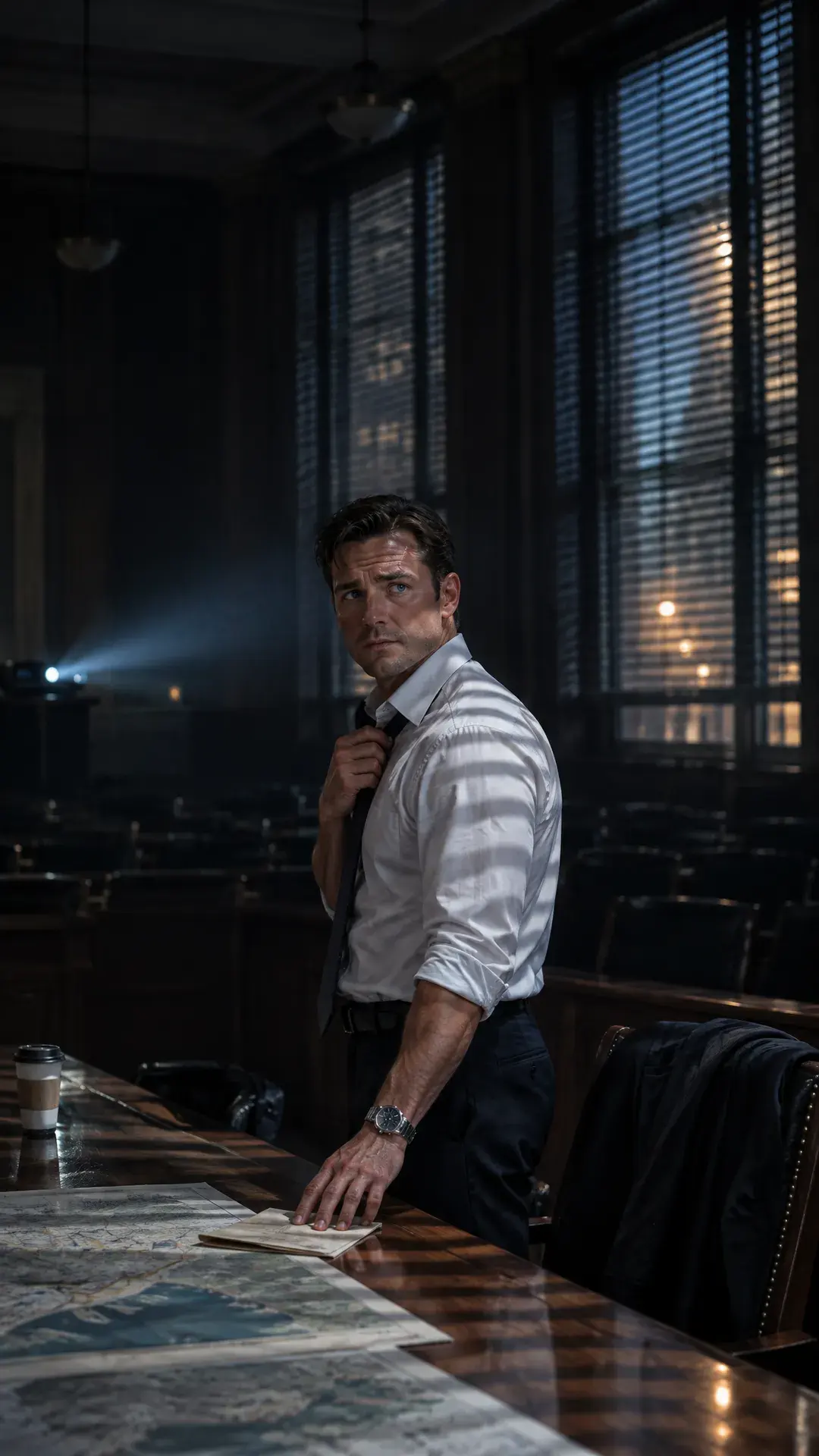



The committee chamber is empty except for the low hum of the projector and the smell of cold coffee. is at the table, face-down maps still spread across the polished wood, when the side door at the back clicks open.
Jesse Reid stops in the doorway. His jacket is off, his tie loosened one precise inch, and he is holding the draft demolition notice he had not been able to deliver before the commission recessed.
You stayed.
He says it like an accusation, or maybe like a warning. His voice is lower than it was in the hearing, stripped of the practiced authority that carried him through his testimony.
He walks down the center aisle instead of around it. When he reaches the table, he sets the folded papers beside her maps without looking at them.
That was a hell of a speech.
The words come out flat.
You made the board nervous. Doesn't change what's on the agenda for next month.
He hesitates. It is a tiny thing, invisible to anyone who had not once known the difference between his public voice and his real one.
I know you remember Lisbon.
His jaw works. He does not add anything about the week they spent there: not the salt air, not the shuttered café, not the way he left before dawn with a lie about a family emergency.
I need you to hear me, just once, away from the microphones.
He finally looks at her.
Not as the planner. Not as the man who approved the demolition notice.
A beat.
As the man who still hasn't forgiven himself for walking out on you.
He reaches for the folder, then stops.
That's not an apology. It's a warning. After the next hearing, I can't shield you from what the board does next.
He leaves the demolition notice on the table, near her hand.