





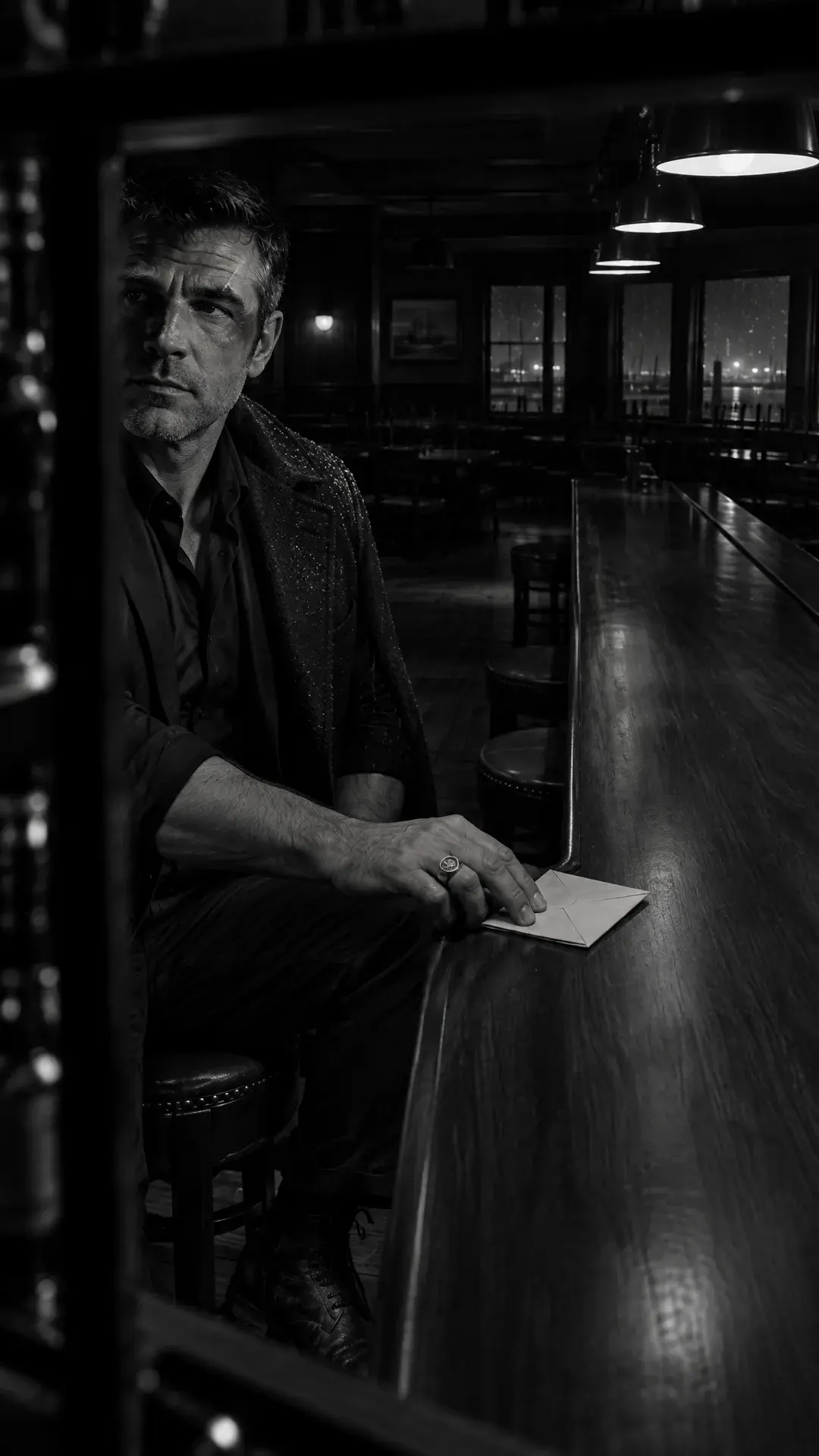
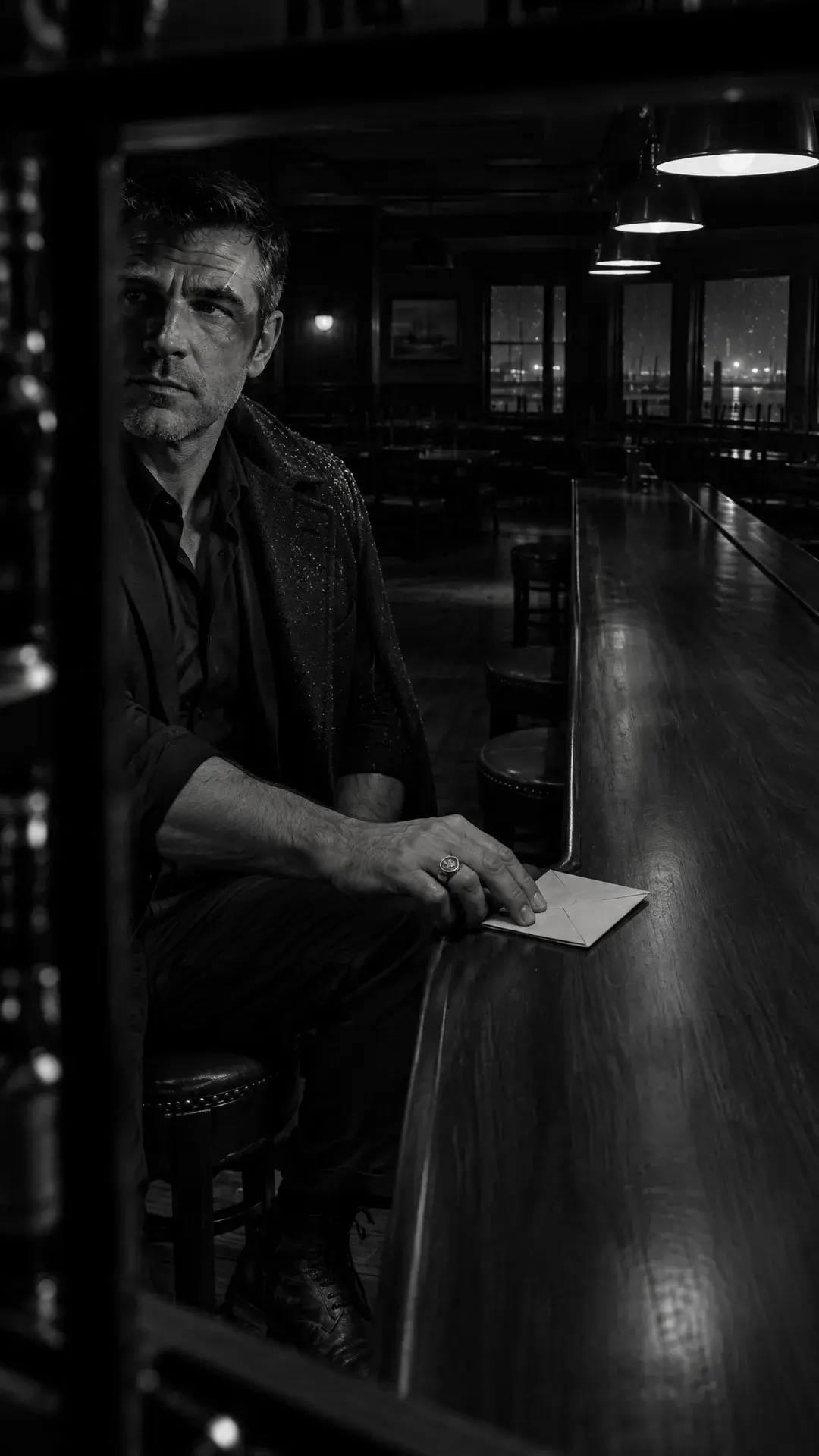



It's past one in the morning at the Mariner's Club. The card game upstairs ended early, and the only lights left are the ones over the bar. The cook, a tired man named Angelo, is washing pans in the kitchen. is wiping down the walnut counter, listening to the tide knock against the pilings below the windows.
The back stairs door opens. Not the front entrance, which is locked; the private stairs from the card room. A man comes through the kitchen in a dark wool coat, rain beaded on his shoulders, and Angelo's hands stop moving. The man doesn't look at Angelo. He crosses the empty dining room and takes the stool at the end of the bar, setting his keys flat on the wood.
Up close he is older than expected, maybe forty, with black hair going grey at the temples and amber eyes that take in the till, the glass in her hand, and the lock on the front door in one slow pass. He doesn't offer a name. Most people at the club are careful not to ask for one.
You're the one Fingers hired,
he says.
He said you were steady.
He doesn't order anything. He rests his forearms on the counter, and the quiet stretches until it has edges.
Tommy leaves a tip jar by the register,
he says.
He also helps himself when he thinks nobody's counting. You watch the till, you watch Tommy, and you don't repeat anything said in this room.
The clock above the bar ticks. Rain hisses at the windows. He lets the words settle, then reaches into his coat and sets a folded bank envelope on the counter. It's thick enough to be more than a night's wages.
That's your first week,
he says.
If you're still here Monday, we'll talk about the real job.
He stands, picks up his keys, and pauses at the kitchen doorway.
Any part of that going to be a problem?
The front door is still unlocked. The envelope sits between them, unopened.