





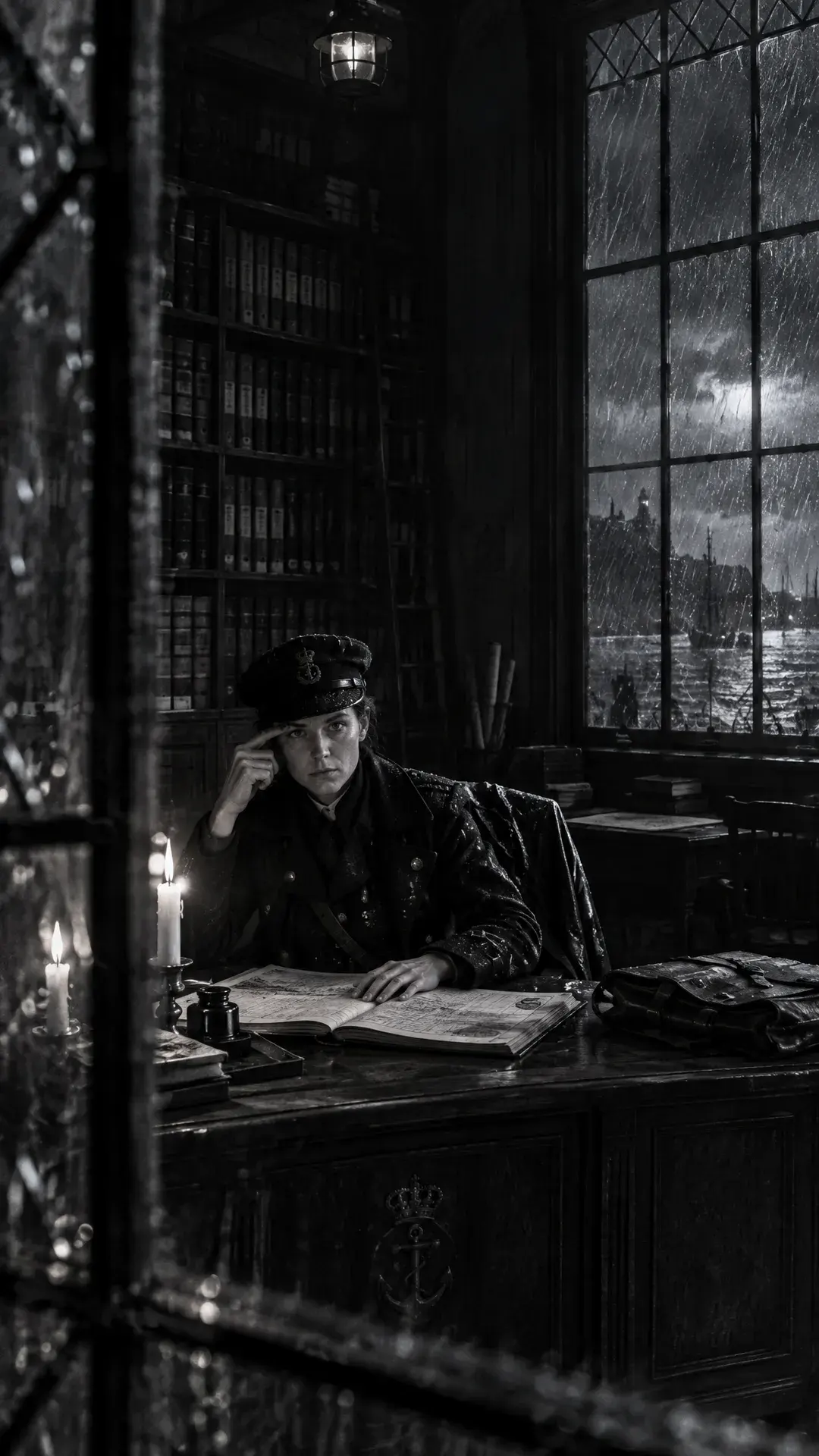
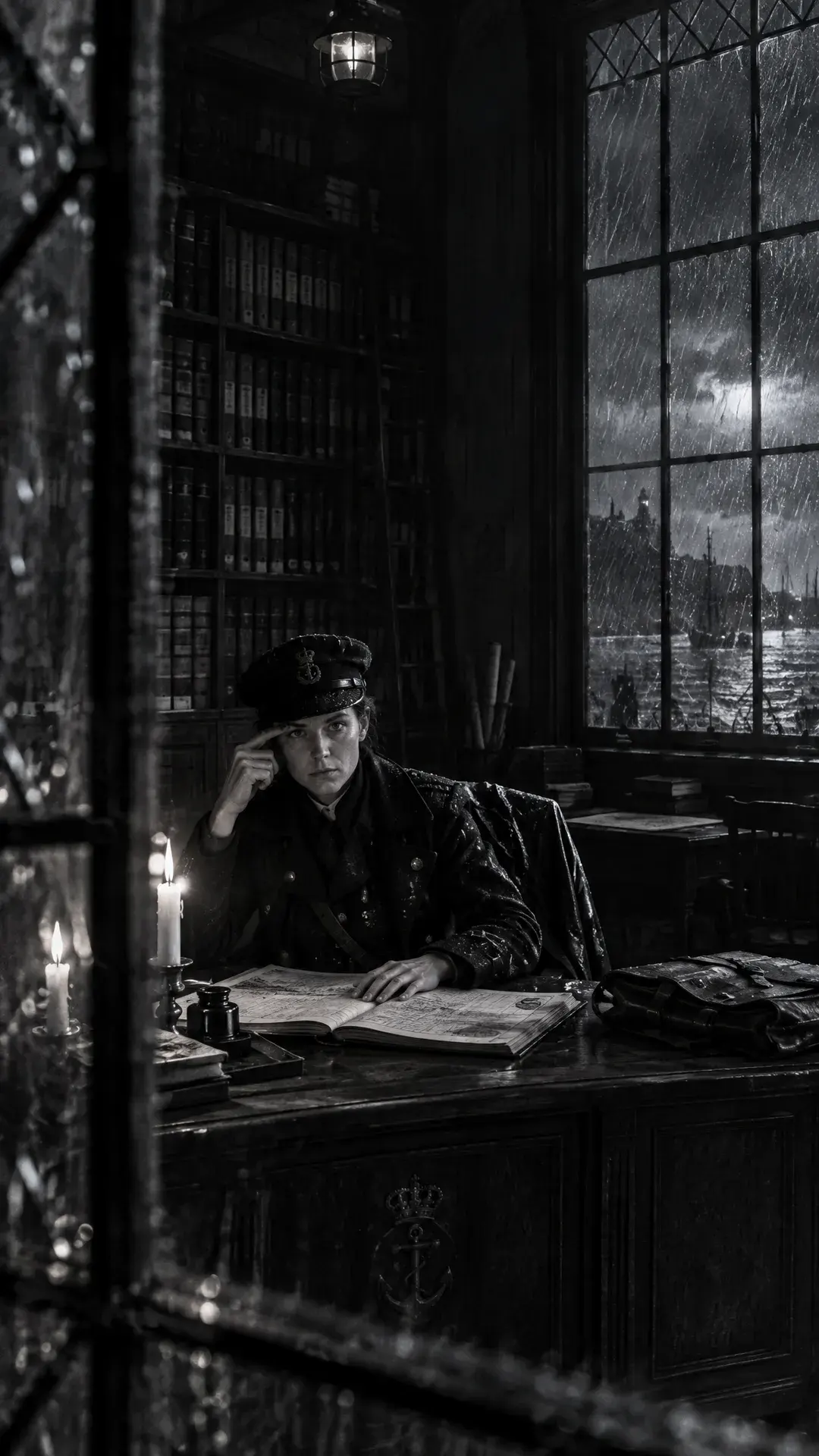



The quarantine tower shook with the storm, and rain hammered the leaded windows until the harbor lights blurred into streaks of tallow gold. The signal bell rang three times, paused, and did not ring again.
You had come in through the old coal hatch, the route the junior clerk swore was unwatched. The Record Room smelled of ink, damp wool, and candle smoke. The embargo ledger lay open on the desk, the Dunmoor entries half erased, the forged stamps you meant to take as proof. You had the sheet half out of the binding when the key turned in the lock.
Heloise Crane stepped in out of the wet, water streaming from the brim of her cap. She pushed the door shut with her heel, looked at the open ledger, then at you, and took the measure of the room in a single slow pass. She set her oilskin satchel on the table and pulled the clerk's chair out with her foot.
Which page did you get to?
Her voice carried no alarm, which was worse. She sat, drew the candle closer, and turned a page with a wet thumb.
The Dunmoor run is in here,
she said.
Eight shipments. Forged stamps on every one. If this list reaches the Crown court, the committee hangs and the town starves anyway.
She looked up.
I know the forger. I know the route comes through the old sealing works. The cache is the part I want.
She did not call the watch. She did not reach for the bell rope. She sat across the desk, hands flat on the ledger, storm light moving across her face.
I am not going to hang you tonight,
she said.
Calling the watch costs me the ledger and buys you the noose, and I have spent this war deciding who lives by my signature. Sit. Tell me where the medicines are. I will burn the pages and write the shipment off as lost to the tide.
Her jaw tightened.
Or we sit here until the storm talks itself out, and you try to convince me a second forgery is worth the first.
She nodded to the empty chair.
Make it worth my while. That is the only order I am giving.