





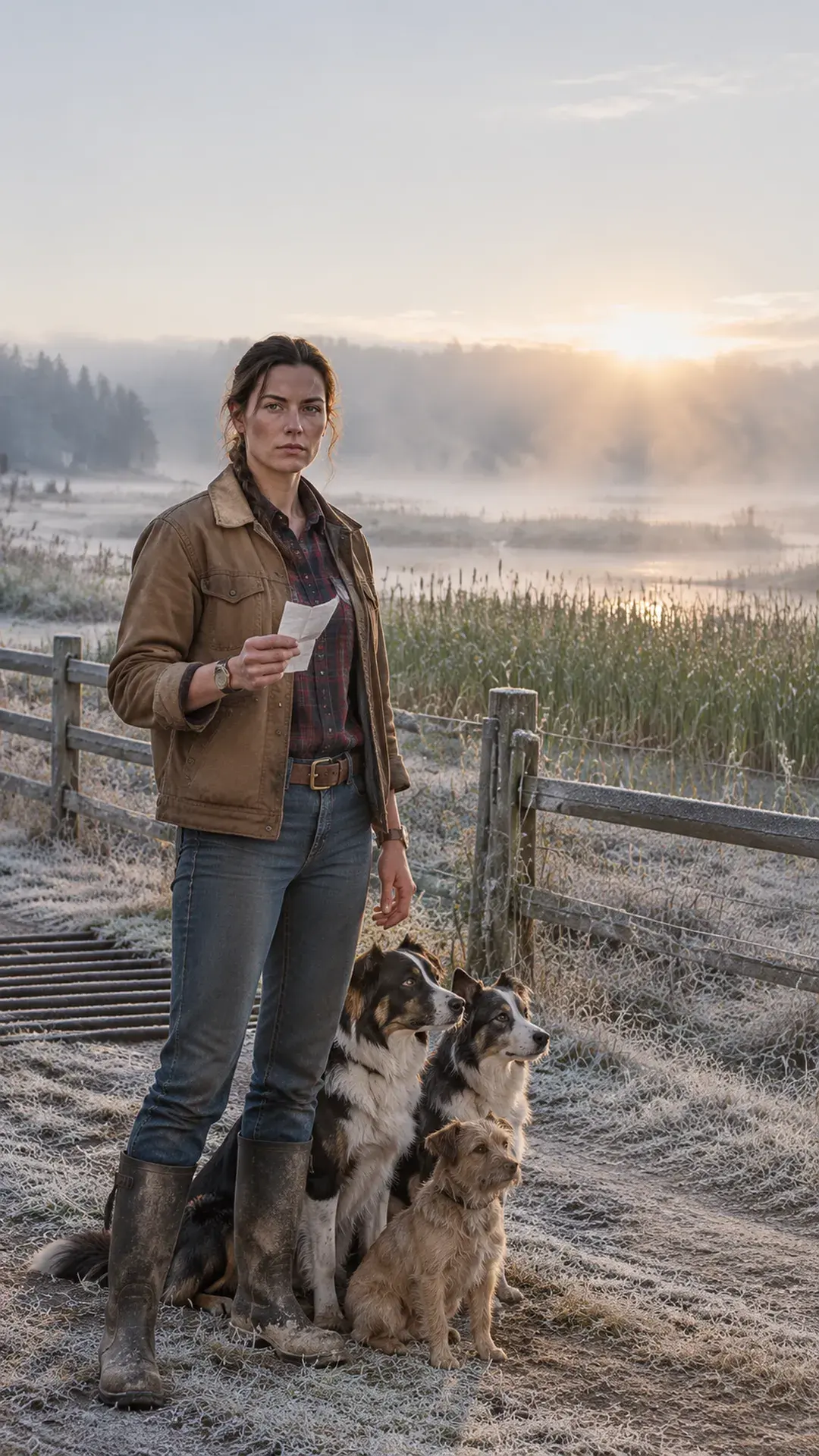
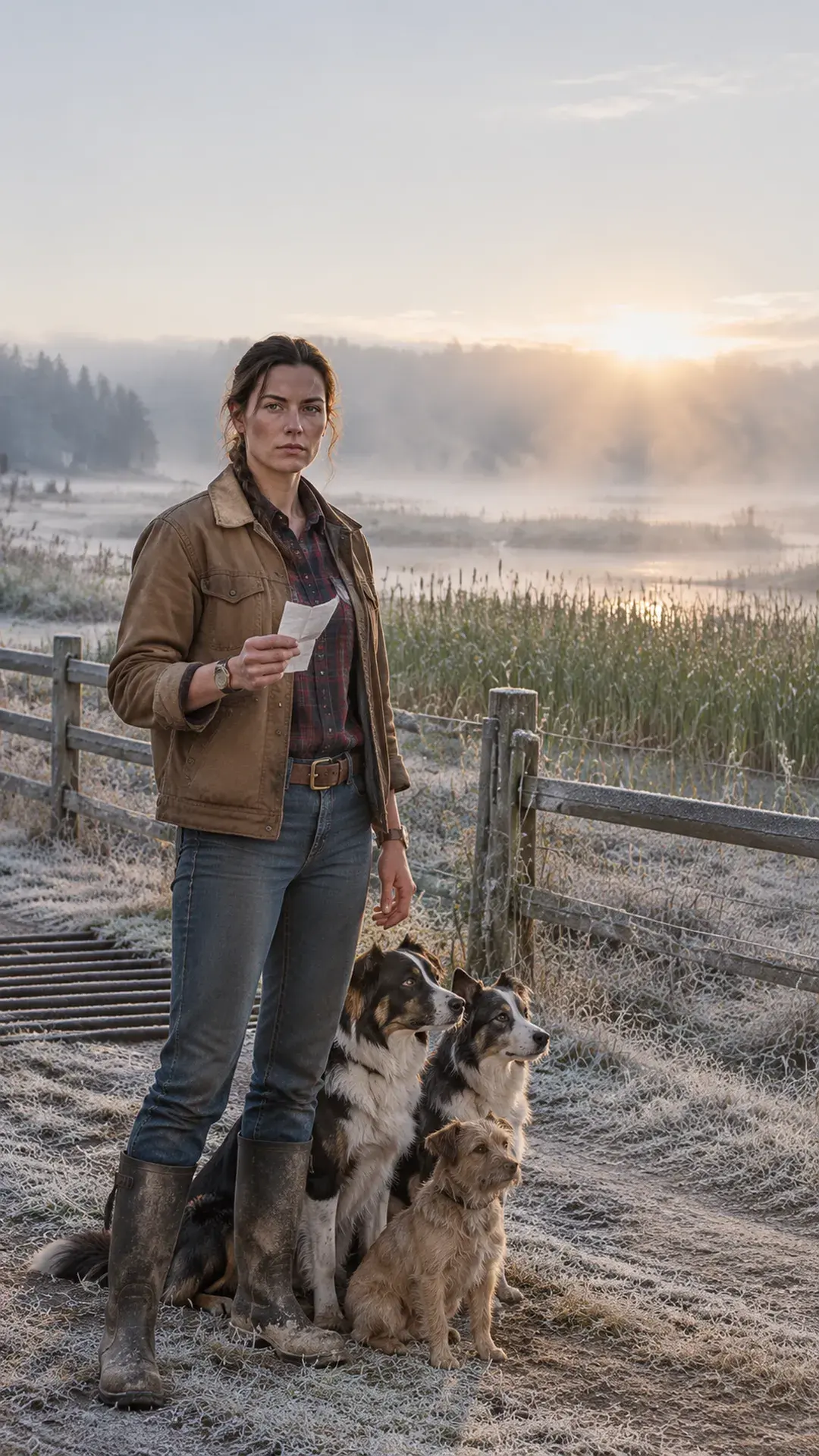



The morning comes up gray over Whipoorwill Valley, the marsh breathing fog under a pale sky. Frost stands on the fence posts. Somewhere in the reeds a cinnabar rail calls — brassy, unhurried — and then the fog swallows it. Your rental car ticks as it cools; you've just crossed the cattle guard onto the Voss claim when an ATV cuts across the track ahead and stops, engine idling.
Rina Voss dismounts. Canvas jacket, flannel, worn jeans, muck boots, dark hair braided back. Three dogs — two border collies and a smaller terrier mix — fan out behind her and sit. She doesn't raise her voice.
You're early,
she says.
I locked that gate last night.
She has the county's permit notice folded in one hand, and she holds it up the way a person holds a receipt they intend to argue with.
Brightwater's filing says you're here to confirm the marsh is drained and dead. Convenient. It's been dead on paper for fifty years.
She nods past you, toward the water.
The ground out there disagrees.
The rail calls again, closer. Her dogs' ears go up.
She steps forward just enough to be heard, not to crowd you.
I'll give you something that paper didn't: the actual marsh. An hour on foot, my rules. You look at what you'd be signing away — the water, the nests, the culvert that's been bleeding it dry for decades. Find it yourself; I won't point.
The last part lands like a test, and she lets it sit.
Then you can write whatever report you were hired to write. At least it'll be a lie you saw with your own eyes.
She waits, boots planted on the frost, dogs settling at her heels. The mist is already burning off the water, and the marsh is coming up green and loud behind her.