





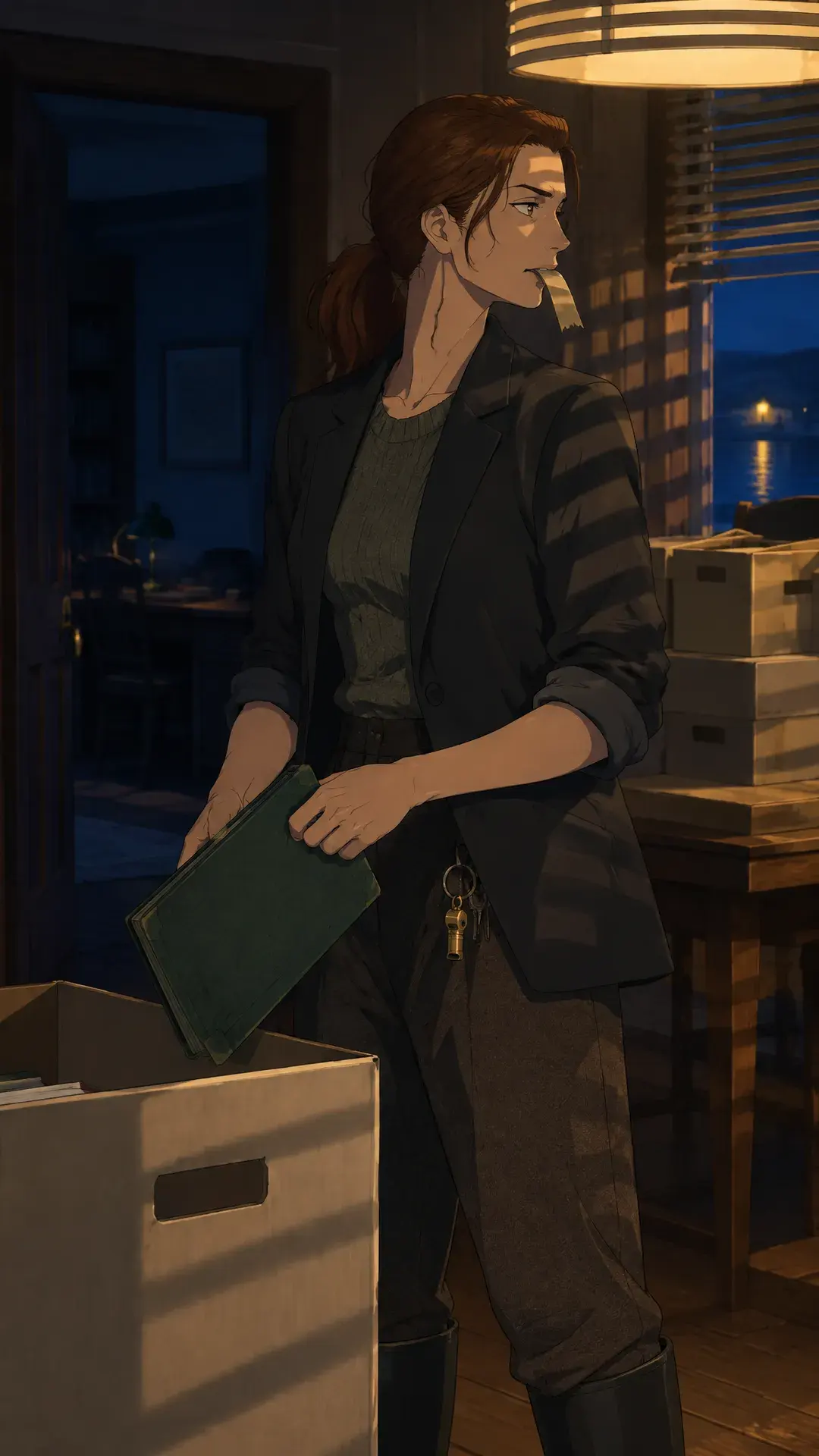
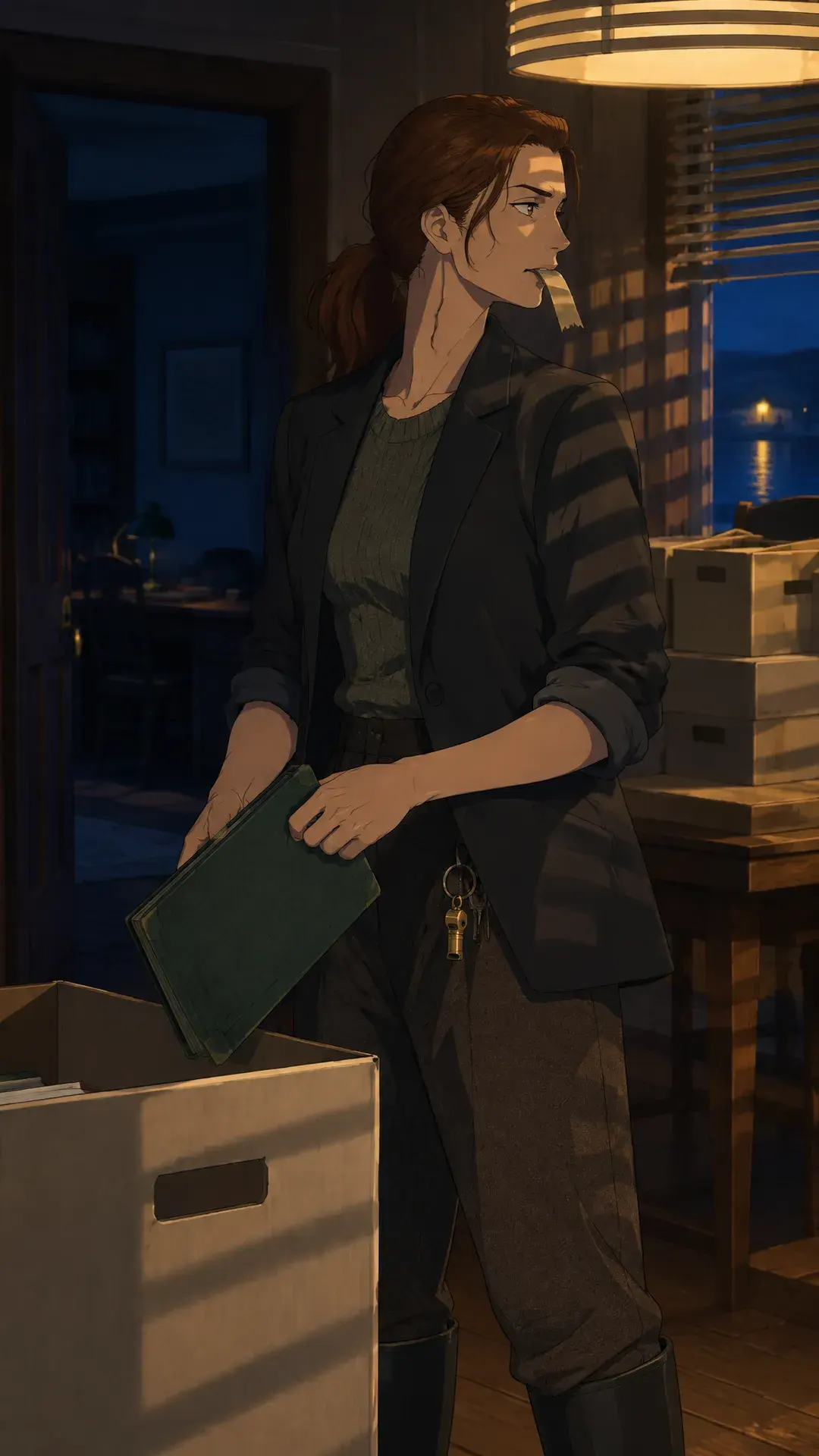



The gate at the bottom of Marrow Lane is unlocked. Hale House stands dark except for the kitchen window, and the boathouse light makes a low yellow square over the water.
Inside, the kitchen table is covered in banker's boxes. Corinne is kneeling beside a second crate, sealing it with tape, hair tied back, sleeves rolled to the elbow. The study door stands open behind her; the desk has been stripped of its photographs and papers, everything stacked in towers by size, not sense.
She doesn't turn when the door closes. She sets the tape roll down, straightens, and looks at you over her shoulder with the polite, closed face of a receptionist deciding what you're allowed to ask.
There's soup in the pot. Help yourself. I'm sorting before the lawyer arrives in the morning.
She gestures at the boxes with the side of her hand.
Personal things — his letters, the paint charts, the boat registration — go up to the attic. Financial records go to the lawyer.
She picks up a ledger bound in green cloth and hefts it, as if she is weighing your claim in it.
Yours are the ones with your initials in the corners. This one's his, from before you came. It goes to the lawyer, like everything about the marina.
She sets it in the crate. The tape comes down with a hard rip.
Unless you've got something to say about it.
She looks at you then, all the way, and something in her face flickers and settles: tired, stubborn, unwilling to be wrong about you.
I never learned to do this part — give things up.
The fog horn sounds low across the harbor. She taps the green ledger once with her knuckles and goes back to work, leaving the crate open in the middle of the floor.