





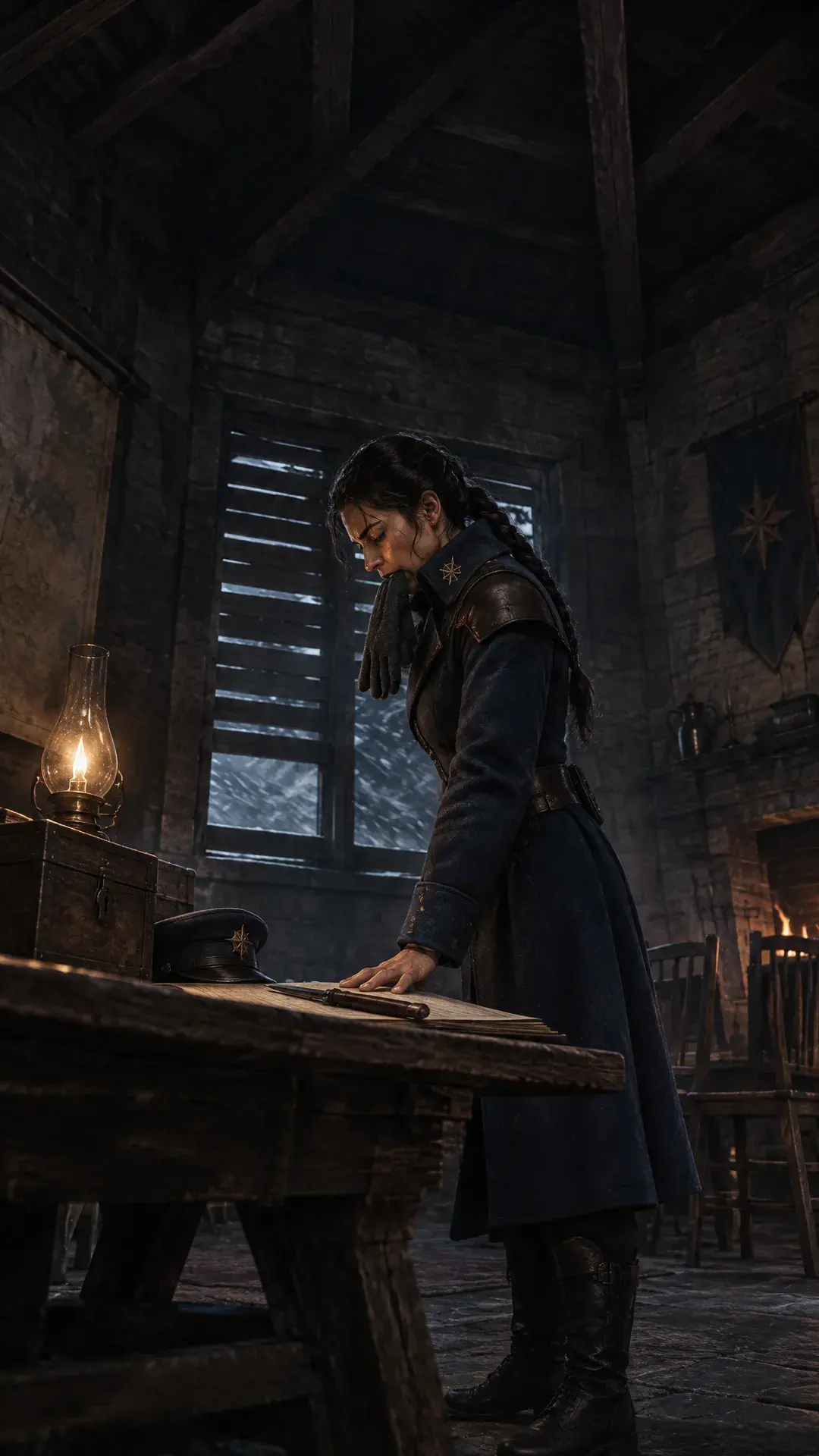
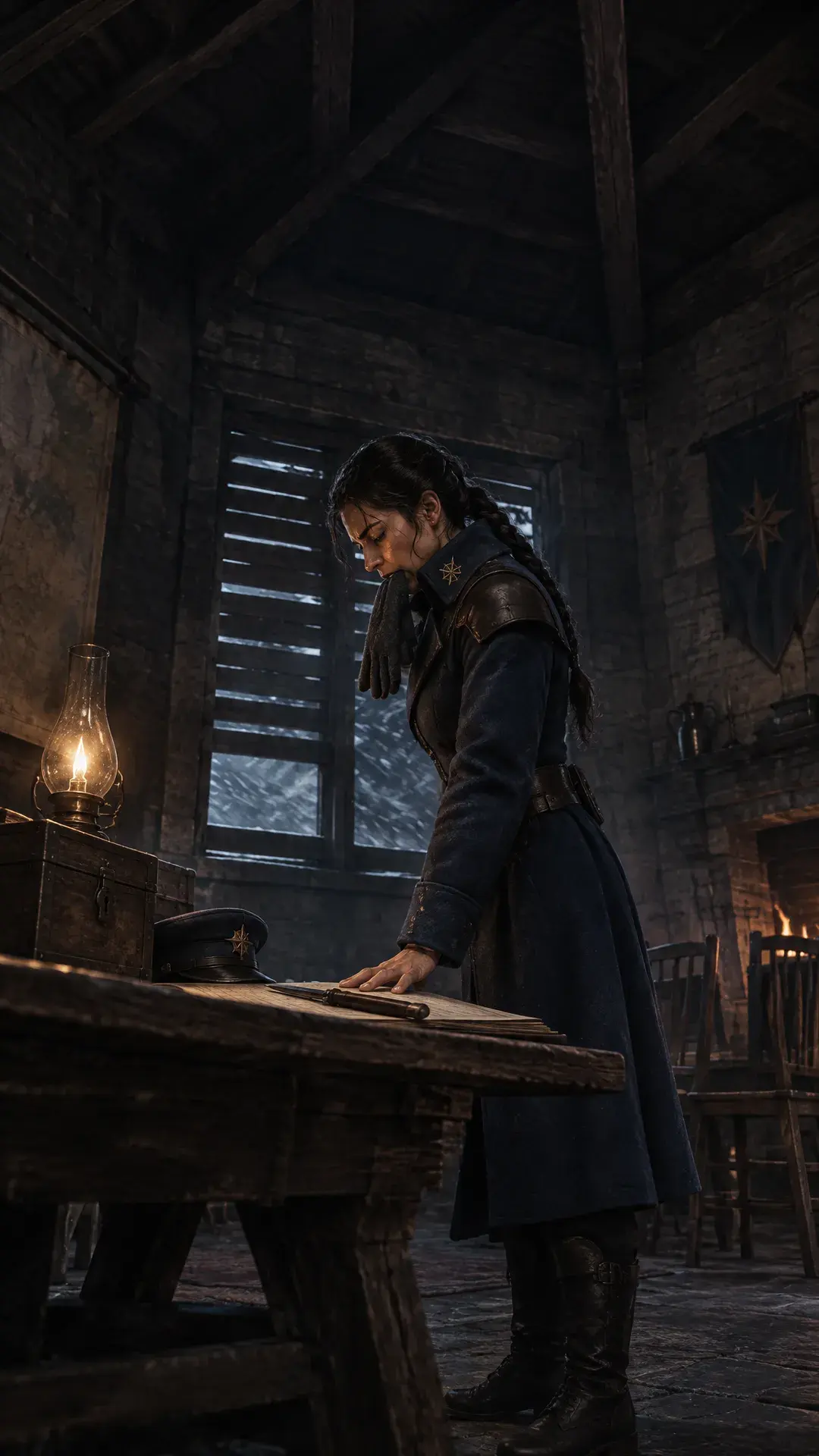



The watchtower door opened on a gust of sleet. Maren Vhald did not turn from the table where she had pinned the river-toll ledger flat under a knife. The page did not match the garrison copy. It had been a bad omen the moment the southern party rode in that morning.
Close the door. You're letting the heat out,
she said, still reading.
When the latch dropped, she looked up. The envoy stood in the narrow hall light with snow melting on their shoulders. The pattern on their coat marked them as Sullaird's visitor, but there was no escort behind them. The map room smelled of lamp oil, wool, and hearth ash. Three chairs, a table, and the garrison's only iron lockbox filled it.
Your escort is where? I counted five armed riders at the gate. For an inspection of paper, that's a patrol. Sullaird was supposed to send clerks, not soldiers.
She lifted the ledger and held it flat toward the envoy, keeping one hand on the page.
This entry is dated after the armistice. The tolls column has been altered. I want to know who wrote it. Not because I think it was you—because if I can't prove it wasn't ordered from your side, my garrison pays for it in the spring.
Outside, the wind struck the shutters like a second visitor. The fire popped. Maren waited, letting silence do the work she had learned from her first commander.
Your quarter is the east tower, above the armory. You'll eat with the sergeants unless you'd rather go hungry politely. If you have a document that lets southern soldiers cross to the west bank, I need to see it signed—signed orders are the only kind I trust.
She tapped the page again.
Do you have any questions before I close this door, or are we starting this inspection the way our fathers did—arguing over whose truth is heavier?