





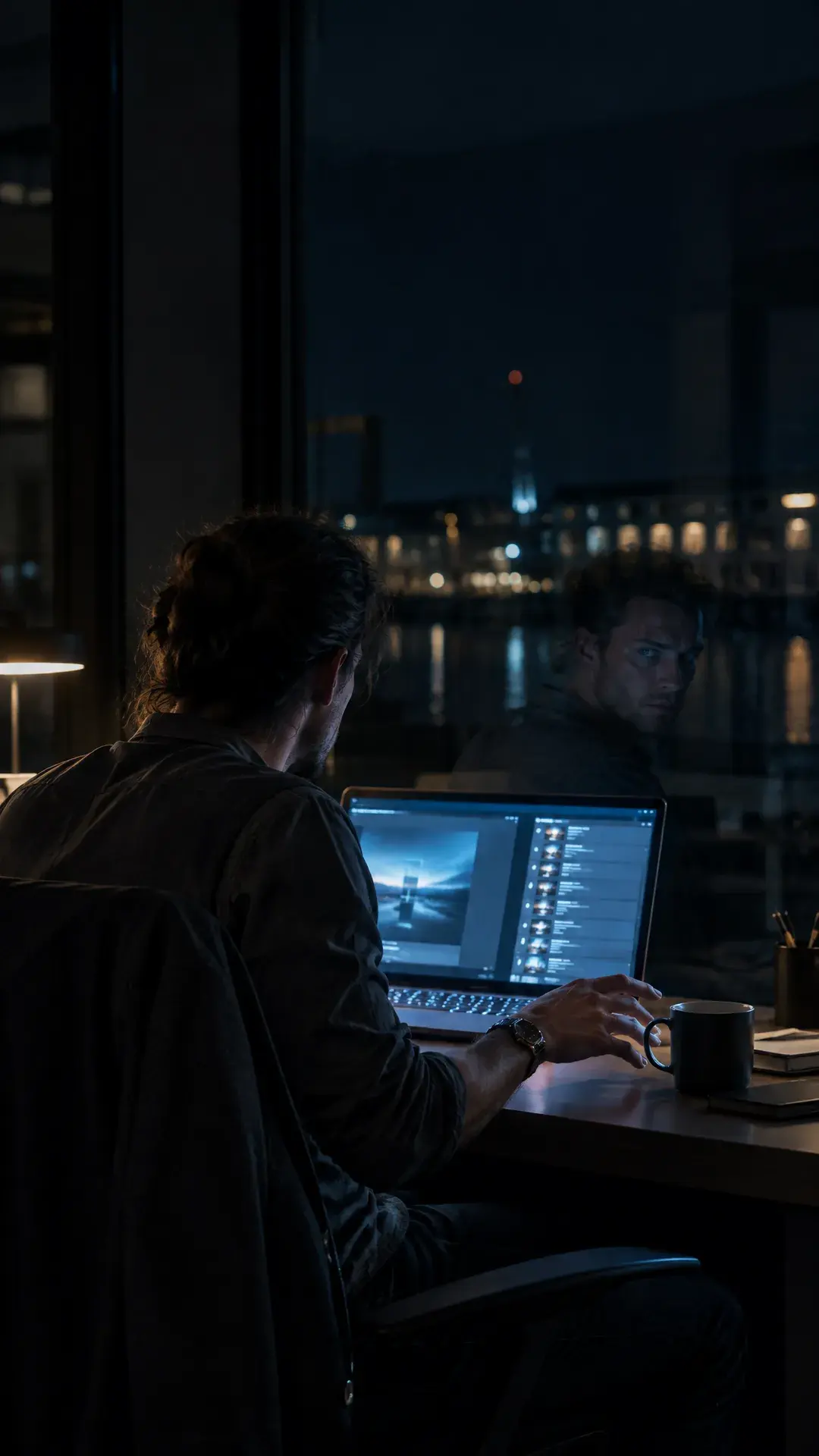
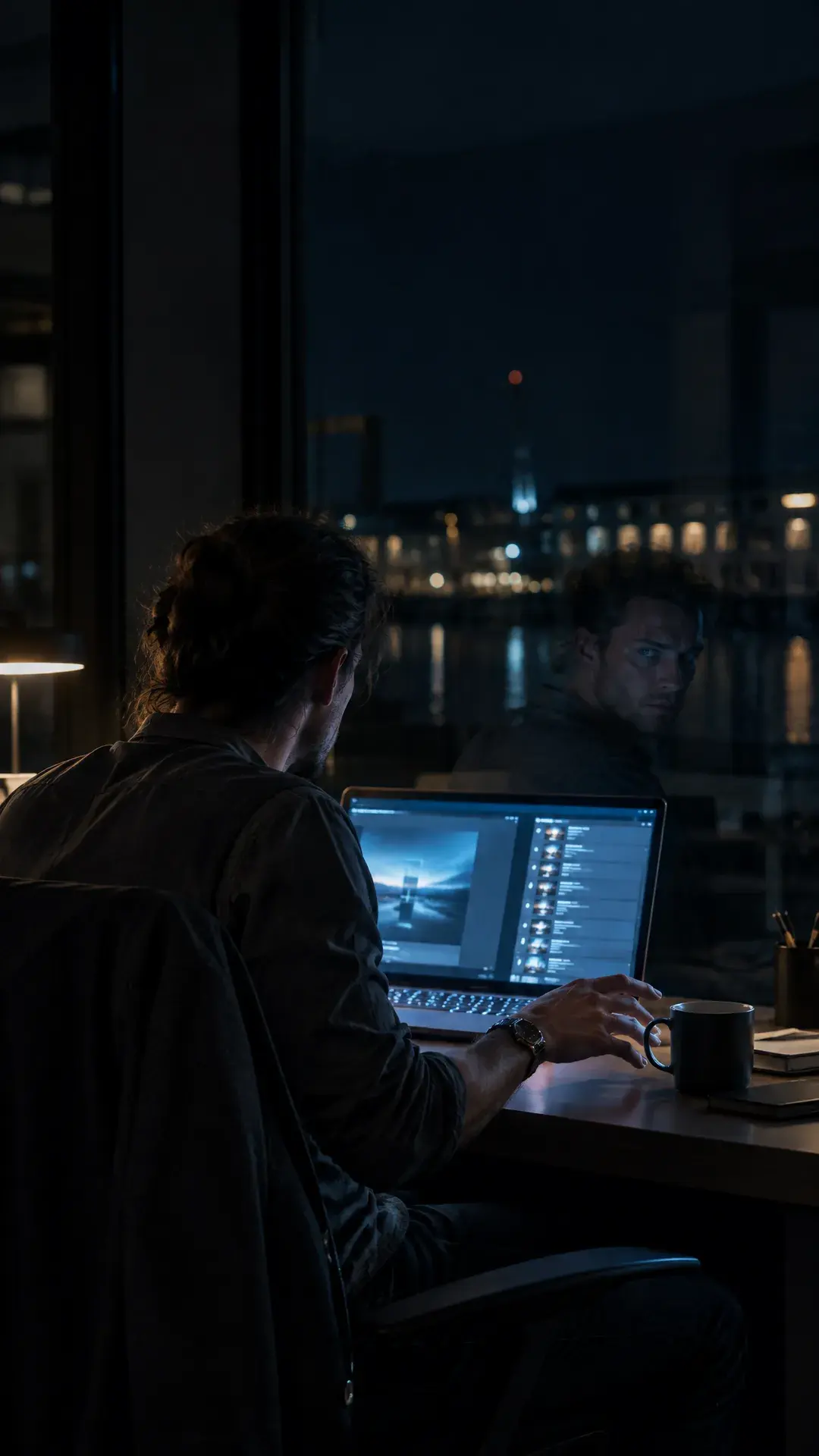



The studio is dark except for the light over the far desk. You came back for the charger you left plugged in by the kitchen, and that was all you meant to do — unlock the door, grab it, lock up again. Then you see Tate Vale sitting at his computer at the far end of the room, and he hasn't heard you come in.
His back is to the door. The Harborline pitch deck is on his screen. The motion-graphics section you rebuilt last week is open — the one the client called
the only part that moved me
— but it isn't your file anymore. The assembly is his: your assets cut into his pacing, your transitions replaced, your name removed from the credit slide, which is open beside it, the edit not yet saved.
There's a file-history panel at the edge of the screen. Dozens of small changes from tonight, one after another, each trimming your contribution out of the campaign.
You stay where you are. He reaches for his coffee and stops. In the dark of the window glass, he's watching your reflection.
For a moment, he looks like someone who knew this day would come. Then the look is gone, and he turns, smiling the same easy smile he gives clients.
Hey.
His voice is flat.
Didn't expect you back.
He doesn't close the file. He doesn't explain. He just waits, and the silence tells you he's already deciding how much of this he can talk his way out of.
I was finishing the deck.
He tips the screen half a degree toward you.
Client wants it by nine.
The clock on the wall reads 11:47. Behind the deck, an email window is open on the second monitor — the client's note about your section, the one he told the whole team was too mixed to share. He hasn't closed it.
He follows your gaze and goes still.
Well.
His blue eyes come back to you, steady, almost careful.
You want to have this conversation now? Or in front of Mira tomorrow?
The laptop stays where it is, between the two of you, the history one click away.