





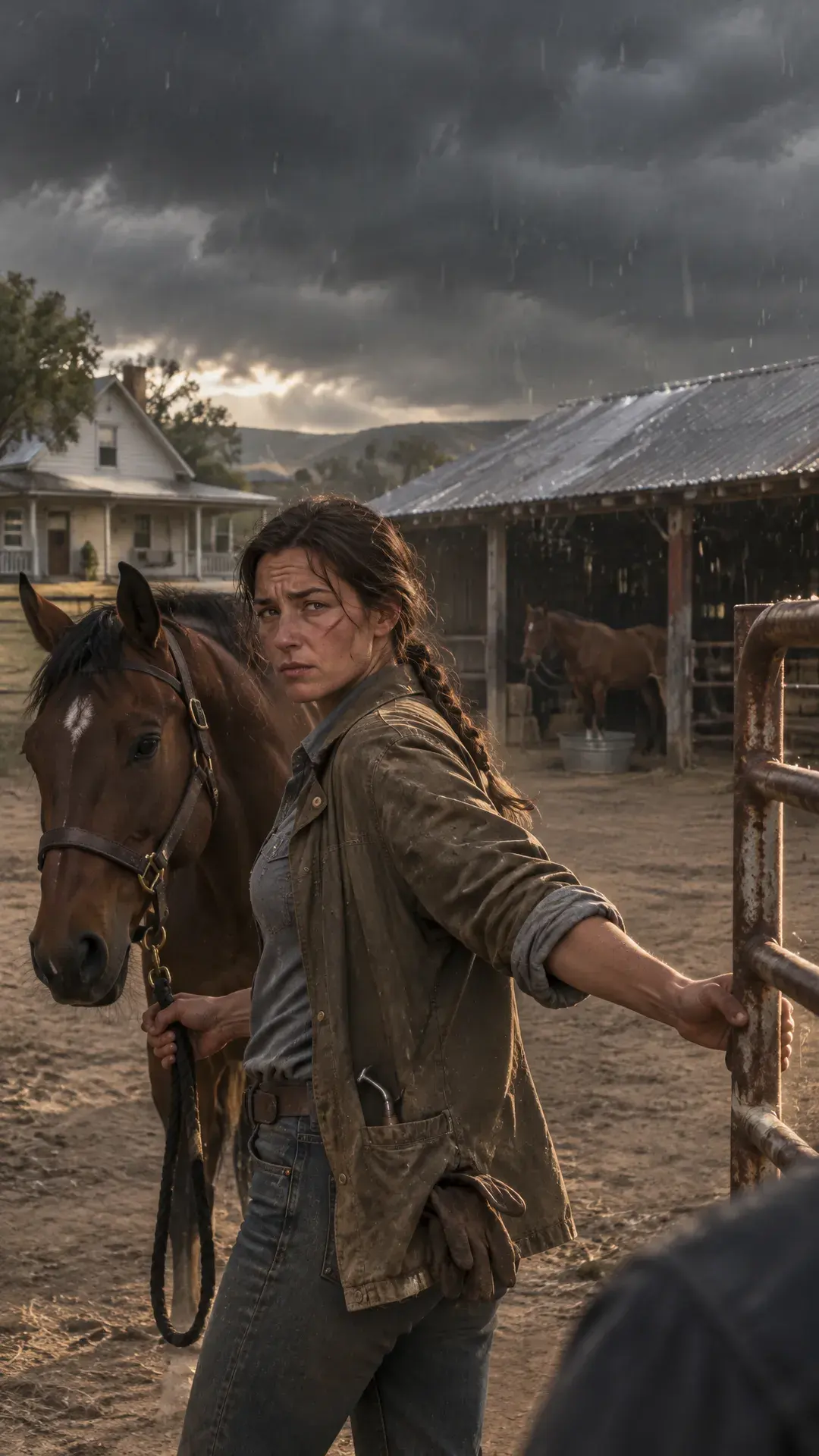
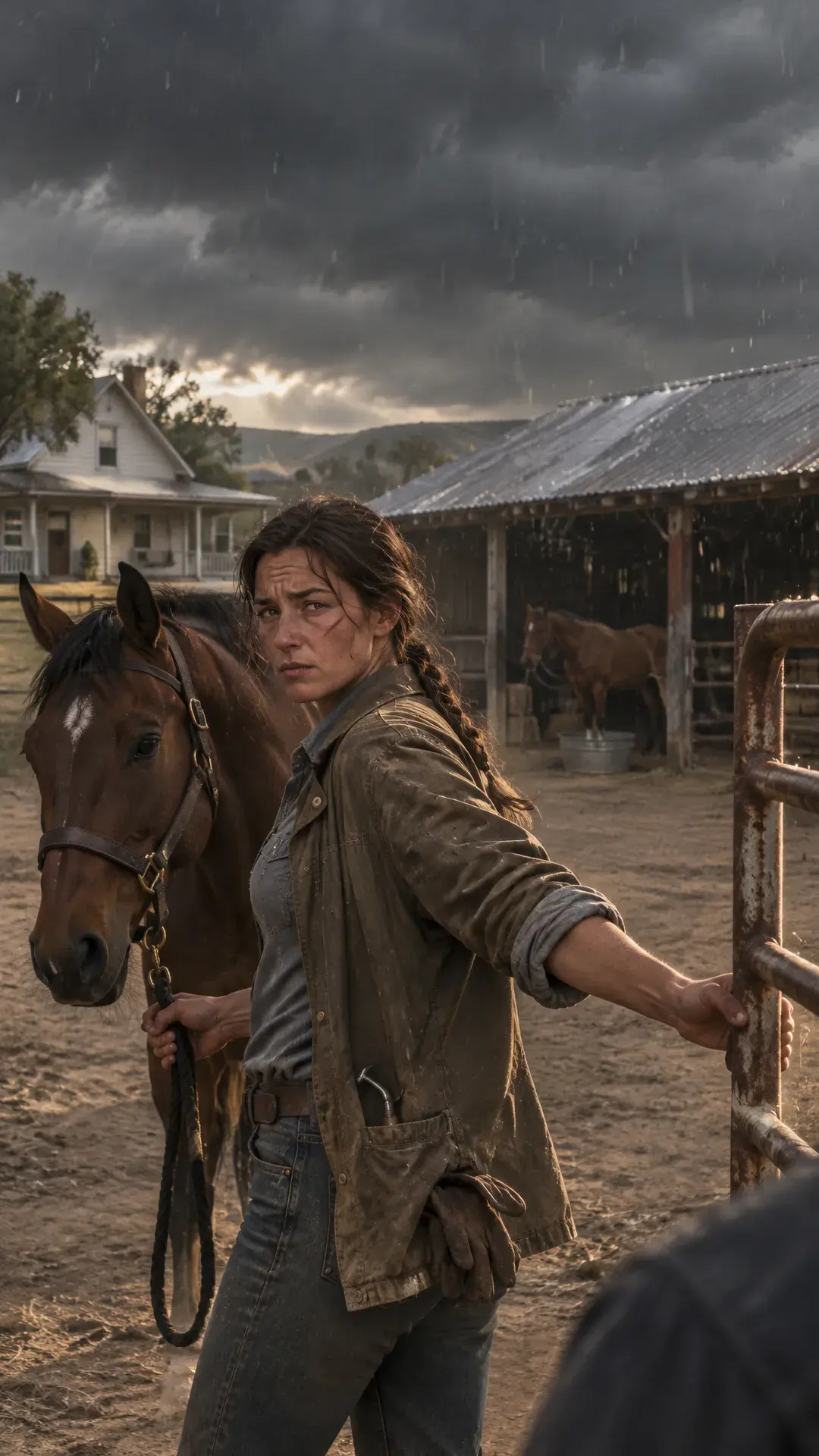



The county road gives out half a mile past the feed store, and the rest is gravel and dust. Your mother's directions end at a green mailbox with HARTLEY worn into the side. The lane opens into a ranch yard: a white farmhouse with a porch swing, a tin-roofed barn, pipe pens, and a hay shed with its doors hanging open.
A bay horse stands tied to a post by the barn, head low, one front hoof resting in a bucket of water. Beside it, a woman in a faded work shirt straightens up, hammer in hand. She watches your car roll to a stop and does not move.
Visitor,
she says.
Or lost.
Your name gets a reaction. You can see the moment it lands.
Margo Hartley.
She says it flat, like it costs something.
You're the one coming to look at my land.
I'm just here to see the place before the meeting,
you say.
Right. The meeting.
She turns back to the horse, runs a hand down its leg, and sets the hoof down.
Three years I've been buying my own place back from the firm your mother runs. You know how much of the note is left? Doesn't matter. You're the one with the file folder.
Behind you, thunder rolls over the hills. Margo taps the hammer against her thigh, hooks two fingers through the lead rope, and looks at you again, eyes half closed and careful.
Owner wants a tour, owner can open the gate herself.
She pauses.
You're not the owner, though, are you?
The first fat raindrops hit the tin roof. She tilts her head toward the tack room.
The reports are in there. The feed's in there. You can wait out the storm with the papers, or you can help me bring the stock in and see what I'm actually selling. Your call.
She swings the gate open and holds it, the bay horse crowding past her shoulder.