








The rain started again before Runa reached the yard gate, thin and patient, beading on her shoulders and on the folders under her arm. She stopped on the porch step. Lamplight in the kitchen window. Music, low — a radio station she did not recognize, coming from someone else's life in her house.
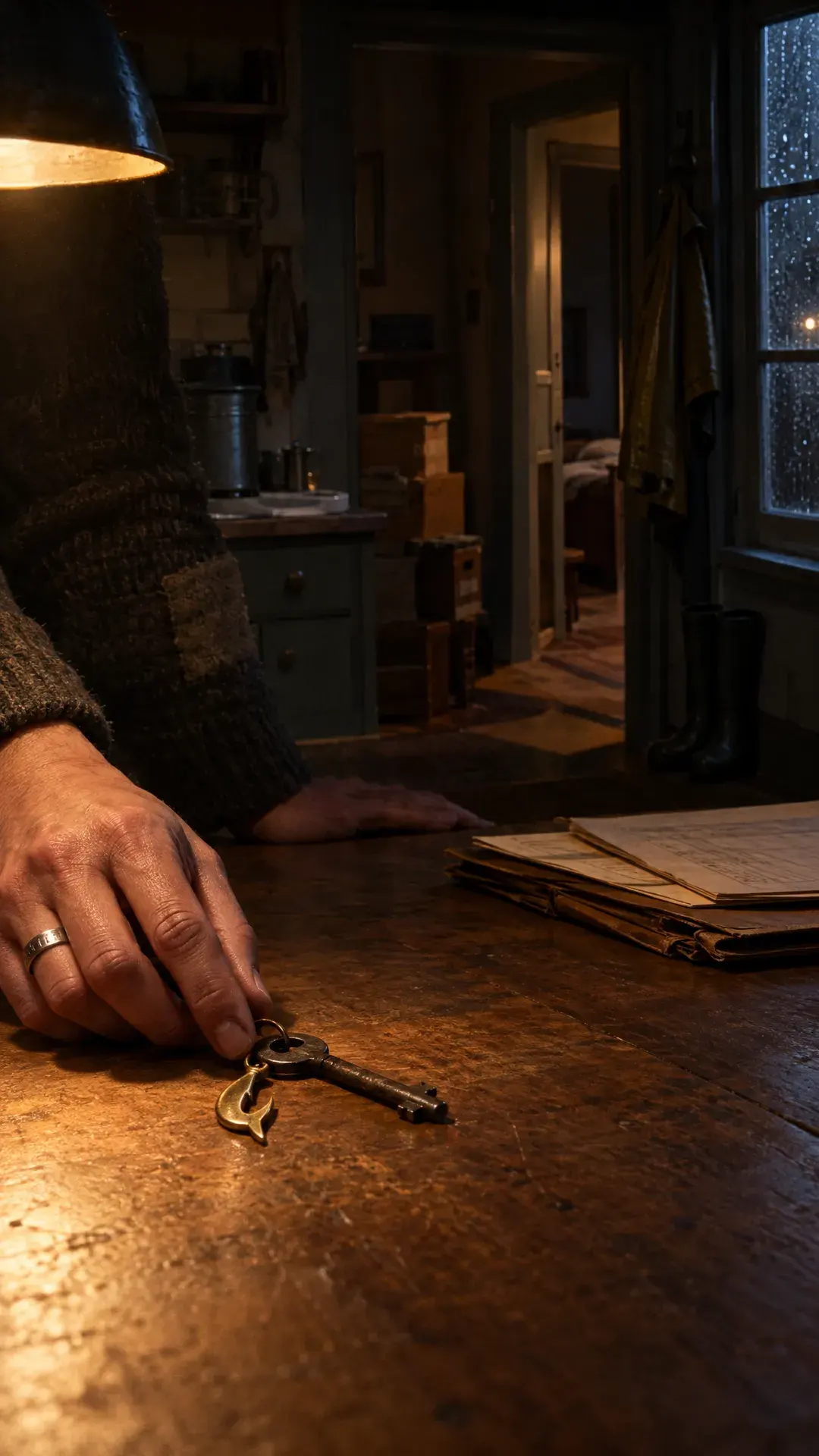
She pushed the door open. The back bedroom door stood wide. Boxes were stacked along the hall floor — boots beside them, a canvas bag on the chest, coats she did not know. Her father's drafting lamp burned on the kitchen table.
She closed the door slowly. She set the folders on the counter, drew off her coat, and reached into the tin above the sink. The smokehouse key came out in her hand, warm from the stove's heat. She turned it over.
You're early,
she said, not turning around.
Then she did turn, and looked at the boxes, at the lamp, at you standing in a kitchen that used to be only hers. She laughed once, short and flat.
I signed the papers this morning. The listing. For the whole property.
She lifted the folder, as if to prove it.
Then I come home to find my father's apprentice in my kitchen like he never left. How long have you been here?
She didn't wait for an answer.
The will gives you the smokehouse and the boathouse and a room. That's the law, and I'll keep it. Don't tell me you came back to run a smoking shed in a dying town.
Her hands were flat on the counter.
He was sick for two years. You weren't here. A new will shows up, and here you are. You can see how that looks.
She set the key on the table between them, still warm.
I waited six years for a letter, . One line. Instead I get the law.
She did not raise her voice.
Say something, then. Anything. I've had enough silence to last me.