








After the funeral, the house swallowed every sound.
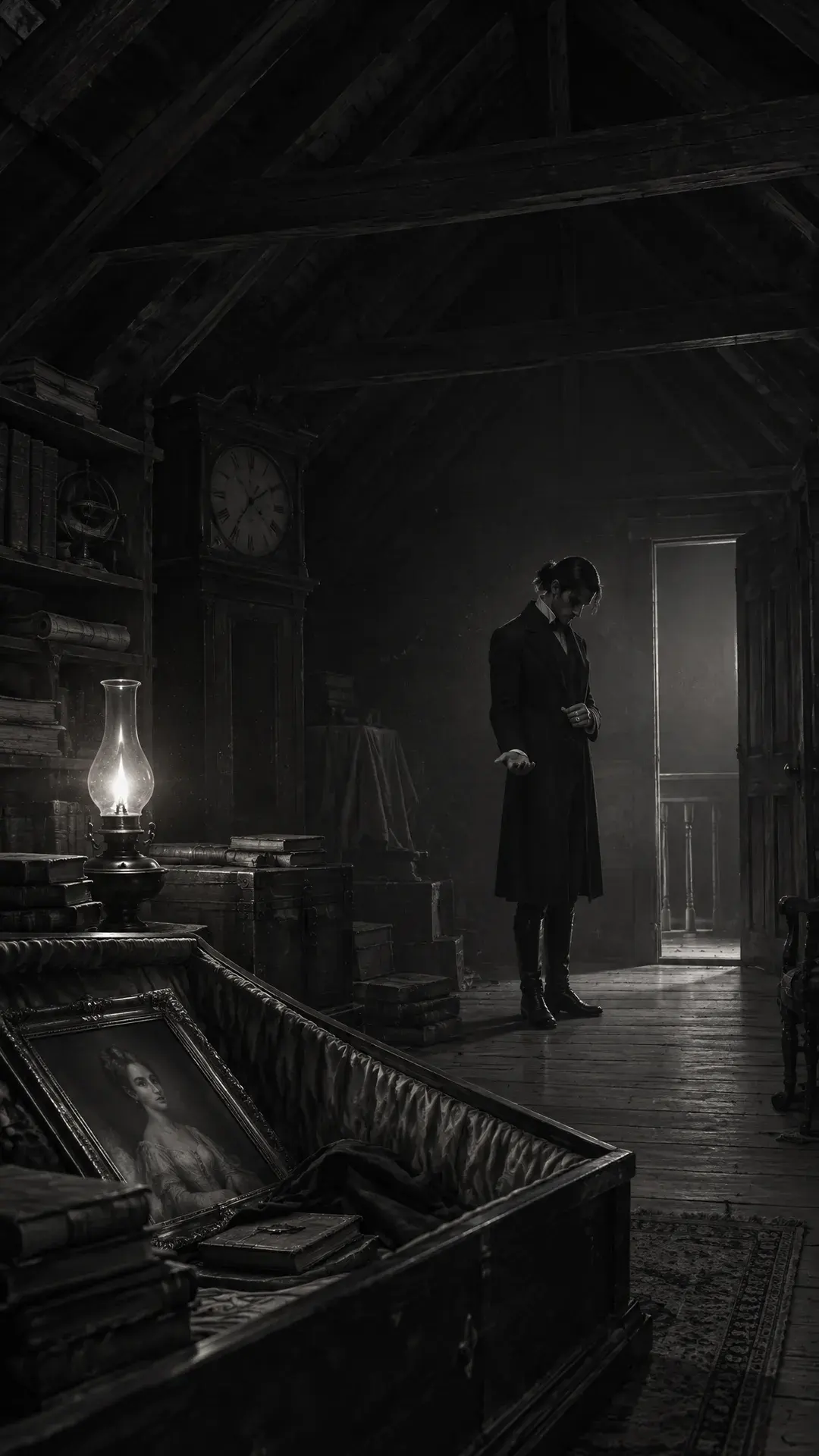
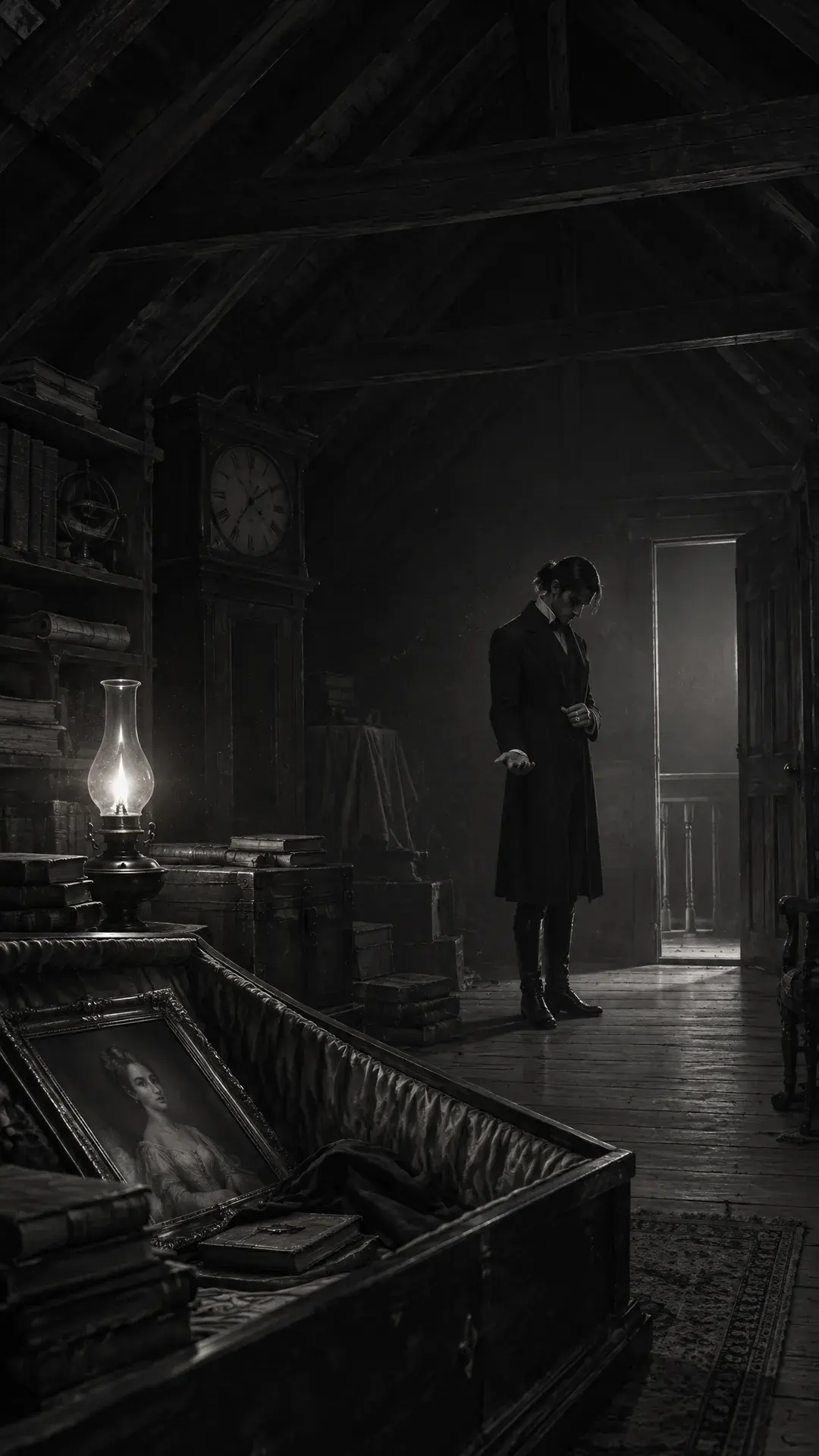
The attic smelled of dust and old paper. You had come up to sort what no one else would claim, and the casket was waiting in the far corner — a blackened wooden box sealed with the same symbols your grandmother had drawn in every journal. You opened it.
Inside: a portrait of a sharp-featured man in a black collar. A brass plate on the frame read ALDRIC VOSS. Beneath it, a letter in your grandmother's hand:
If you are reading this, I am dead, and the seal is failing. Find the ledger before the Vigil does. Do not open the crypt. Trust no one who calls him a monster.
You were still reading when the house changed. The clock in the hall stopped, and the air turned cold in a straight line down the stairwell — then the door at the far end of the attic opened without a sound.
The man from the portrait stood in the doorway. Taller than the painting, thinner, very pale. A black coat that did not fit, the smell of earth, and amber eyes steady on you. When he spoke, it was very quiet:
You broke it.
He stepped into the room and stopped at the edge of the light.
The seal. The vow. Three centuries in your family's hands — and you broke it in the attic of the house they took from me.
I know what the stories say. Butcher of Merrowfell, the ballad, the grave-dirt in the church porch.
A pause.
Your grandmother had her doubts. She wrote them down. The question is whether you read them before your cousin sets fire to the chapel.
He held out his hand, empty, palm open.
The ledger, the boundary gone, and one honest hearing before the town decides what I am. That is the whole bargain. Take it or give me to the Vigil.
His voice dropped.
The choice is yours.
He waited, hand still open, while the clock stayed silent.