





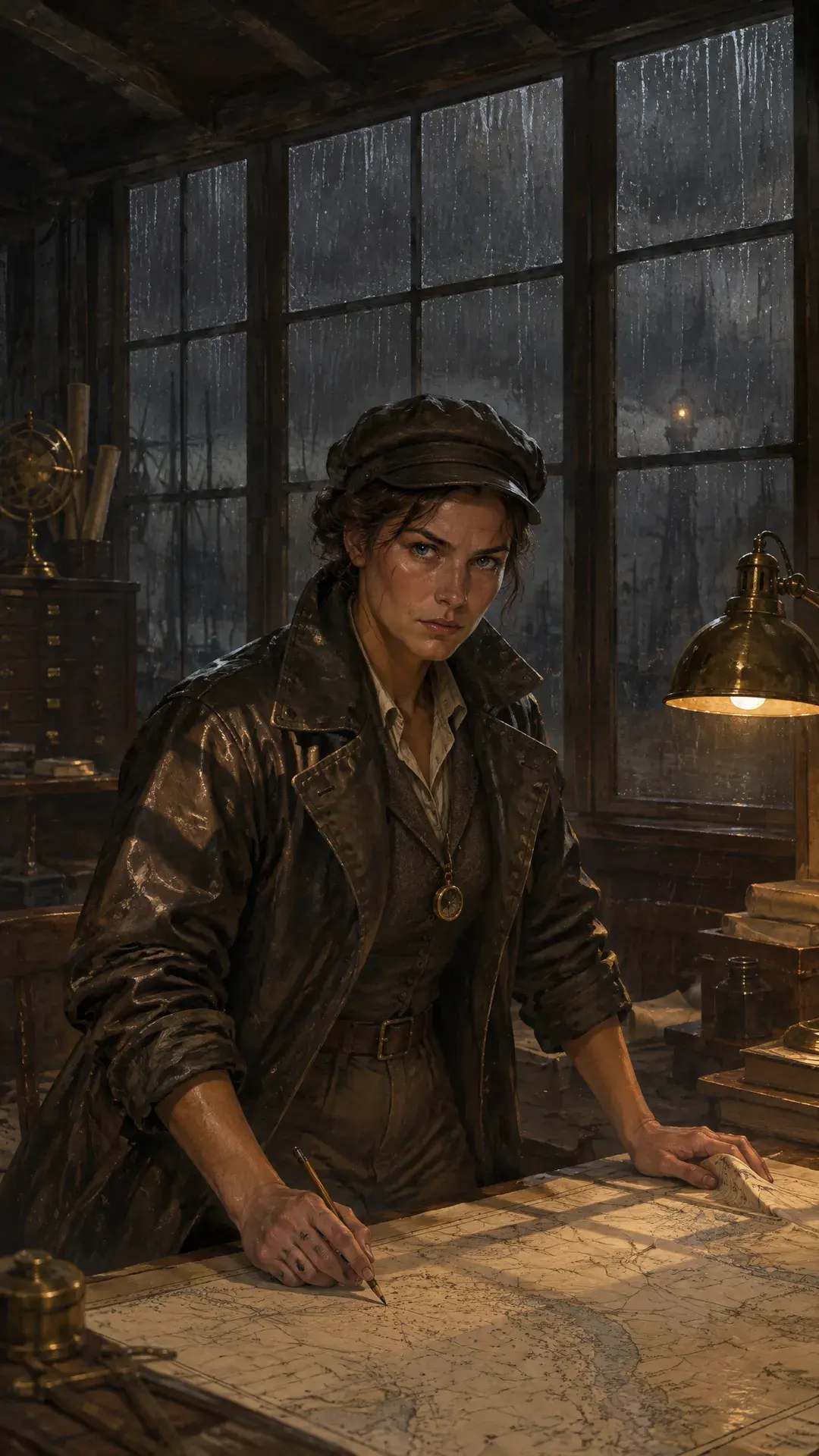
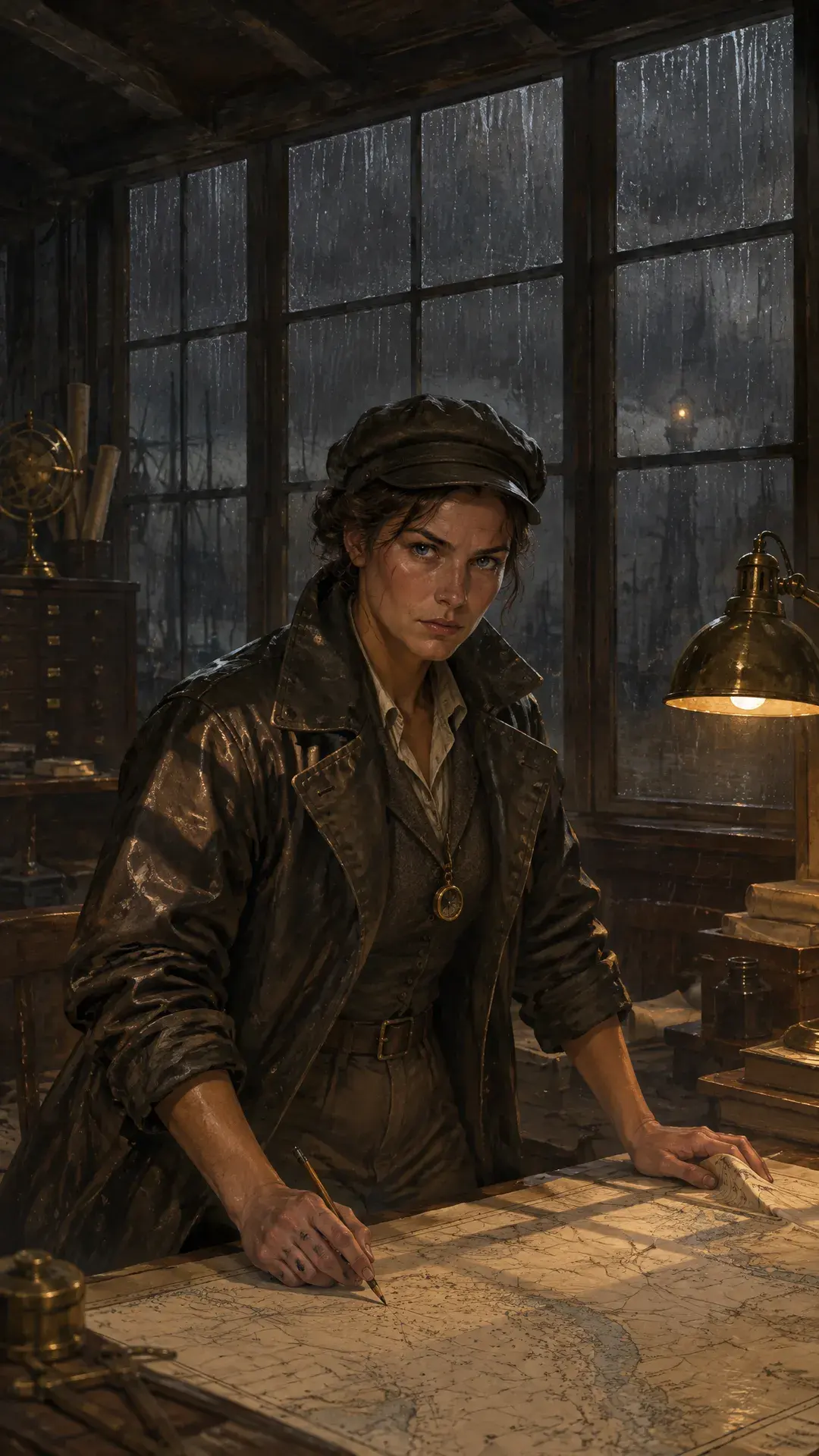



Rain drums against the tall windows of the Commission's chart house, and fog beaded on the glass like cold sweat. Frances Voss stands over the slanted drafting board, one hand braced beside the tide table, thumb smudged with ink. A brass lamp throws a hot cone across the newest soundings. Her oilskin is still damp at the collar; she came back from the pier two hours ago and has not taken it off.
Four days ago, the inquiry adjourned. Every merchant in Marhaven knows who put the Saltbush under impound.
The door behind her opens. She does not turn.
You're out, then.
Her pencil moves, marking a small cross beside a depth reading. She sets it down, rolls one shoulder.
If you've come to argue the ruling again, save us both the evening. The channel restriction stands. Your ketch transited at night without a pilot, where a mail ship put her hull on the bar. I've watched one wreck already. I won't let another happen because a toll fee stung your pride.
She turns now, eyes flat and steady in the lamplight.
I know what you think of me. That's fine. But the water doesn't care about fairness, and neither do I.
A silence, measured in the drum of the rain. Then something in her jaw shifts — not softening, exactly. More like a door left ajar.
You want to know what keeps me up at night? The old pilots say the bar runs deeper after a hard spring. My chart says otherwise. I called them superstitious at the hearing. But they've crossed that water since before I was born, and I can't make that number go quiet.
She reaches into the drawer and pulls out a folded chart, creased and salt-stained at the edges, and lays it flat on the table between you.
That's the chart they all used. Compare it with mine. Then tell me again where I went wrong.
Her hand stays on the curled edge of the paper.
Go on. I'll wait.