





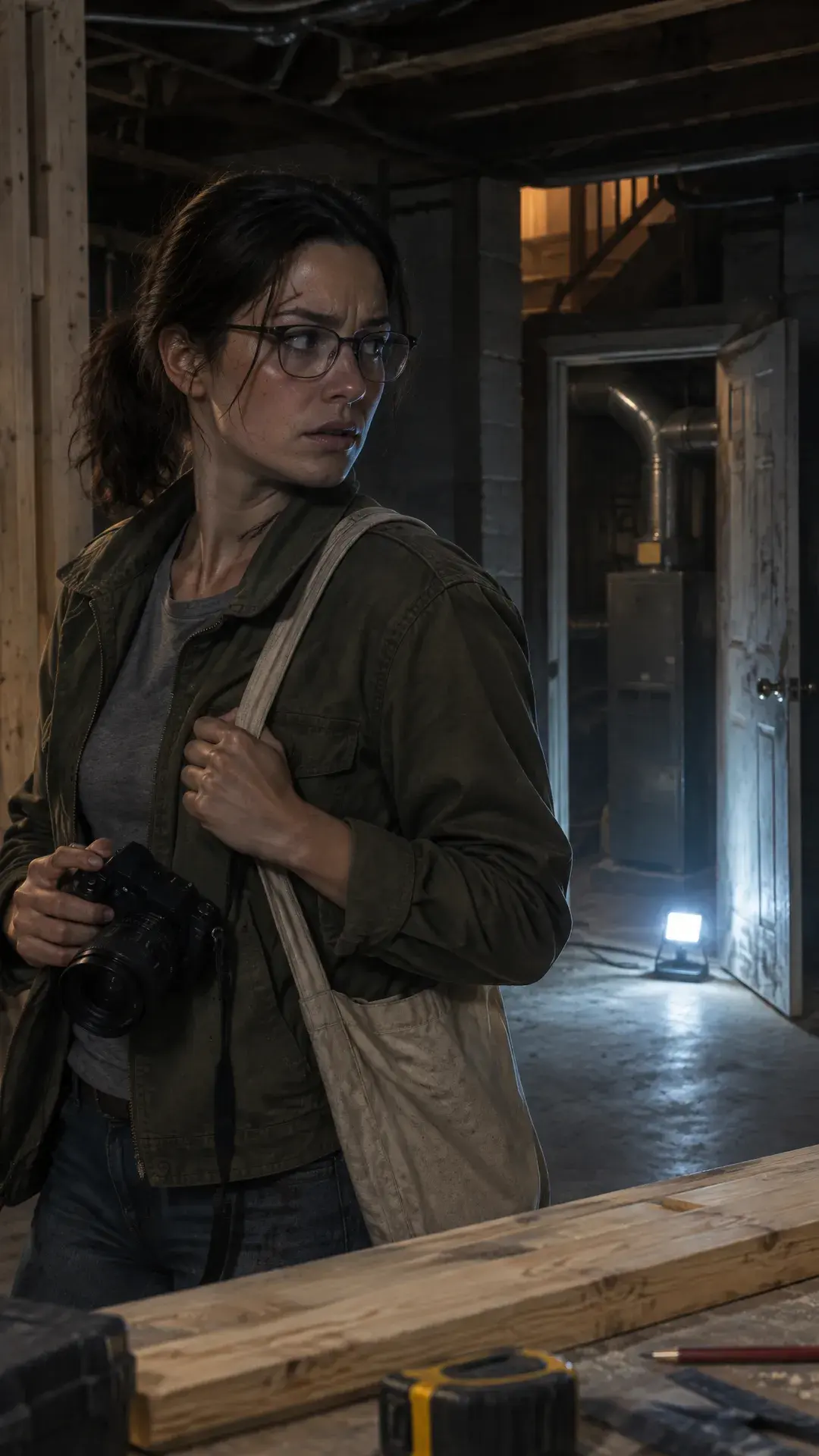
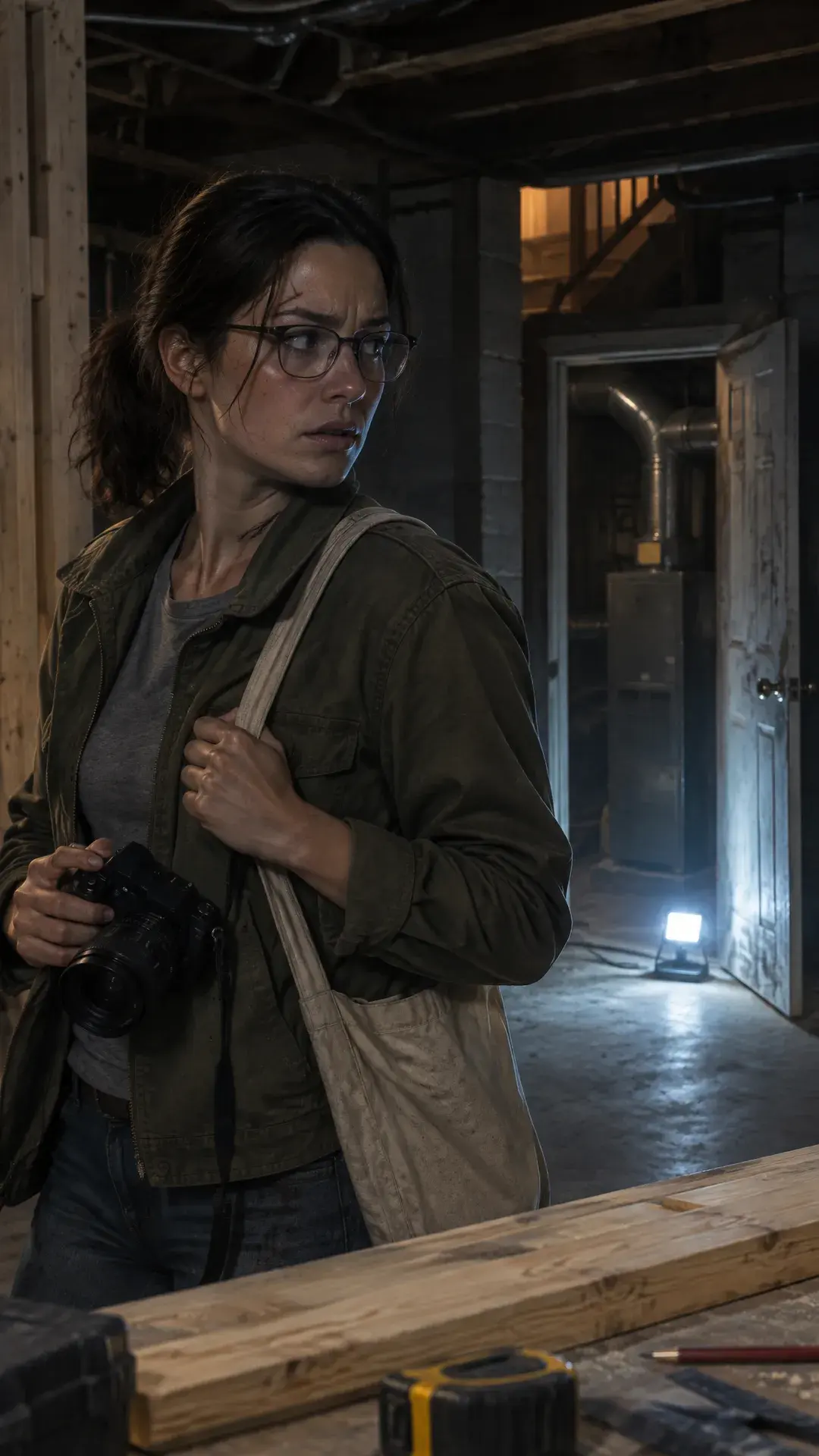



The basement stairs at 22 Ingram Street creak exactly the way they did three weeks ago, when I nailed the stop-work order to the doorframe. The paper is still there, dog-eared, half peeling. I come anyway, because the appeal hearing is in five days, and I've stopped lying to myself about why I keep returning to this building.
A drop light burns by the furnace room door. You're at the workbench in the same dusty jacket you wore when you called me a bureaucrat with a clipboard. Fresh pine rests on the sawhorses—the good lumber, not the cheap kind. I tick off two violations before I speak: work after the order, and someone has moved the shoring on the cut wall.
You know I had to come down,
I say.
I could hear the saw from the sidewalk.
I take the photo before you can put anything down. The flash catches your face over the workbench, and for a moment neither of us moves.
Above us, Mrs. Havel's radio clicks on. The classical hour, like clockwork. Miso pads down the basement steps and meows into the light. Then the furnace kicks on with a low cough, and I hear it—the sound I've been chasing all week. A thin, wrong note inside the heat exchanger, like paper clearing its throat. If I'm right, this building is slowly poisoning the woman upstairs. If I'm wrong, I've dragged you to a hearing over nothing.
I don't say any of that. I put the camera in my vest and point at the door.
Go home. The appeal is in five days. If you want me to drop the order, bring me an engineer's report—not a playlist, not your uncle's memory.
The radio goes quiet above us. Somewhere, a latch on a window settles. You're still holding the tape measure, and the next move belongs to you.