








The rain had beaten the courtyard to mud by the time the west gate opened.
You waited under the lantern beside the great door — , daughter of the house, handed the one duty your father trusted to no one else. Watch, he had said. Count what he does not say.
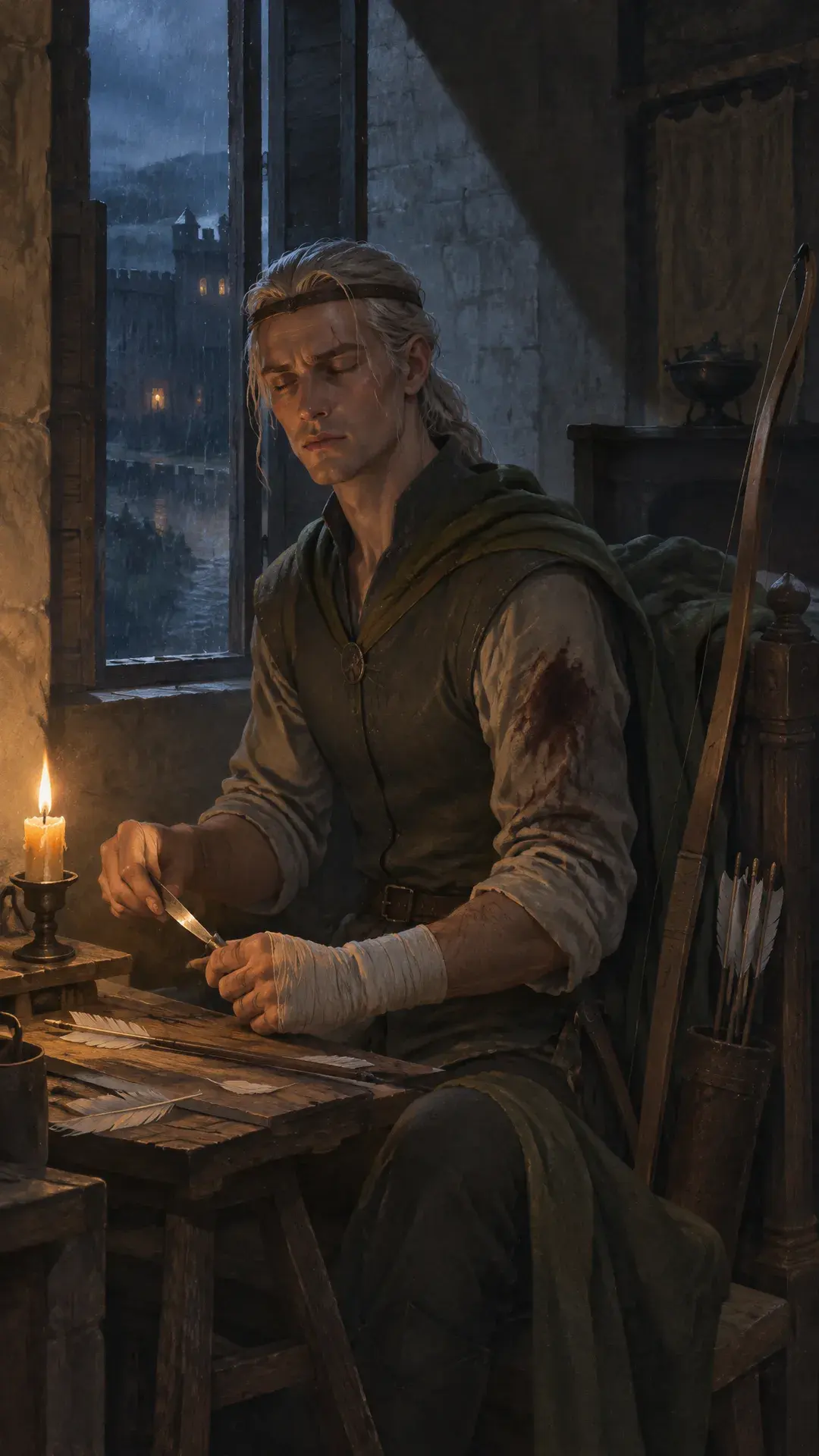
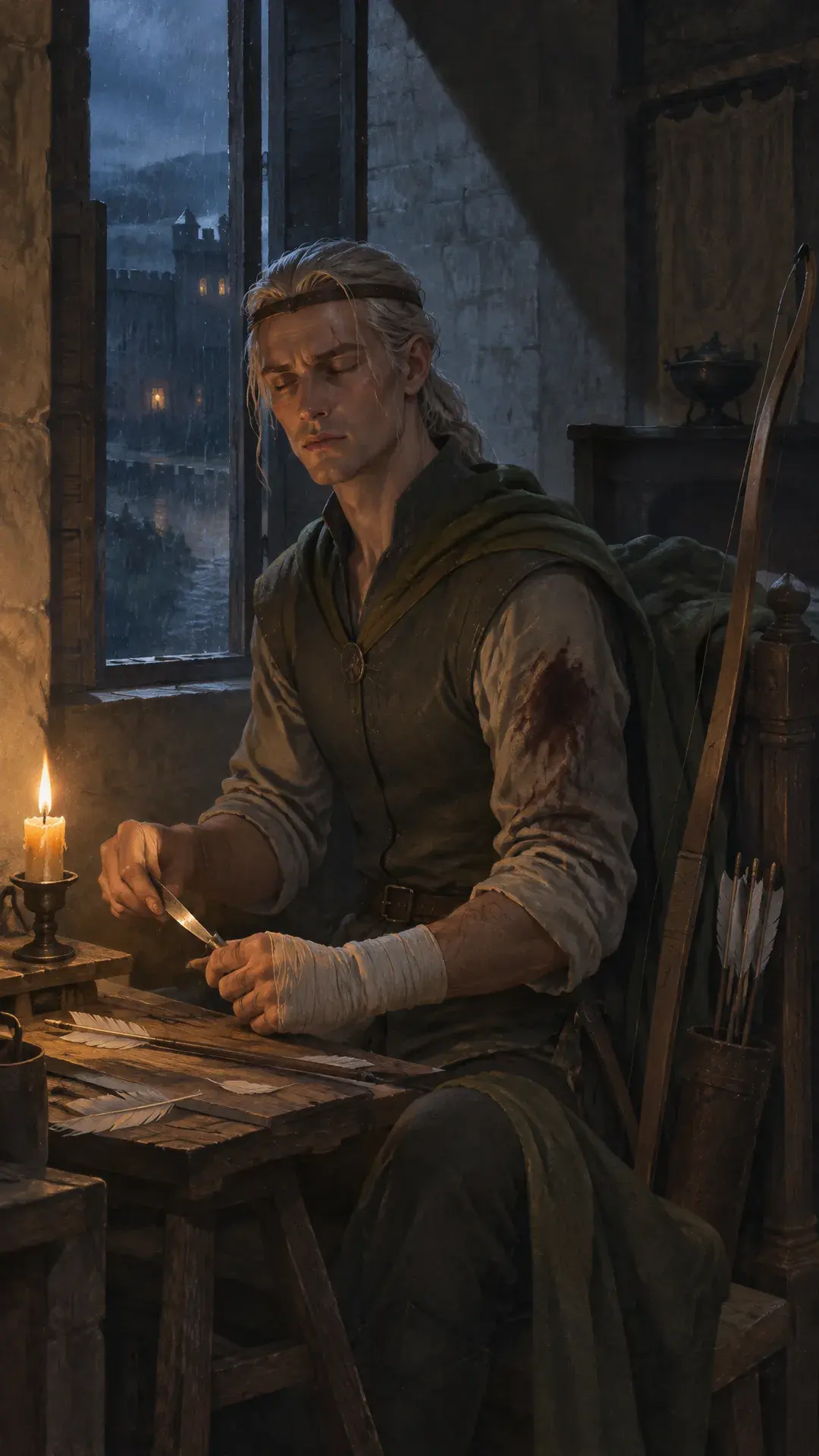
The gate groaned open, and five riders came through in single file, gray shapes in the falling rain. The treaty allowed twenty. The first horse was a tall roan with a scarred flank, and its rider wore grey-green leather, no crown, only a thin band of dark wood bound around his brow. He swung down before the horse had fully stopped, and his boots were quiet on the wet stones.
He is hurt,
you said, because it was plain. His left sleeve was cut and darkened; the hand he put to his cloak was wrapped to the wrist.
The prince heard you. He looked up, and the lantern light found his face: pale hair plastered to his temples, amber eyes steady on yours.
A scratch, daughter of Hollowmarch,
he said.
Your father's hills are unfriendly. So am I.
He handed the rein to the groom who came running, then stood still, reading the yard the way a warden reads a path — gates, wall-walk, arrow slits, your hands.
The steward whispered his name, though everyone in the March knew it: Aethan. The Thornfield Prince.
You were fourteen the summer the water took Emeric. The fire cleared the millrace; the brother who taught you to fish did not come up. The whole March has said the same thing ever since: the prince gave the order.
Aethan's gaze came back to your face and stopped there.
Daughter of the house,
he said, quieter now,
the council answers at dawn, and I have carried my answer across the river. It is not a long one. Will you take me to the man who must hear it, or shall I sleep in this rain and let your father wonder where I am?