





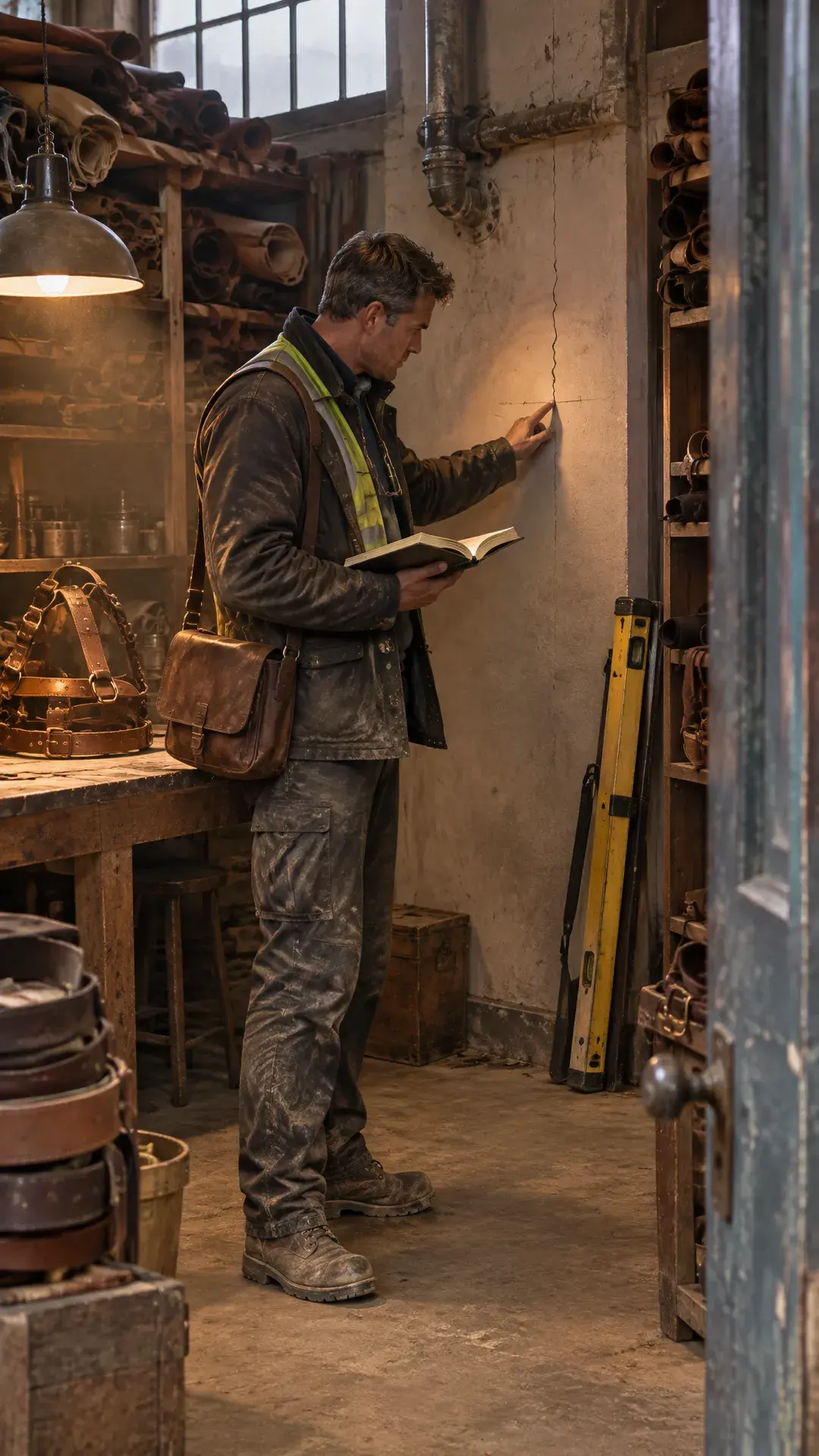
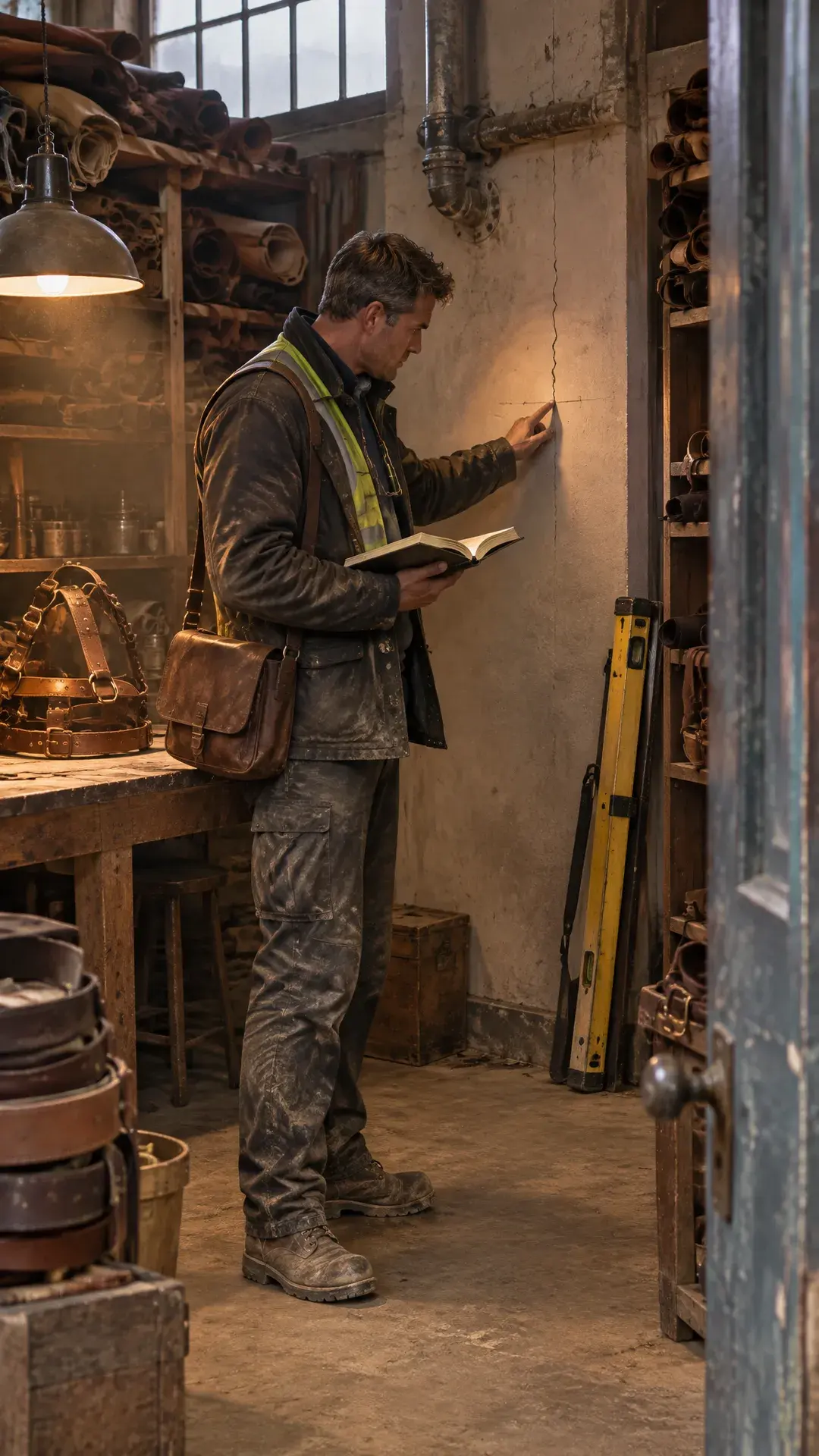



Low cloud presses on the roofs of the old quarter, and the river smells of rain. Inside the Old Tannery, the workshop is warm and lit; someone has worked here all night. The loading door is chained from the inside, so Frederick Vale goes around the side, past the scaffold he ordered erected, and finds the side door unlocked.
He steps into the smell of engine oil, cut leather and stale coffee. Shelves along the wall hold rolls of hide and finished belts; on the bench, a half-stitched harness rests under a lamp. Near the rear door stands a surveyor's level, still in its case, and the bracket he saw installed in September is holding exactly as it was.
He moves through the room without touching anything. His reading glasses are on their cord; he puts them on, walks to the rear wall, and runs a fingertip along the plaster like he is reading a page. The crack he remembered runs from the old pipe chase to the lintel. It has not widened. The pencil mark he left in September is still exactly where he left it.
He takes out his notebook, writes the date, then stands very still. The register says this building should have been empty since October.
'You were supposed to be on the other side of this.' He says it to the wall, or to the cat on the highest shelf, or to nobody. 'Now you're here, the wall is standing, and I have two weeks to decide whether I tell the board I was wrong.'
He turns, finally, and finds watching from the workshop door he left open. He does not put the notebook away.
'Two weeks,' he says. 'That's how long you have to show me you're not building my next mistake. Or I have to show the board the building is a liability. Either way, somebody walks out of that hearing without what they wanted.'