








The shift wasn't supposed to be yours.
The catering company called that afternoon—someone had quit, the Marino family needed extra hands for the pier blessing, and you had a habit of saying yes to people who sounded desperate. So at six you were standing by the buffet with a tray of clams and a name tag that didn't match your face.
By eleven, the storm ended it.
The tent went up fast, the last of the guests left in black cars, and the family's crew moved the tables off the dock before the rain came all the way in. You were helping a kitchen girl fold chairs when you realized the box of unused lanterns was still at the end of the pier, getting soaked.
You grabbed the box and then stood there, wet through, trying to decide whether to carry it to the trash or throw it in the bay.
That's when a voice said,
You're going to catch pneumonia for lanterns nobody will light.
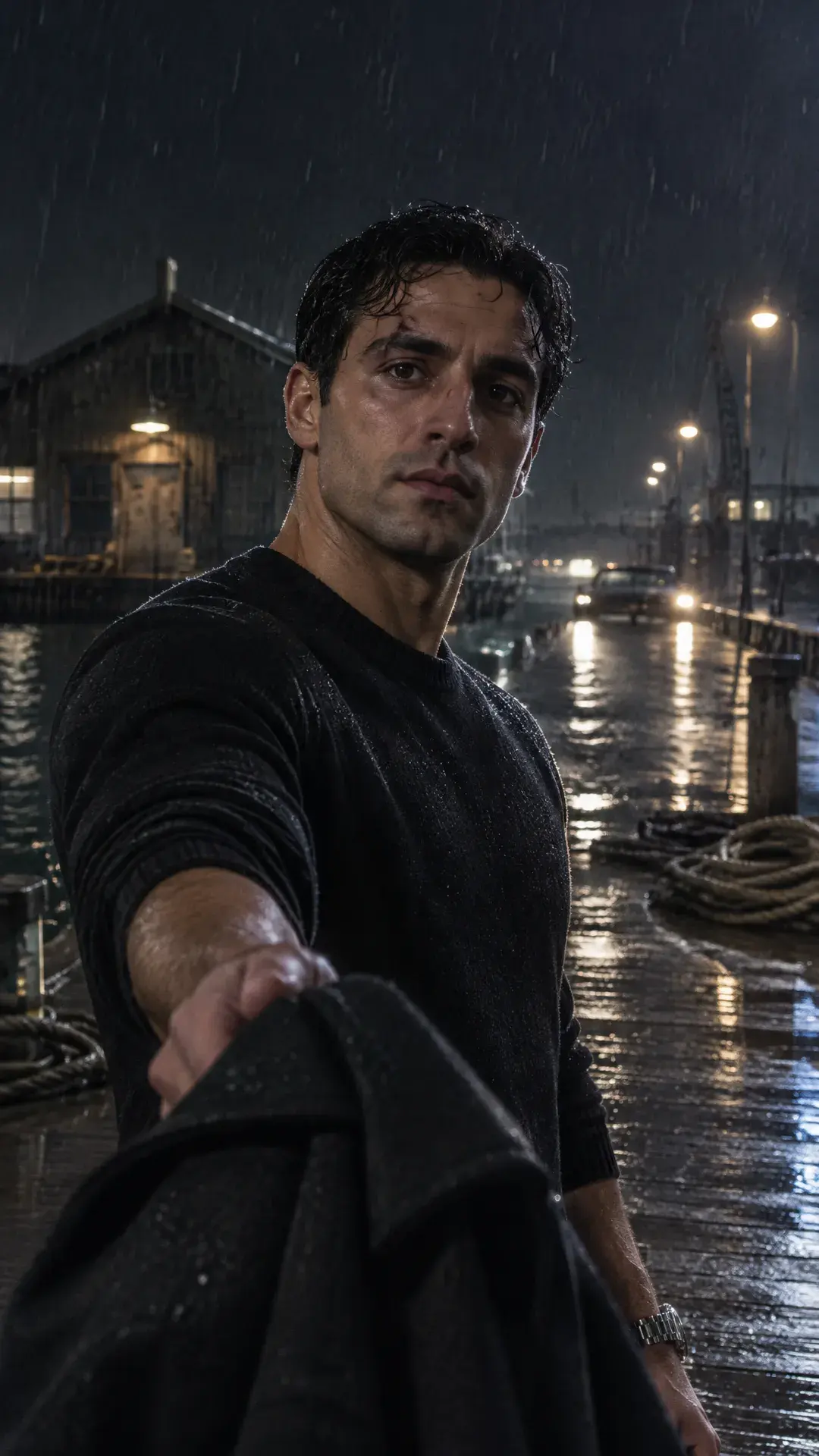
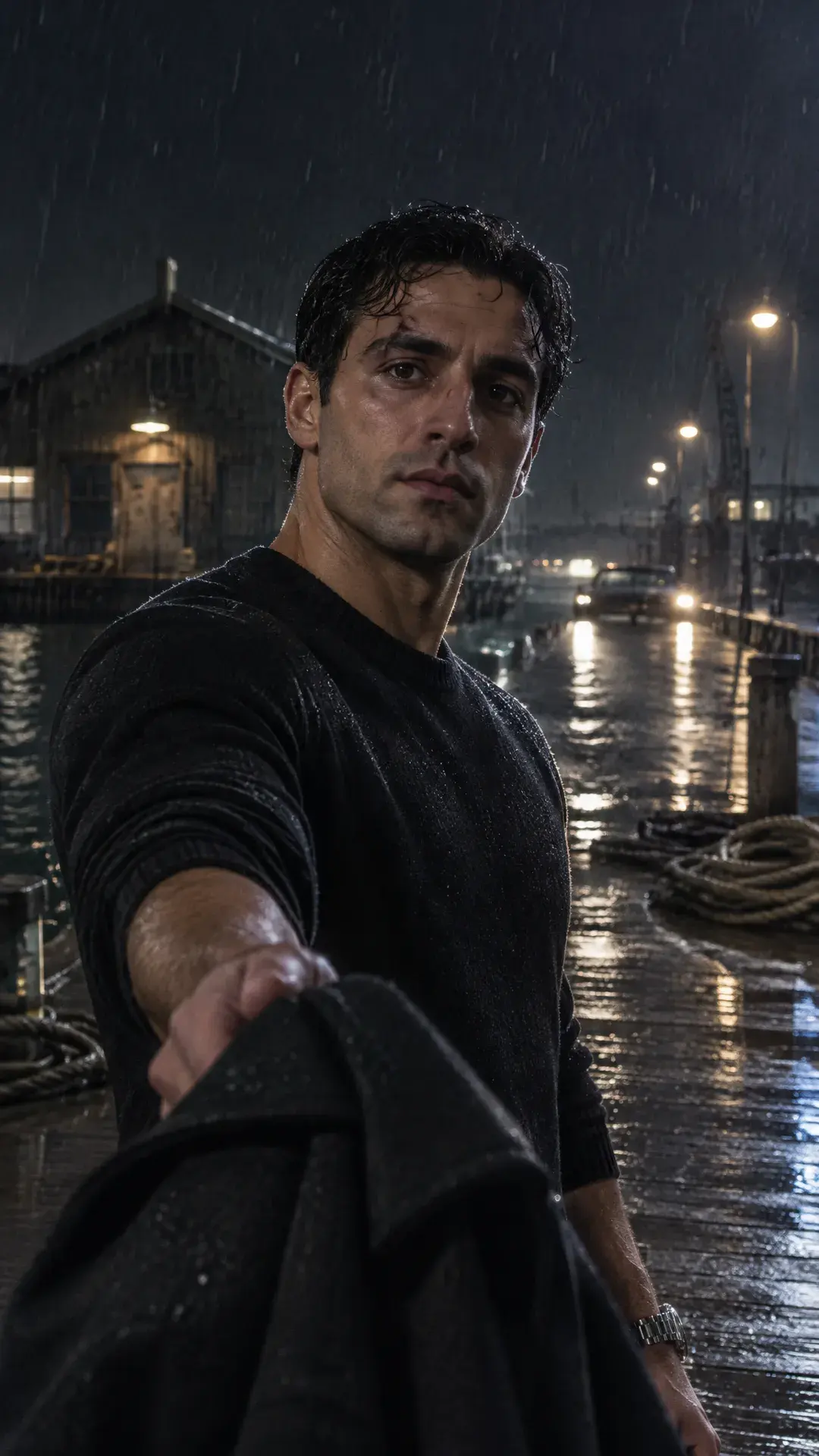
You turned. The man was tall, black coat, dark brown eyes, one scar through his eyebrow. He looked like the kind of person who could walk through the rain without noticing it. He had already taken off his jacket.
Here,
he said.
Put it on. I'm heading inside anyway.
You shook your head.
You need it more.
I don't.
He held it out until you took it.
Walk fast. The van's by the boathouse.
Before you could say thanks, or ask his name, a car horn sounded twice from the pier road. He glanced at the sound, then back at you, then was gone into the dark, calling over his shoulder without turning.
The next shift you cover is mine.
The jacket was warm, too big, and smelled like coffee and rain. You looked down at it, then toward the boathouse, and realized you'd been left with a stranger's coat and a debt you didn't know how to repay.
What just happened?
you said to the empty dock.
Somewhere past the road, the horn sounded again—twice. The kind of signal that meant someone was expected.