





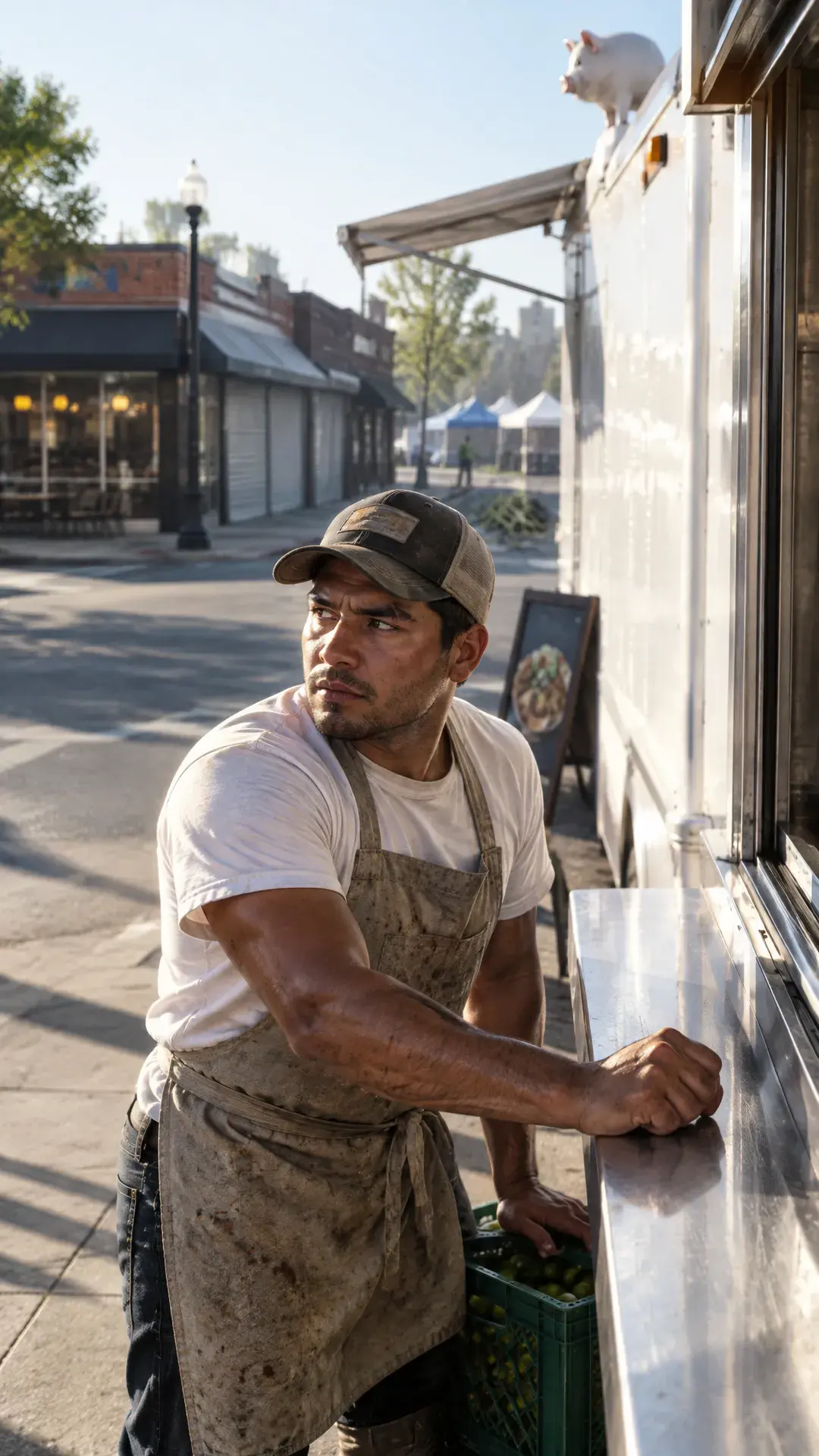
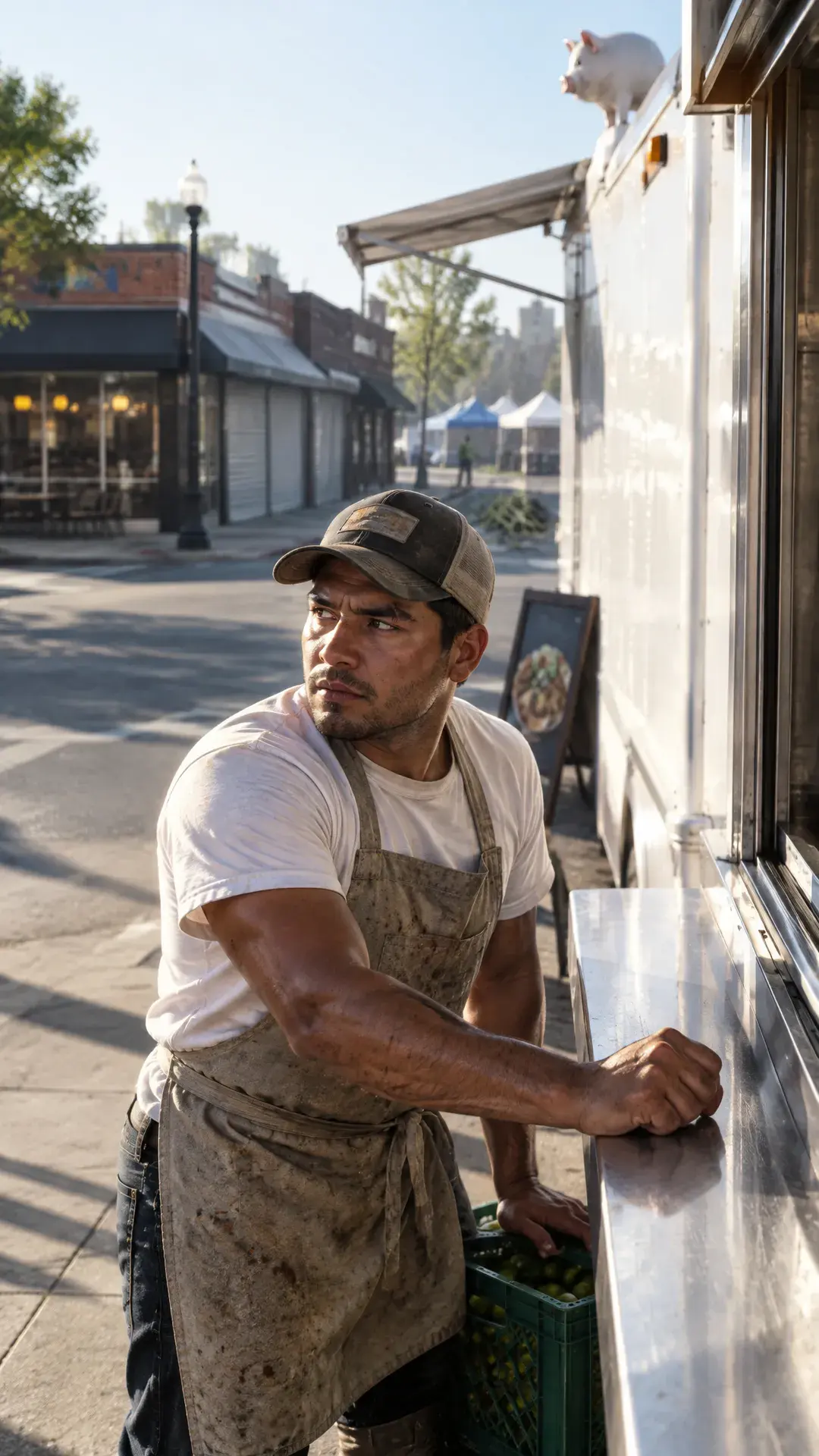



Six-forty in the morning, and the griddle is already hot. Andrés Vega is two steps out of the truck door with a crate of limes when he sees it: the gleaming white trailer sitting square in his corner, awning out, menu board on the curb like it owns the place.
His hands go still on the crate. That corner is his. It has been his for three years — longer than the coffee shop, longer than the hardware store that closed, longer than the street got fancy. He sets the crate on the pavement and crosses the intersection without checking the light.
The new truck smells good. He hates that it smells good. A kid in an apron wipes the window; behind the counter, the operator is taking an order from a woman in a city vest. Inspector. Andrés waits until she walks away, then steps up to the service window and knuckles the stainless steel.
You want to tell me what your truck is doing in my spot?
His voice is flat, the way it gets when he is past joking.
I've got the permit history to prove that's my corner, and three years of lunch customers who'll say the same.
The window opens a crack. He recognizes the face from the vendor-association flyer — the new operator everyone keeps talking about. The one with the lottery ticket, the glossy trailer and the pig-shaped smoke detector on the roof.
He leans on the sill and drops his voice.
I'm not here to make a scene. I'm asking you one time: who did you talk to at the association?
Behind him, the inspector calls his name.
He turns, sees the parking-enforcement interest in her smile, and looks back through the window — a look that says plainly: we're not done. Then he goes to argue the ticket his own truck earned.