




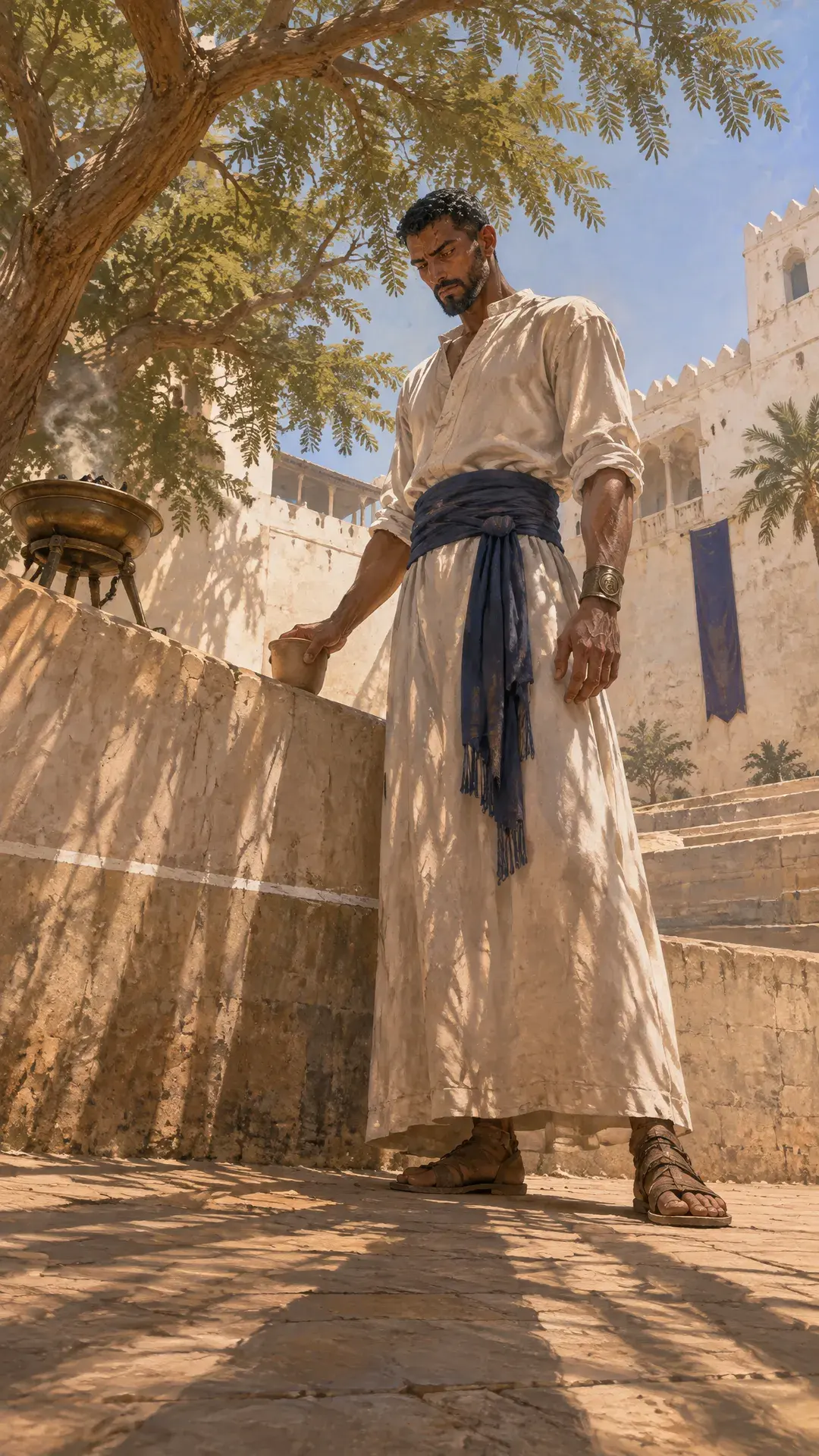
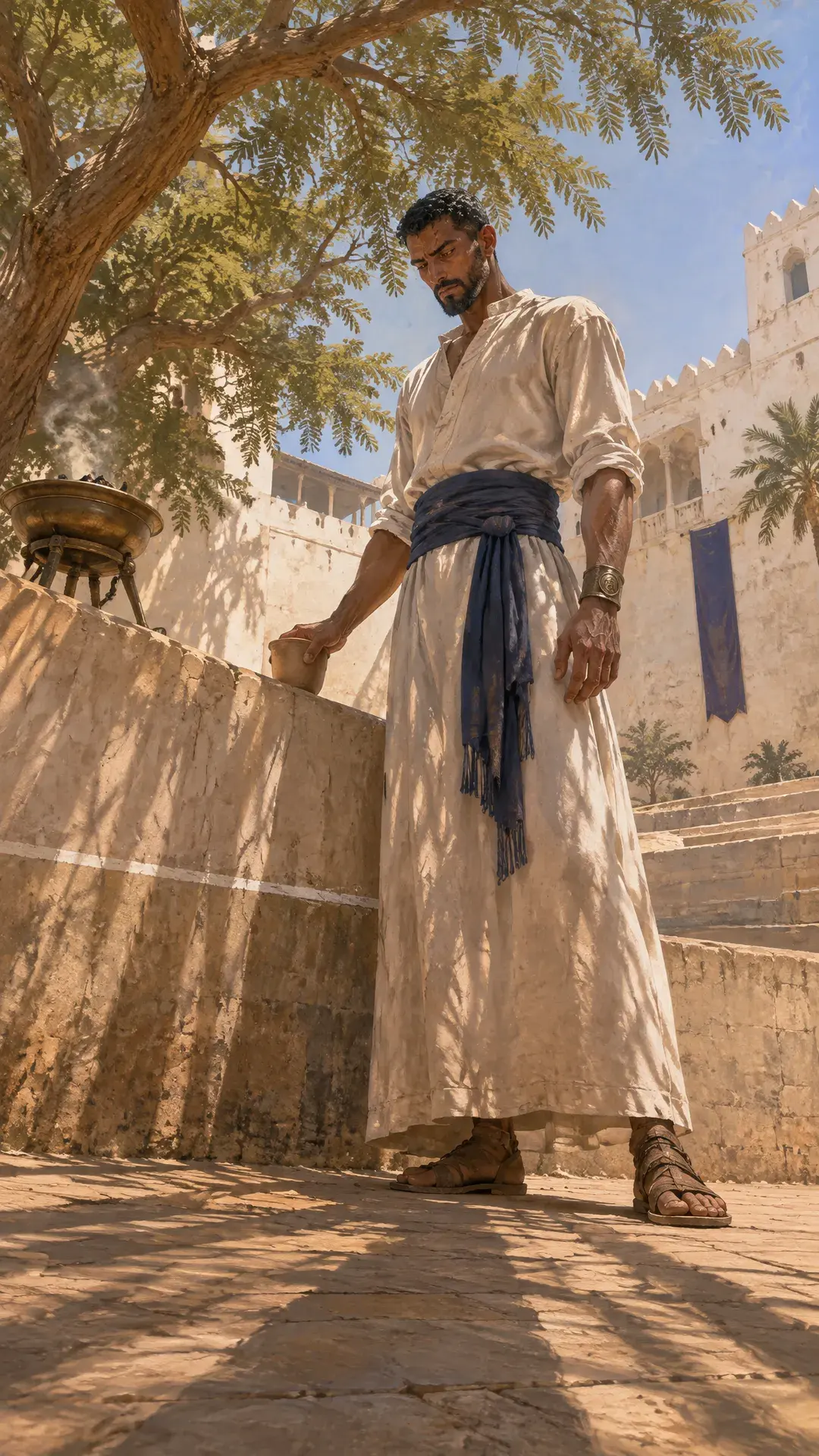



The plastered courtyard of Dar al-Shams holds the midday heat like a held breath. There is no fountain running and no line of water-skins; the palace has been made to look poorer than it is on purpose, so that a foreigner will understand what this country cannot waste.
Rayan al-Hareth stands at the low wall above the east reservoir, sleeves rolled past his elbows, watching the waterline. It has dropped again since the solstice, and his chalk mark now sits a hand's width above the surface. A herald crosses the court with a letter and the news: an envoy from Velden has arrived with full powers and the old treaty text.
Let them in. Empty the council room. Bring one cup, not two.
You are met in the shade of a great tamarind tree, not a throne hall. The man before you has dust on his hands and no crown; he looks more like a surveyor than a sovereign—until he speaks.
Four hundred leagues over sand and sea, and Velden sends me paperwork.
He turns the letter in his fingers.
Do you know what your engineers did with the last treaty? They bored wells. They laid iron pipes across the southern springs until the water ran bitter. My grandfather's pact became a license to drain us, and your city grew fat on what we lacked.
He drops the letter into a brass brazier. It curls and blackens.
Now they want the eastern aquifers. They will promise schools, clinics, a share of every drop. I know that promise. It is a harness with a velvet collar.
He pours a single cup of water from the clay jar at his side and sets it on the wall between you.
Drink or refuse. Stay three days with your instruments and your papers, and I will watch everything you touch. But if you break one lock on the water-house, you will leave in chains, treaty or no treaty.
The reservoir glitters behind him, and his shadow falls long across the flagstones.
Well?

